
Arm Veins
Prominent arm veins are often a normal feature, particularly in people with low body fat or well-developed muscles. However, some people seek treatment because they dislike their appearance, while others develop prominent veins alongside pain or swelling. The right approach depends on the cause. An assessment can help distinguish naturally visible veins from varicose veins or less common vascular problems. Where treatment is appropriate, options may include phlebectomy or sclerotherapy. The most suitable approach depends on the vein’s anatomy, the findings of any necessary investigations and the individual’s treatment goals.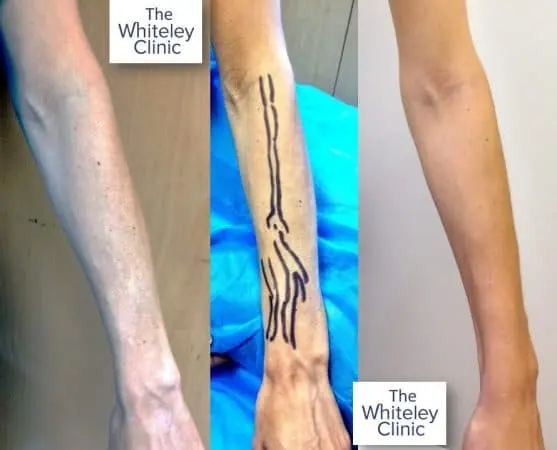
What Are Prominent Arm Veins?
Arm veins carry blood from the hands and arms back towards the heart. Some superficial veins lie close to the skin, making them visible as blue or green lines. In some people, these veins appear larger, raised or twisted.
Visible veins do not necessarily indicate venous disease. Their appearance varies with body composition, age, skin thickness and individual anatomy. However, enlarged, tortuous veins may represent varicose veins, particularly when they cause discomfort or develop alongside other symptoms.
The distinction matters because naturally prominent veins do not usually require medical treatment, whereas certain vascular conditions need further investigation.
What Causes Arm Veins to Become Prominent?
Several factors can make arm veins more noticeable. In many cases, more than one contributes to their appearance.
- Low body fat – Less subcutaneous fat leaves superficial veins more visible beneath the skin.
- Ageing – Changes in skin thickness and elasticity can make veins on the hands and forearms more noticeable.
- Exercise and muscular development – Increased blood flow during exercise and developed forearm muscles can make veins temporarily or persistently more prominent.
- Heat – Warm conditions can dilate superficial blood vessels, making veins appear larger.
- Genetics – Inherited differences in vein anatomy, skin characteristics and body composition influence how visible the veins appear.
Less commonly, prominent arm veins may indicate a vascular problem. Venous obstruction or thrombosis can interfere with blood returning from the arm and cause swelling or enlarged superficial veins.
Venous thoracic outlet syndrome (vTOS) is another possible cause. In this condition, compression of the subclavian vein near the first rib and collarbone can restrict venous drainage. Symptoms may include swelling, pain, bluish discolouration and prominent veins around the shoulder or upper chest.
These conditions require medical assessment rather than treatment aimed solely at improving the veins’ appearance.
Do Prominent Arm Veins Need Treatment?
Prominent arm veins do not always require treatment. If the veins are naturally visible and cause no symptoms, treatment is usually optional. Some people nevertheless choose a procedure to change their appearance.
However, new or unusual changes deserve attention. One-sided swelling, persistent pain, redness or warmth may indicate a vascular problem. Sudden swelling, particularly with bluish skin, requires urgent medical assessment because an upper limb deep vein thrombosis (DVT) may be responsible.
Sudden chest pain or breathlessness requires emergency medical attention. These symptoms can indicate a pulmonary embolism, a potentially serious complication of DVT.
The aim of an assessment is to identify the cause before deciding whether treatment is necessary. Removing a superficial vein will not resolve an underlying obstruction or thrombosis.
How Are Arm Veins Assessed?
A clinical assessment helps determine whether prominent arm veins reflect normal anatomy, superficial varicose veins or an underlying vascular condition. The clinician considers when the veins became visible, whether their appearance has changed and whether symptoms accompany them.
The assessment may include:
- Medical history – Previous thrombosis, vascular procedures, recent intravenous access, exercise-related symptoms and relevant medical conditions may influence the investigation.
- Physical examination – The clinician assesses the location, size and course of the veins, alongside any swelling, skin changes or differences between the arms.
- Duplex ultrasound – When indicated, this non-invasive scan assesses venous anatomy and blood flow. It can help identify thrombosis, obstruction and connections between superficial and deeper veins.
The American Institute of Ultrasound in Medicine’s peripheral venous ultrasound practice parameter, supports ultrasound assessment for suspected venous thrombosis or obstruction, varicose veins and pre-procedural vein mapping. The examination should reflect the patient’s symptoms and clinical findings.
If venous thoracic outlet syndrome is suspected, a more detailed vascular assessment may be needed. Any obstruction affecting blood flow should be investigated and addressed before cosmetic treatment is considered.
Once the assessment identifies suitable veins, the clinician can discuss which ones may be treated safely and whether the expected result matches the patient’s goals.
What Are the Treatment Options for Arm Veins?
The most suitable treatment depends on the size, position and anatomy of the veins, as well as the reason for their prominence. Phlebectomy remains an established procedure for selected superficial veins. However, no single technique suits every case.
Phlebectomy
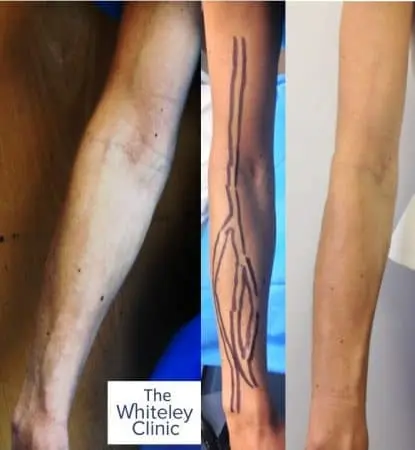
During a phlebectomy, the clinician removes targeted veins lying just beneath the skin through small incisions. The procedure is generally carried out under local anaesthetic. Once the veins have been removed, the clinician covers the incision sites with dressings or adhesive strips. Stitches are not usually needed.
Phlebectomy is still used to treat varicose veins and has not been superseded by newer techniques. However, most of the available evidence concerns treatment of leg veins, rather than veins in the arms. For this reason, a thorough assessment is needed to establish whether phlebectomy is an appropriate option for prominent arm veins.
Foam sclerotherapy
In foam sclerotherapy, a clinician injects a medicinal foam into the affected vein. This triggers a reaction in the vein wall, causing the vessel to close. The body then breaks down the treated vein and gradually absorbs it.
The procedure may be suitable for certain veins close to the skin’s surface, but it is not appropriate in every case. The clinician needs to consider the vein’s position, diameter and relationship with the deeper veins before recommending treatment. Side effects can include local inflammation and changes in skin colour. More serious vascular complications are possible, although they occur less often.
Other treatments
Laser treatment may be appropriate for certain vascular conditions, but the term covers different techniques. Endovenous laser treatment, for example, closes a vein from within using laser energy. Evidence for its routine use in prominent arm veins remains limited, so it should not be presented as the standard or best option for every patient.
If an underlying condition causes the prominence, treatment must address that problem first. For example, venous thoracic outlet syndrome may require specialist management of compression of the subclavian vein. Depending on the findings, treatment may include anticoagulation, clot removal or surgical decompression. These procedures are distinct from cosmetic treatment of superficial arm veins.
The clinician should explain the benefits, limitations and risks of each suitable option before agreeing on a treatment plan.
Arm Vein Treatment at The Whiteley Clinic
Treatment begins with a consultation to discuss the appearance of the arm veins, the patient’s concerns and the result they hope to achieve. The clinician assesses the veins and determines whether further investigation, including duplex ultrasound, is appropriate.
Where treatment is suitable, the consultation covers the available options, the veins that can be treated safely and the expected recovery. The clinician also explains any preparation and aftercare requirements.
For suitable superficial veins, options may include phlebectomy or ultrasound-guided foam sclerotherapy. The final recommendation depends on the individual assessment rather than the appearance of the veins alone.
To discuss prominent arm veins or request an appointment, submit an enquiry through the Contact Us page.