Forehead Veins
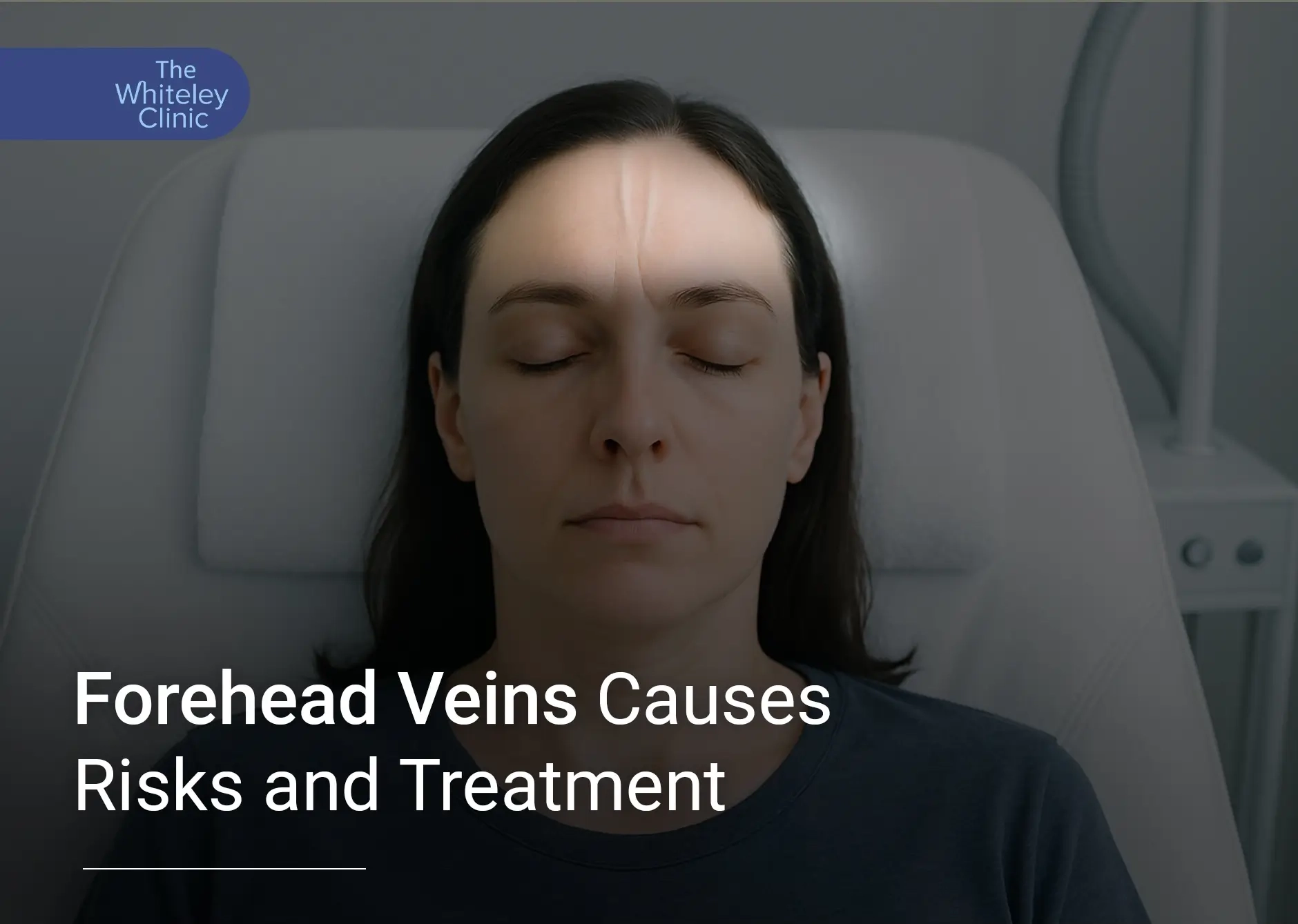
Forehead Veins that bulge are a common cosmetic concern that can cause significant distress for many patients. These prominent vertical veins often appear between the eyebrows and may become more visible during smiling, exercise, alcohol consumption, or exposure to heat. While they do not usually indicate a serious medical condition, they can affect self-confidence, particularly in photographs or social situations. In this article, we will explain what these veins are, why they develop, whether they require treatment, and which modern techniques provide safe and effective removal.
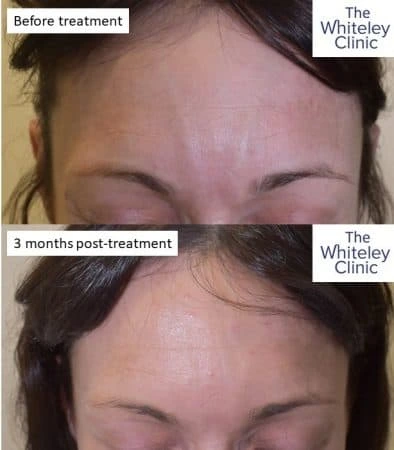
Veins on forehead removed at The Whiteley Clinic
What Are Forehead Veins and Why Do They Appear?
Medically known as supratrochlear veins, forehead veins run vertically from the hairline down to the base of the nose, between the eyebrows. Textbooks suggest there are usually two of these veins, but in practice, patients may present with just one large vein, or a network of three or four. The way these veins appear can differ significantly between individuals.
These veins become more prominent with facial expressions, physical activity, or vasodilation caused by heat or alcohol. Genetic predisposition, thin skin, and ageing may also make them more visible. Although they are mostly a cosmetic concern, their presence often prompts patients to seek treatment.
Are They a Serious Medical Concern?
In most cases, forehead veins do not represent a life‑threatening condition and have no adverse effect on normal venous circulation. Their main impact is cosmetic, as many patients find the appearance distressing.
In rare situations, underlying vascular abnormalities cause prominent superficial veins in this region. Therefore, a qualified specialist should conduct a clinical assessment to rule out other pathologies and decide whether treatment is necessary.
Is It Necessary to Treat Prominent Forehead Veins?
Treatment of forehead veins is generally elective, meaning it is not medically necessary. Most patients seek intervention for cosmetic reasons. However, because these veins can become increasingly prominent over time or appear more noticeable in certain situations, treatment can significantly improve quality of life and self-esteem. For many, this justifies pursuing available treatment options.
Treatment Options From Traditional Methods to Modern Innovations
Until 2016, specialists believed that treating forehead veins was impossible. Early attempts with external lasers, sclerotherapy, or phlebectomy often failed or delivered unsatisfactory results.
Prof Mark Whiteley was among the first to develop effective techniques for treating these veins. Initially, he used phlebectomy, a method involving tiny incisions and physical removal of the veins under local anaesthetic.
In 2019, Prof Whiteley collaborated with Dr Charles Esteves Pereira from Brazil to create a groundbreaking method. They developed a minimally invasive endovenous laser ablation (EVLA) technique using very fine laser fibres inserted directly into the vein. This approach, performed under local anaesthetic, allows permanent removal of forehead veins with minimal scarring. Surgeons typically hide the only incisions beneath the hairline.
Recent studies have expanded on this innovation. A 2025 pilot study reported in PubMed described the use of a 1320 nm diode laser, which showed excellent cosmetic results with minimal complications.
How Is the Procedure Performed?
The surgeon first injects a local anaesthetic to numb the treatment area. Next, they insert a fine laser fibre into the vein. Then, using ultrasound guidance and a low-energy laser, they seal the vein shut. To protect the skin and surrounding tissue, the surgeon injects a tumescent solution around the vein, which not only reduces discomfort but also minimises the risk of burns.
The operation is quick and does not require general anaesthesia. Consequently, most patients can leave the clinic shortly after treatment. In cases where a vein fails to close completely, the procedure can be safely repeated.
Recovery and Aftercare
Recovery from endovenous laser ablation of forehead veins is usually smooth. Patients may experience minor bruising or swelling, which typically resolves within two to six weeks. The tiny scars, hidden along the hairline, usually become invisible during this time.
Post-treatment advice includes avoiding strenuous activity for a few days, protecting the area from direct sunlight, and following the clinic’s aftercare guidelines. Most patients return to normal daily activities almost immediately.
Are There Any Risks or Side Effects?
Although the procedure is considered safe, potential risks include temporary bruising, mild skin tethering, or, in rare cases, skin burns. Studies have shown that the type of laser fibre and the power used significantly affect safety. For example, treatments performed with radial fibres and lower power settings reduce the chance of burns compared with older bare-fibre methods.
Overall, complication rates remain low, and when performed by experienced specialists, the benefits of treatment far outweigh the risks.
Why Sclerotherapy Carries Risks
Sclerotherapy is a well-established option for treating varicose and spider veins in the legs, but it is not suitable for forehead veins. The sclerosant solution, once injected, can potentially enter deeper venous channels located close to the eyes and the brain. Although extremely rare, this may lead to serious complications such as visual disturbances, retinal damage, or neurological events. Because of these potential risks, vascular specialists generally advise minimally invasive laser techniques rather than sclerotherapy in this sensitive anatomical region.
Clinical Research and Evidence
The technique developed by Prof Whiteley and Dr Pereira was first described in the peer-reviewed journal Dermatologic Surgery. Their publication demonstrated successful outcomes in the majority of patients, with minimal side effects. Follow-up research, including the more recent 1320 nm laser study, supports the growing evidence that endovenous laser ablation is both safe and effective for this indication.
The Role of the College of Phlebology
Ongoing training and standardisation of these innovative procedures are being advanced through the College of Phlebology. This ensures that new techniques are safely introduced to clinical practice and that patients benefit from the latest evidence-based care.
The Importance of Choosing the Right Clinic and Specialists
Importantly, selecting the right clinic and an experienced medical team is crucial for the success of forehead vein treatment. Although these veins are not a medical emergency, they can have a significant psychological and cosmetic impact. Modern treatments such as endovenous laser ablation achieve their highest effectiveness and safety when performed by skilled specialists using advanced technology.
At The Whiteley Clinic, every patient receives an accurate diagnosis and a personalised treatment plan based on individual anatomy and the latest scientific evidence. This ensures excellent cosmetic results with minimal downtime. If you are troubled by prominent forehead veins, consulting the experts at The Whiteley Clinic can be the first step towards restoring your confidence and achieving a natural appearance