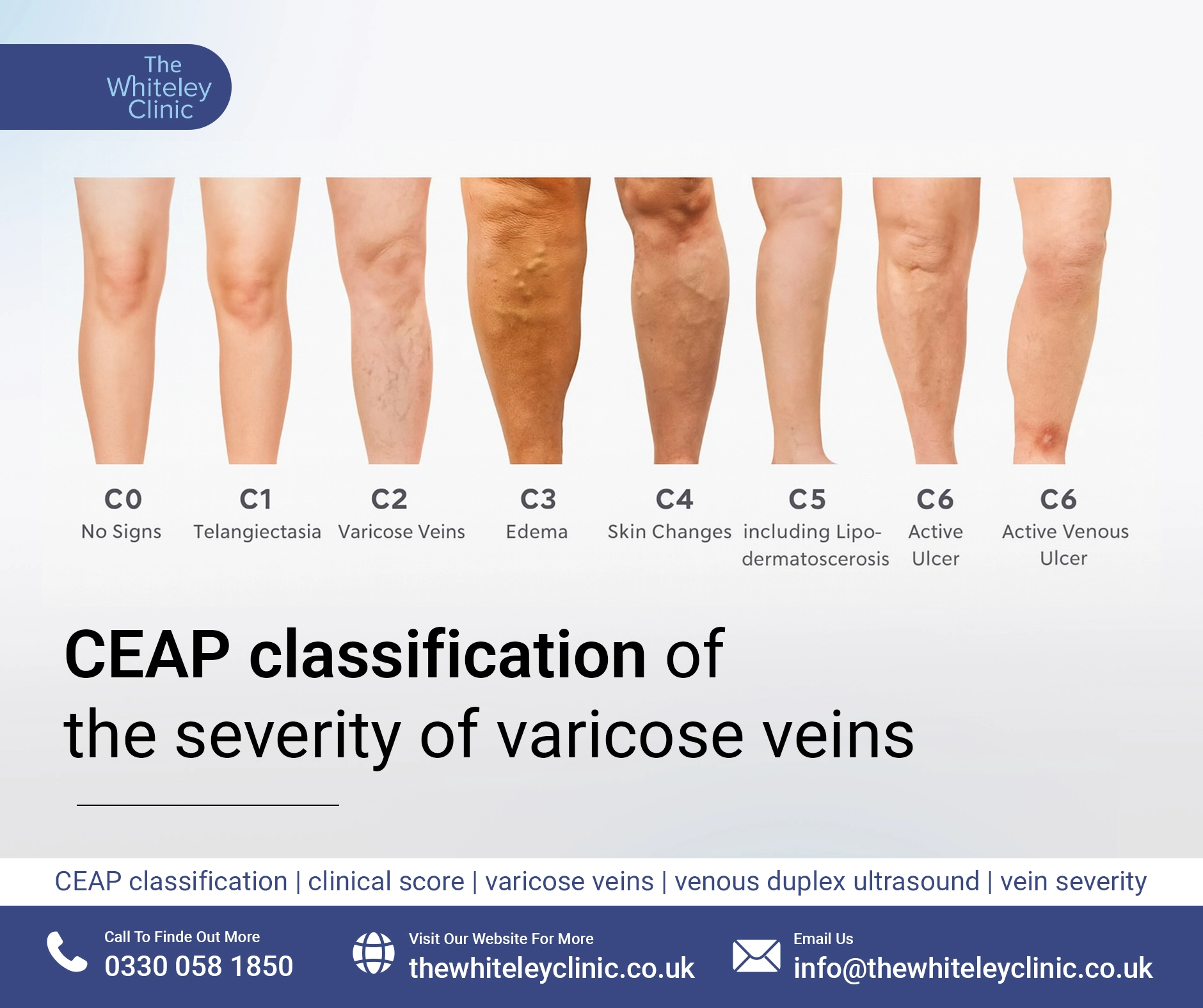
CEAP clinical score
February 19, 2026
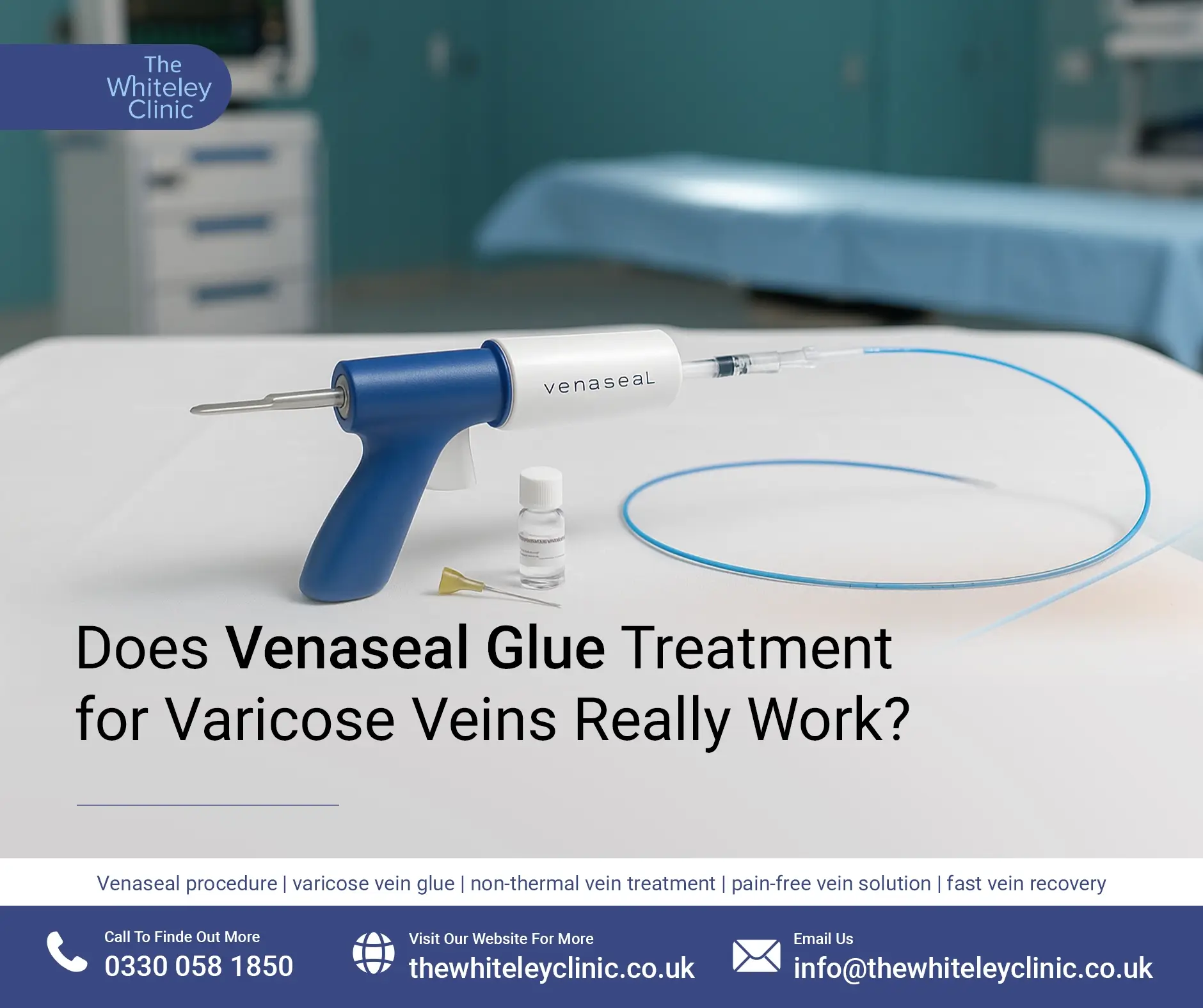
Venaseal Glue Treatment offers a breakthrough approach to managing varicose veins.
This walk-in, walk-out procedure provides an effective alternative to traditional methods.
A major international multi-centre study ran from 2013 to 2014 and showed excellent one-year outcomes.
Researchers published the findings in 2014 in the Journal of Vascular Surgery: Venous and Lymphatic Disorders.
Professor Mark Whiteley and The Whiteley Clinic led the UK’s involvement in this ground-breaking trial.
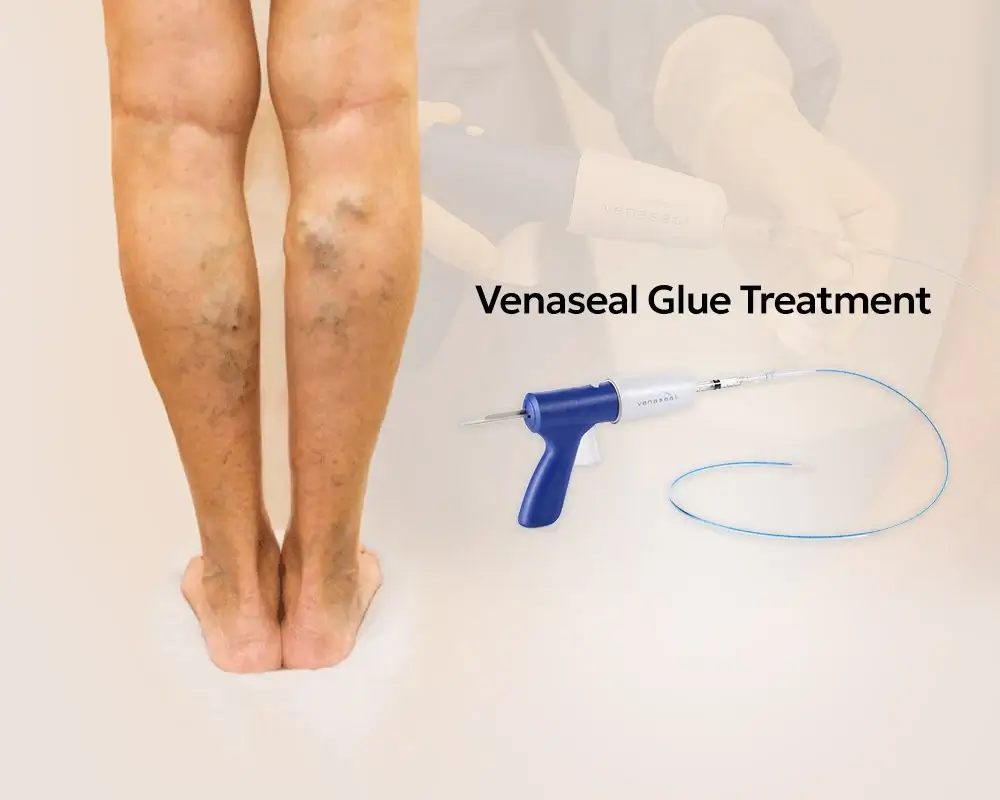
Venaseal Glue Treatment uses a medical adhesive to seal faulty leg veins with minimal invasion. Often referred to as “superglue,” this innovative method stands apart from traditional thermal ablation techniques such as EVLA (endovenous laser ablation) and RFA (radiofrequency ablation).
Unlike those thermal methods, which require multiple injections of local anaesthetic along the length of the vein, Venaseal avoids this discomfort entirely. As a result, patients experience a much gentler procedure.
In addition, the treatment significantly reduces the need for post-procedure compression stockings, making aftercare simpler and more comfortable. Therefore, it appeals strongly to those seeking a less invasive and more convenient solution for varicose veins.
Read more: Venaseal Glue Treatment for Varicose Veins
The main benefit of Venaseal Glue Treatment is that it avoids the use of tumescent anaesthesia.
By contrast, thermal treatments like EVLA and RFA require multiple needle injections to numb the entire length of the vein, a process many patients find uncomfortable.
Instead, Venaseal needs just one injection at the catheter entry point. For this reason, it is especially appealing to patients who fear needles or feel anxious about injections.
Moreover, most patients can return to normal activities immediately after the procedure. This makes Venaseal a convenient and patient-friendly option for treating varicose veins.
The big advantage is comfort. It eliminates the need for tumescent anaesthesia. Traditional methods require numbing along the entire vein. That means many needle jabs.
In contrast:
A video from The Whiteley Clinic shows each step.
The glue hardens in minutes. Over time, the body absorbs it, leaving scar tissue. This keeps the vein closed for good. As a result, blood no longer flows backwards, the main cause of varicose veins.
The European multi-centre study, which included The Whiteley Clinic as one of only three centres in the UK, followed patients for a full year after they underwent Venaseal Glue Treatment. The results, published in 2014 in the Journal of Vascular Surgery: Venous and Lymphatic Disorders, were highly encouraging. Closure rates proved comparable to those achieved with EVLA and RFA, the two leading thermal ablation methods at the time.
Importantly, patients – particularly those with needle phobia or minimal visible bulging veins – reported less discomfort, required fewer injections, and had a reduced need for compression stockings after the procedure. These outcomes highlight Venaseal as a strong and patient-friendly alternative for selected individuals who seek effective vein treatment with minimal intervention.
Venaseal Glue Treatment does come with a higher price tag, usually about £1,000 more than EVLA or RFA.
As a result, the cost may not be justifiable for every patient, particularly for those who tolerate injections well or already own compression stockings.
Nevertheless, for many people, the added comfort, greater convenience, and quicker return to daily life make the extra cost worthwhile.
In fact, this treatment is ideal for busy individuals who want a minimally invasive option with very little downtime.
Professor Mark Whiteley has pioneered the diagnosis and treatment of varicose veins in the UK. His role in the original study shows a strong commitment to evidence-based innovation. By joining international research, The Whiteley Clinic has helped shape both the understanding and clinical use of new vein treatments such as Venaseal.
The Whiteley Clinic also ranked among the first in the UK to adopt the Venaseal Glue Treatment. Today, it continues to offer this option as part of its personalised approach to venous care.
In conclusion, Venaseal Glue Treatment is a safe, effective, and well-tolerated option for managing varicose veins. Published one-year data supports its use, while real-world clinical experience further confirms its benefits. It now stands as a true alternative to thermal ablation.
For patients who prioritise comfort, fewer injections, and minimal downtime, this innovative procedure offers a compelling choice. Thanks to clinics like The Whiteley Clinic, it is now more accessible than ever.