
Klippel-Trenaunay Syndrome (KTS)
March 26, 2026
Foam Sclerotherapy Research to improve varicose vein treatment safety has been undertaken at The Whiteley Clinic and published in The Journal of Vascular Surgery (Venous and Lymphatic Disorders) July 2014.
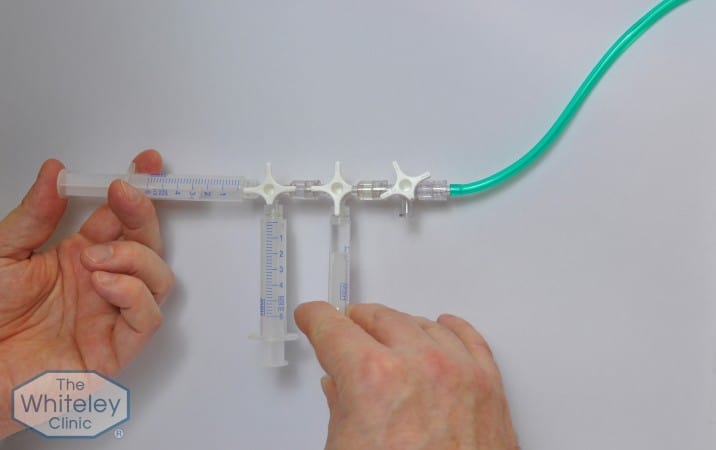
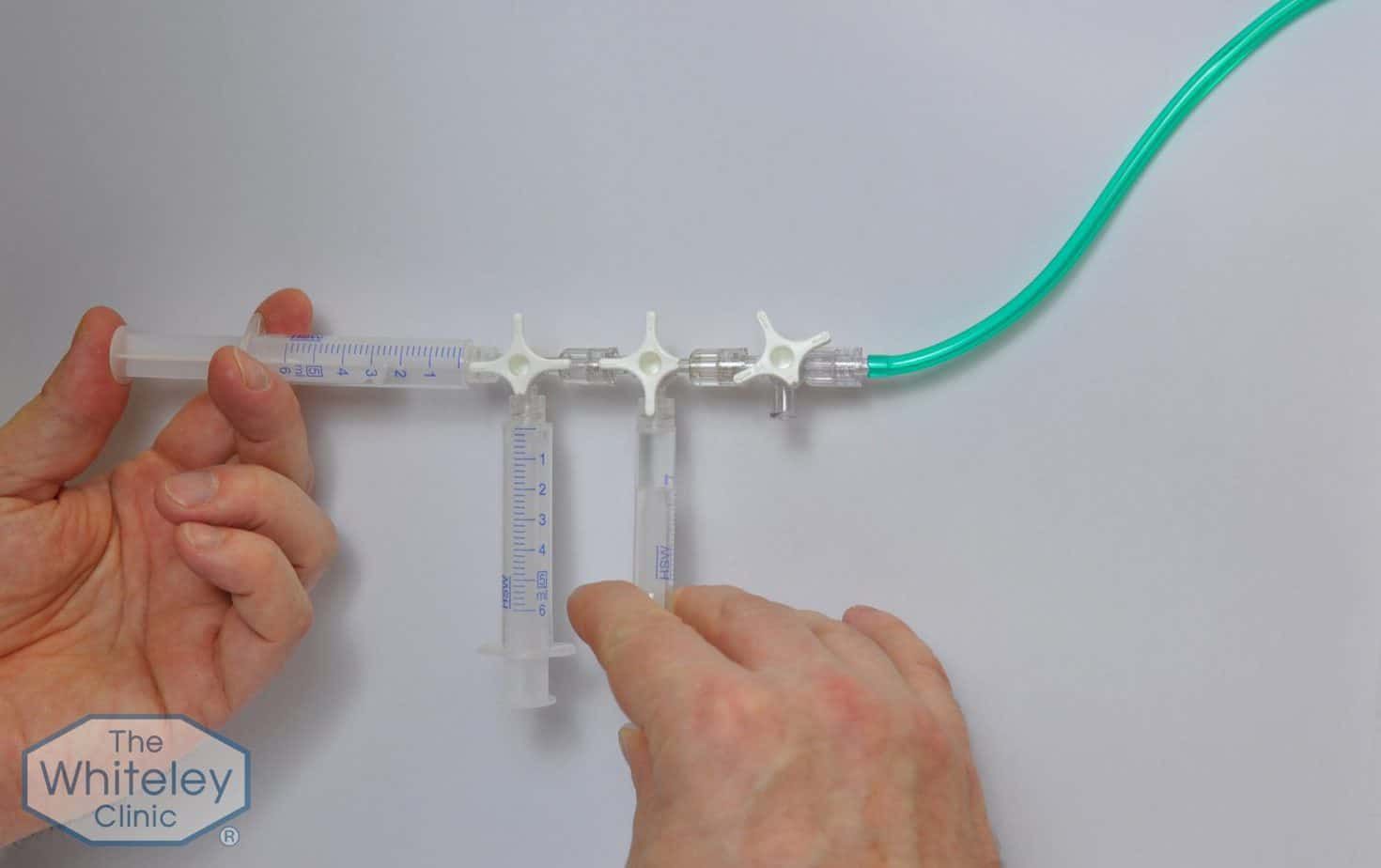
Foam Sclerotherapy research resulted in the Whiteley-Patel method of making foam
Foam Sclerotherapy is a procedure which is widely used for the treatment of varicose veins. During the procedure, the diseased vein is destroyed by injecting a liquid foam which kills the cells in the vein wall. The foam sclerotherapy treatment is performed using different methods and equipment and is undertaken in different temperatures and altitudes. It is a widely used procedure which can have variable results. Many Doctors treat their patients on the basis that the procedure "should work" with no question on how the procedure and results could be improved. View our video to understand more about Foam Sclerotherapy
Foam Sclerotherapy works when the injected foam displaces the blood from the target vein. By creating a foam which lasts longer, the blood is kept out of the target vein for longer, allowing more time for the foam to destroy the cells - which in turn should allow for better results. The study performed by staff at The Whiteley Clinic looked at how different external factors can make the foam last longer. The team studied the different effects of :
The team worked out the best conditions for making foam and how to make it last longer, including in areas of high altitude. It is know that using air (as part of the mix to make foam) can cause visual disturbances and migraines. In rare occurrences it can cause a mini-stroke called a transient ischaemic attack (TIA) or even a full stroke. The study showed that there is a much safer Oxygen : Carbon dioxide mixture that can be used to reduce the risks from air being pumped into the blood stream. The resulting Whiteley-Patel technique for making foam and improving treatment safety has been used for patients at The Whiteley Clinic since July 2014.
Mark Whiteley and his team had to perform many of the study's experiments in a walk in freezer at the University of Surrey and at several stations on Mount Titlis in Switzerland. The team consisted of Professor Mark Whiteley with Salil Patel, Alexandra Ostler, Scott Dos Santos and Tom Piriea, who were all summer research fellows at the The Whiteley Clinic during 2013. Salil Patel went on to win first prize at the national vein meeting, the Venous Forum of the Royal Society of Medicine. Salil was a second year student at the time and beat all of the qualified doctors in the competition. ____________________________________________________________________________ The clinical abstract is available to read in full