

How Can You Effectively Treat Calluses and Corns on Feet?
August 15, 2026
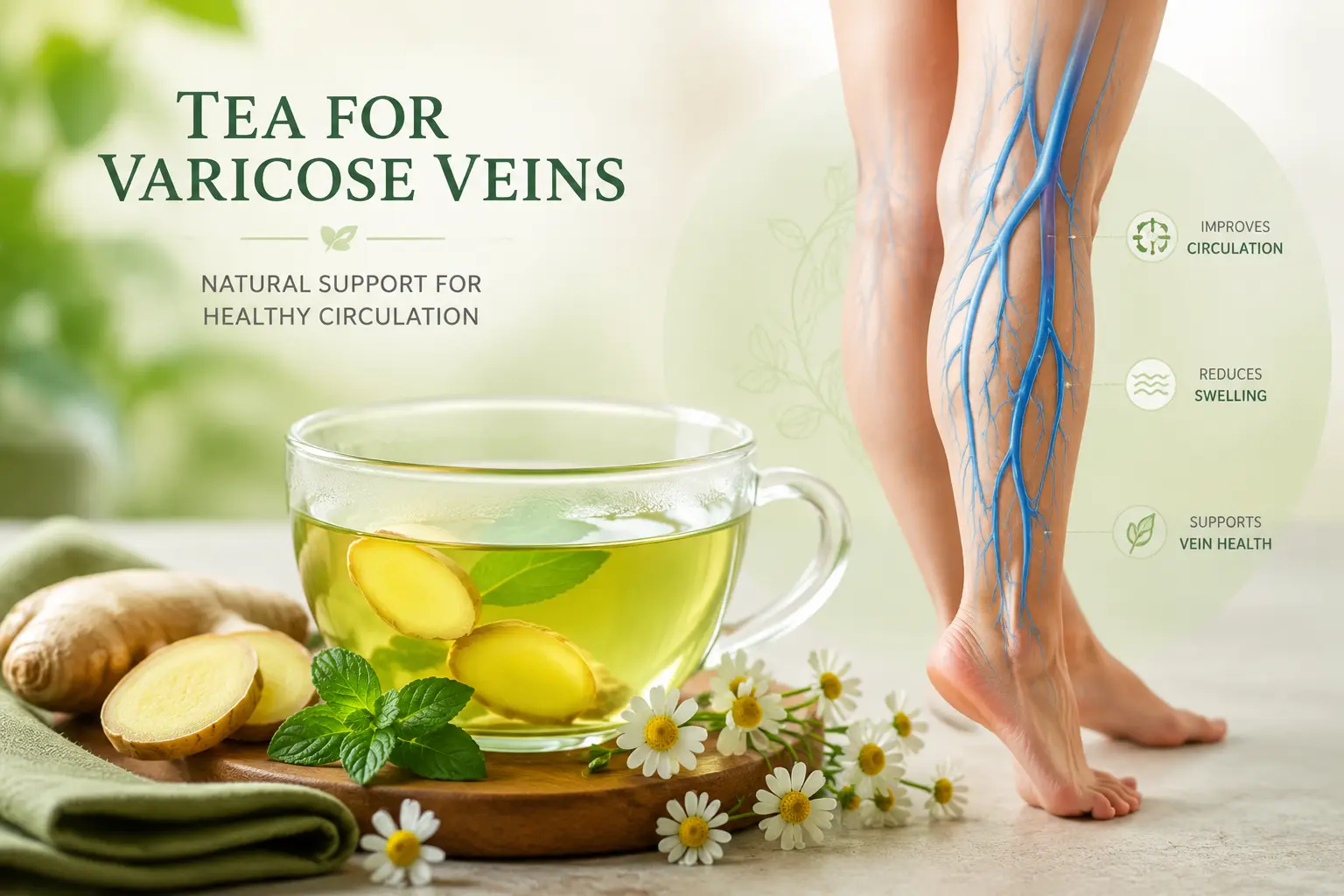
Tea for varicose veins is often discussed as a supportive dietary approach for improving circulation and easing discomfort in the lower limbs. Varicose veins develop when venous valves weaken, causing blood to pool and increasing pressure within the veins, especially in the legs. While no beverage can repair damaged valves, certain teas and proper hydration may support vascular function, reduce inflammation, and improve overall venous comfort.
This article explores how hydration and herbal teas, including green tea, ginger tea, and chamomile, may contribute to better venous health. It also explains the physiological role of veins and the importance of maintaining optimal blood flow in managing symptoms associated with venous insufficiency.

Veins play a crucial role in returning deoxygenated blood back to the heart. Unlike arteries, venous return depends on muscle contraction and one-way valves. These valves prevent backflow and support upward blood movement against gravity.
Venous reflux occurs when the one-way valves in the veins fail, allowing blood to flow backward and increase pressure within the lower limb veins.
When venous function becomes impaired, blood pools in the lower extremities. This leads to visible swelling, heaviness, and discomfort. Consequently, circulation support becomes an important focus in lifestyle management strategies. Within this context, tea for varicose veins is often considered as part of a broader nutritional and hydration-based approach.
Adequate hydration directly influences blood viscosity. In a dehydrated state, blood becomes thicker, which increases resistance within the vascular system. This can place additional strain on already weakened veins.
Proper fluid intake helps maintain optimal circulation. It also supports the removal of excess sodium, which can contribute to fluid retention and swelling in the legs. In addition, sufficient hydration helps maintain elasticity in vascular tissues, which is essential for efficient venous return.
Water remains the most effective fluid for supporting vascular health. However, herbal teas can complement hydration routines and provide additional bioactive compounds that may assist circulation and inflammation control.
Read more: How Do Veins Work
Certain herbal teas contain compounds that may help support vascular function. These effects are not curative but may contribute to symptom relief and improved comfort.
Ginger tea contains active compounds such as gingerols. These compounds may support peripheral circulation and help reduce inflammatory responses. Improved blood flow can ease feelings of heaviness in the legs, which are commonly associated with venous insufficiency. For this reason, ginger is often included in discussions about tea for varicose veins.
Chamomile tea is known for its mild anti-inflammatory properties. It may help reduce swelling and discomfort in the lower limbs. In addition, chamomile supports relaxation, which can indirectly benefit circulation by reducing vascular tension and stress-related constriction.
Green tea contains a high concentration of catechins, a type of polyphenol with antioxidant activity. These compounds help reduce oxidative stress, which plays a role in vascular ageing and endothelial dysfunction.
Research suggests that polyphenols in green tea may support the structural integrity of veins, including the great saphenous vein in humans. This vein is commonly affected in varicose vein conditions. While green tea does not repair damaged valves, it may help maintain vascular tone and reduce inflammatory stress on vein walls. As a result, tea for varicose veins frequently includes green tea as a key dietary component.
Polyphenols act by neutralising free radicals and reducing oxidative damage within blood vessels. This mechanism may help preserve endothelial function and support normal venous elasticity. In addition, improved vascular resilience may reduce the progression of symptoms associated with chronic venous insufficiency.
However, these effects remain supportive rather than therapeutic. Polyphenols cannot reverse structural valve failure, which is the underlying cause of varicose veins. Therefore, green tea should be viewed as a complementary element within a broader lifestyle strategy.
Tea for varicose veins may provide supportive effects by contributing to hydration, supplying antioxidants, and offering mild anti-inflammatory properties.
Water remains essential for maintaining healthy blood flow, while herbal teas such as ginger, chamomile, and green tea may contribute additional vascular support.
Despite these potential benefits, varicose veins require medical assessment when symptoms progress. Lifestyle measures, including appropriate hydration and balanced nutrition, may assist in symptom management but do not replace clinical treatment.