

Klippel-Trenaunay Syndrome (KTS)
March 26, 2026
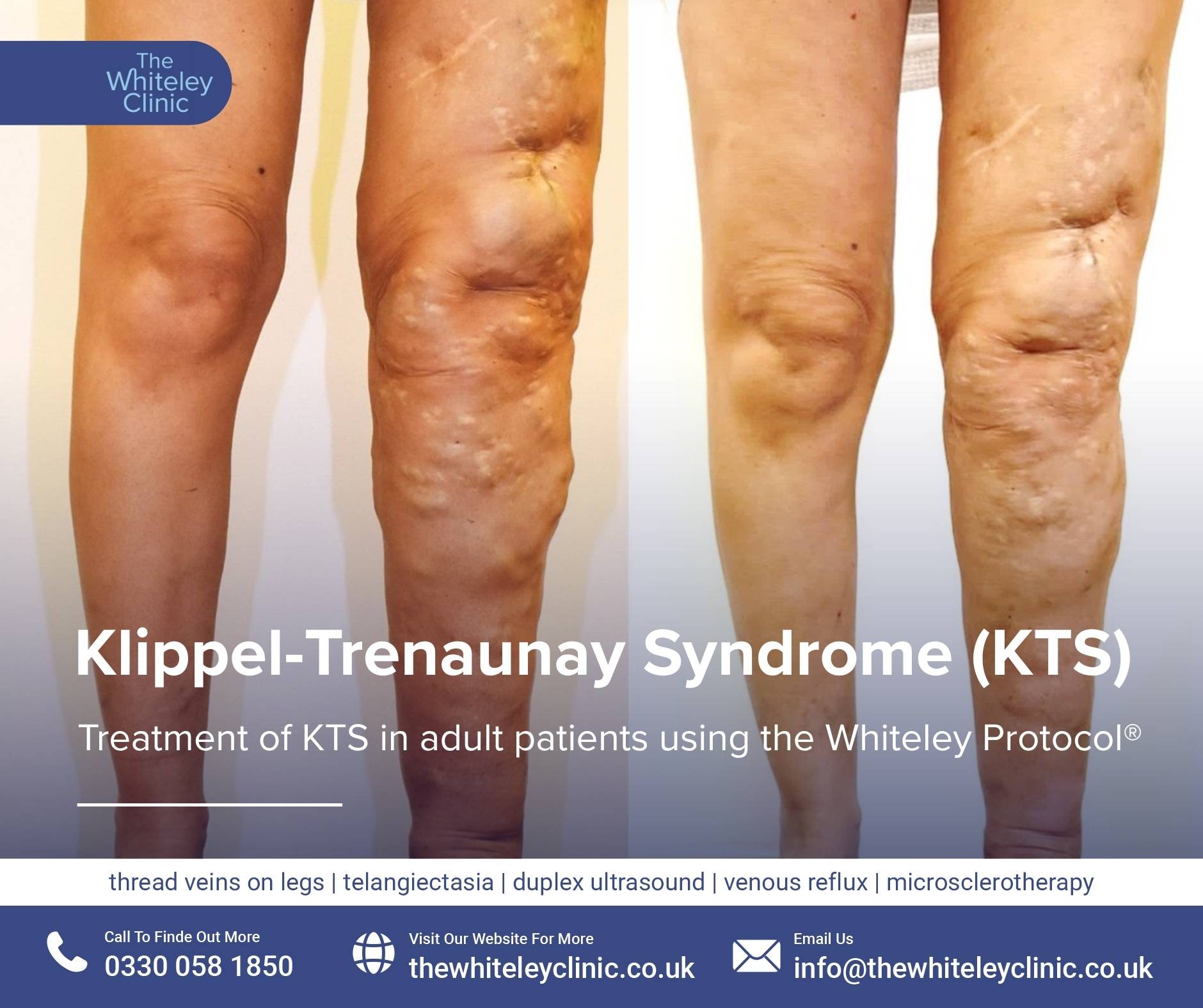
Klippel-Trenaunay Syndrome (KTS)
Treatment of KTS in adult patients using the Whiteley Protocol®
Klippel-Trenaunay Syndrome (KTS) is a genetic condition that is not inherited. It occurs as a mutation in individuals. Several genes can be involved, so there is considerable variation in how patients present.
KTS is typified by having two of the following three conditions, usually in one leg:
· severe varicose veins
· birthmark over the affected area
· increased size of affected limb
In addition, many doctors say that an embryological vein, called the “marginal vein,” is present.
However, at The Whiteley Clinic, we have been treating adults with KTS and getting good results in the majority of cases over 20 years.
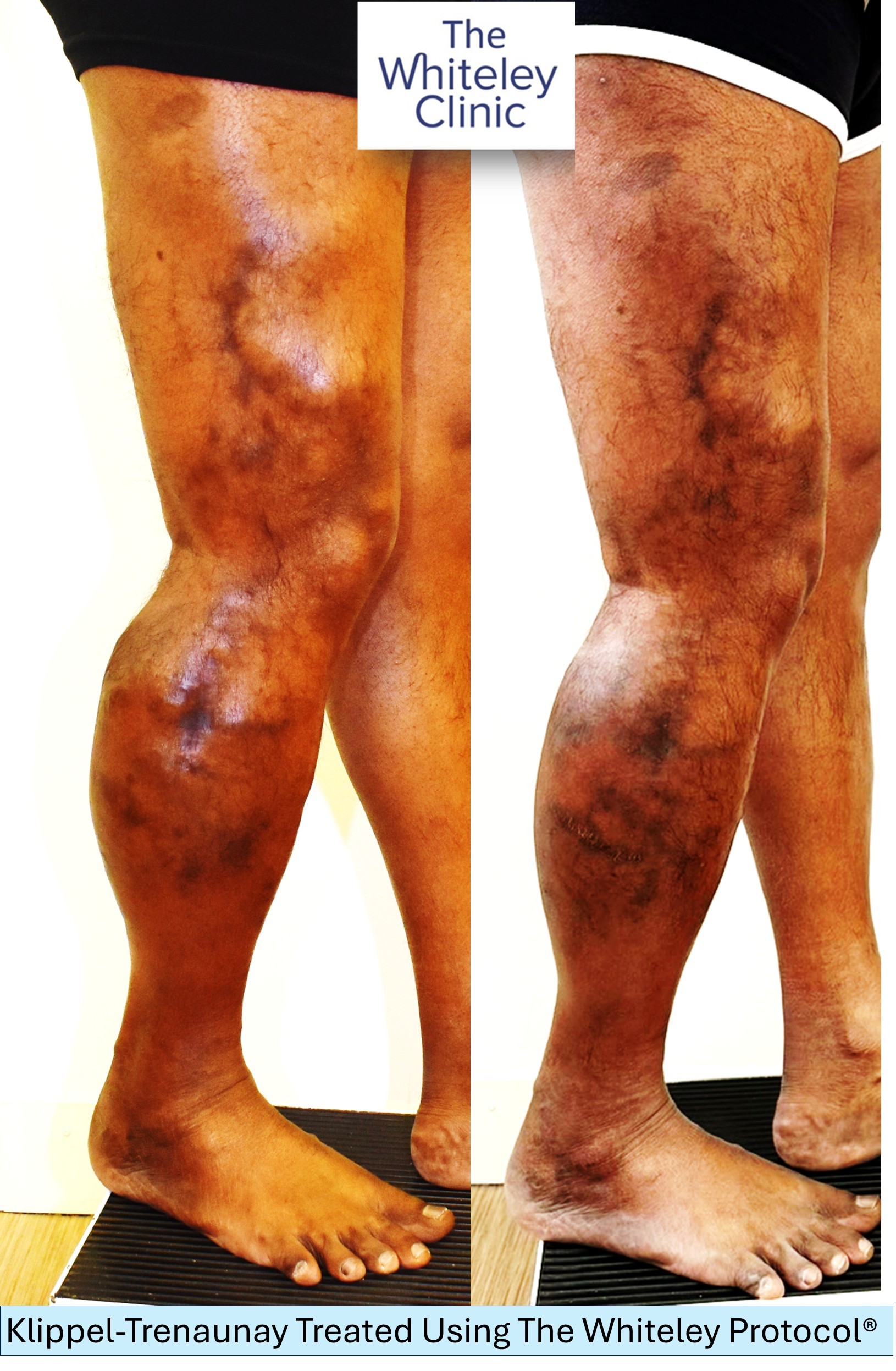
Investigating Klippel-Trenaunay Syndrome (KTS)
We have found that the criteria above are not sufficient, so we have developed a new classification based on findings from Duplex Ultrasound examinations. However, as with any varicose veins, such a scan must be performed by a trained vascular technologist and takes 20-30 minutes per leg.
The quick duplex ultrasound scans often performed in cheap commercial vein clinics by the doctors themselves are not accurate enough to find all of the underlying problems in complex conditions such as KTS (see: Why Varicose Veins Come Back – and How to Stop Them).
The major problems in KTS are a large number of incompetent preparator veins (IPVs). IPVs are often ignored by non-venous specialists search as vascular surgeons 9ie: arterial surgeons), general surgeons and radiologists. This is because they are perceived as hard to find and even harder to treat.
Fortunately, at the Whiteley Clinic, our specialist vascular technologists are trained to only scan veins and are therefore trained to look specifically for IPVs.
Treating Klippel-Trenaunay Syndrome (KTS)
In the past, many vascular surgeons would strip the veins out and tie off (“ligate”) any IPVs. However, we have found that this causes all of the veins to grow back again without any valves and now with scar tissue, within a few years.
More recently, some doctors have been trying to treat KTS by just injecting foam sclerotherapy into the veins. However, if the underlying venous reflux in the saphenous veins and IPVs is not treated first, foam sclerotherapy merely causes painful thrombophlebitis and the veins to all reopen again.
Treating Klippel-Trenaunay Syndrome (KTS) with The Whiteley Protocol®
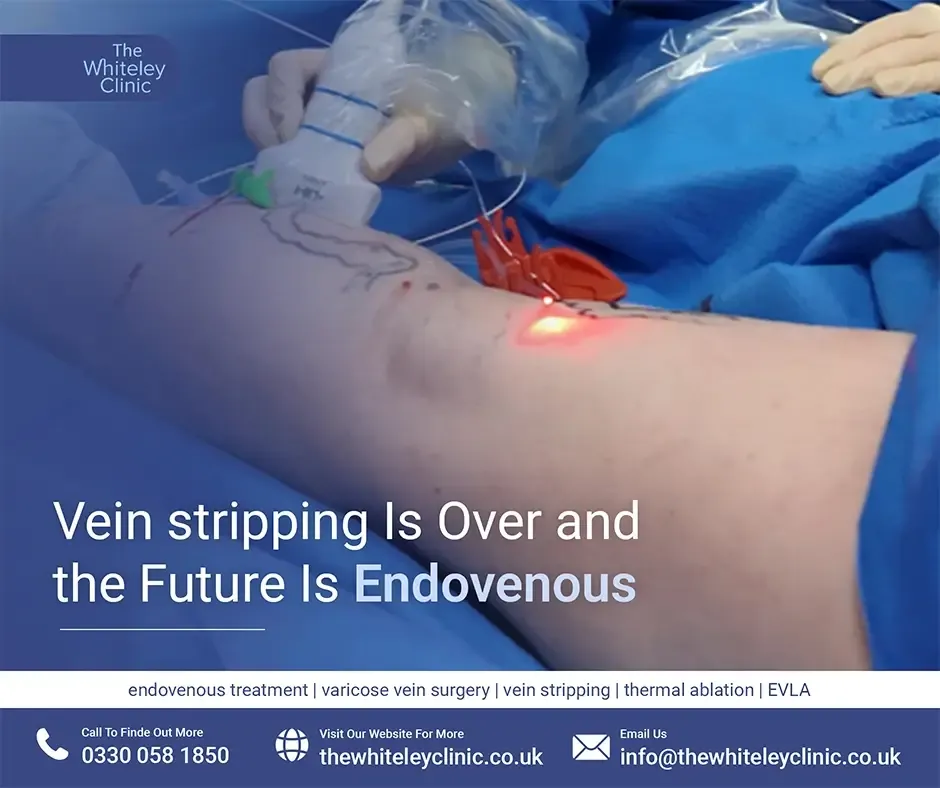
Prof Mark Whiteley introduced end of venous thermal ablation (EVTA) into the UK in 1999, and showed that it is possible to treat incompetent saphenous veins without them growing back again for reopening.
Furthermore, In the year 2000 Mark Whiteley and Judy Holdstock invented the TRansLuminal Occlusion of Perforator (TRLOP) technique to close IPVs with a single needle hole and under local anaesthetic.
By using a combination of these two methods, followed by ultrasound-guided foam sclerotherapy once the reflux had been treated, we have found our KTS patients to get very good results.
As it is such a complex condition, the protocol calls for several visits in the first couple of weeks to get a good diagnosis and initial treatment, and then once completed, we recommend a follow-up at six months and then annually to identify and treat any new KTS appearance.
Most of our patients find that the limb swelling reduces dramatically, and the feeling of heaviness and aching either improves significantly or even disappears. Most say it has completely changed their lives.
Who is suitable for Klippel-Trenaunay Syndrome (KTS) assessment and treatment
At The Whiteley Clinic, we currently only see adults (in the UK, this means 18 years old or more). We also only recommend treatment for patients who can walk and have veins that can only be treated successfully if the leg pump is working properly.
Klippel-Trenaunay Syndrome (KTS). The babies and infants are a much more severe problem and should be treated in specialist paediatric units.
Relevant publications and presentations:
Endovenous radiofrequency ablation and combined foam sclerotherapy treatment of multiple refluxing perforator veins in a Klippel-Trenaunay syndrome patient.
Harrison C, Holdstock J, Price B, Whiteley M.
Phlebology. 2014 Dec;29(10):698-700.
Australasian College of Phlebology 2025 – Gold Coast, Australia – May 2025
Treating Klippel-Trenaunay syndrome
Mark S Whiteley
Sri Lanka Society for Vascular Surgery (SLSVS 2025) – Sri Lanka – May 2025 (Online)
Klippel-Trenaunay Syndrome in adults: lesion learned and a new approach to diagnosis and treatment
Mark S Whiteley
iVLS 2025 – Lamezia, Italy – June 2025
New Approaches to the Diagnosis and Treatment of Klippel-Trenaunay Syndrome in adults.
Mark S Whiteley
European Venous Forum 2025, Krakow, Poland – June 2025
Klippel-Trenaunay Syndrome (KTS) in adults: A case series of a specific staged approach and examination of the role of incompetent perforating veins (IPVs)
Elinor K Hart, Mark S Whiteley
52nd Veith Symposium, New York – November 2025
Klippel-Trenaunay Syndrome (KTS) in adults: A staged approach.
Mark S Whiteley