
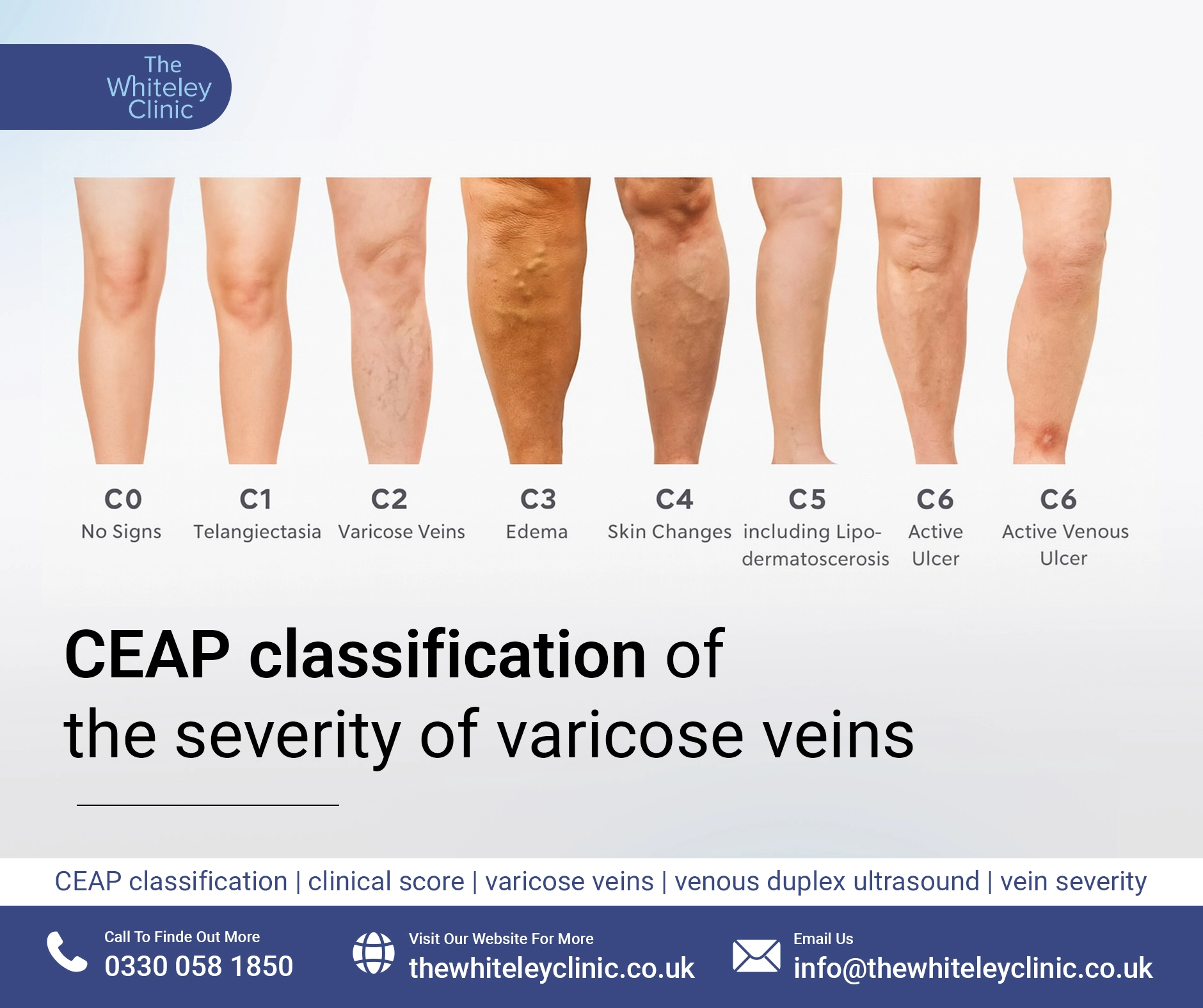
CEAP clinical score
February 19, 2026
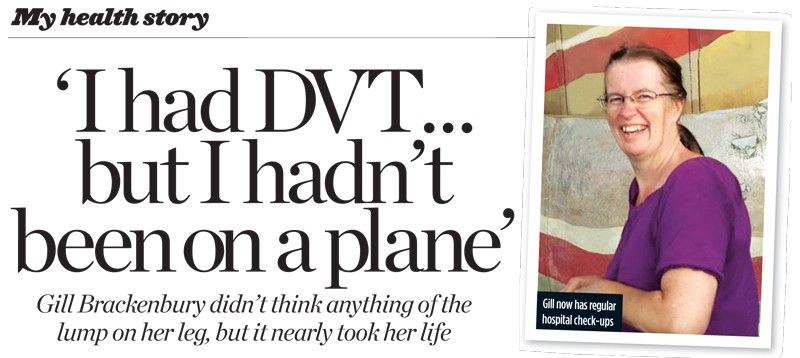
Life-saving deep vein thrombosis diagnosis saved the life of Gill Brackenbury. The story was recently featured in Woman Magazine and explains how a chance conversation with Professor Mark Whiteley led to a swift diagnosis of a potentially life threatening situation.
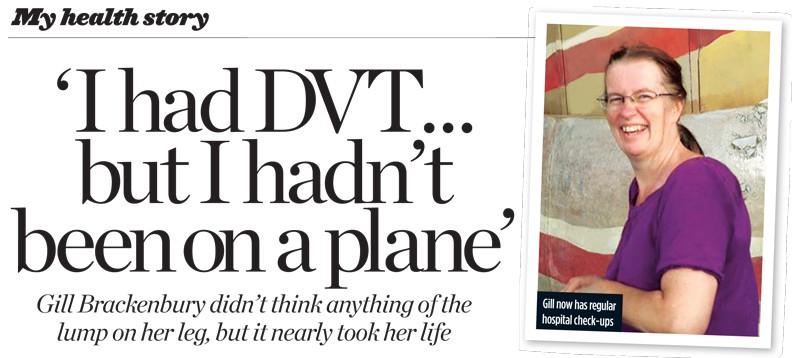
Life-saving deep vein thrombosis diagnosis for Gill Brackenbury by Professor Mark Whiteley
John Brackenbury had his varicose veins assessed at The Whiteley Clinic in September 2014. He mentioned that his wife had a lump on her left leg which had got harder and hotter and had started to throb. Concerned about the symptoms, Professor Whiteley asked more questions about her health. When he heard that Gill had also been complaining of chest pains, he advised that she immediately go to A&E. He was worried that she might have a deep vein thrombosis. Gill saw her General Practitioner who referred her to the hospital. After several tests, it was confirmed that Gill did have a DVT in her leg. She also had three blood clots in her lungs. Worryingly, the blood clots had caused a pulmonary embolism which meant that a piece of the clot had broken off into the bloodstream and was blocking one of the blood vessels in the lungs. If left untreated, the clot could have stopped blood flow to the heart – a fatal condition. Fortunately, Gill got to the hospital in time and received a swift diagnosis and treatment. She was given injections of Fragmin and Warfarin tablets to dissolve the clots. She remained in hospital for six days and it took a further two weeks to feel ‘normal’ again. Today, Gill is still on Warfarin which will keep her blood thin and she also wears compression hosiery each day. Professor Whiteley and the clinical team at The Whiteley Clinic recently had the opportunity to meet with Gill who was delighted to be able to pass on her thanks in person.
Aside from age, other factors that could cause DVT are :
_________________________________________________________________________________________________________ If you are concerned that you may have a DVT, you should contact your GP immediately