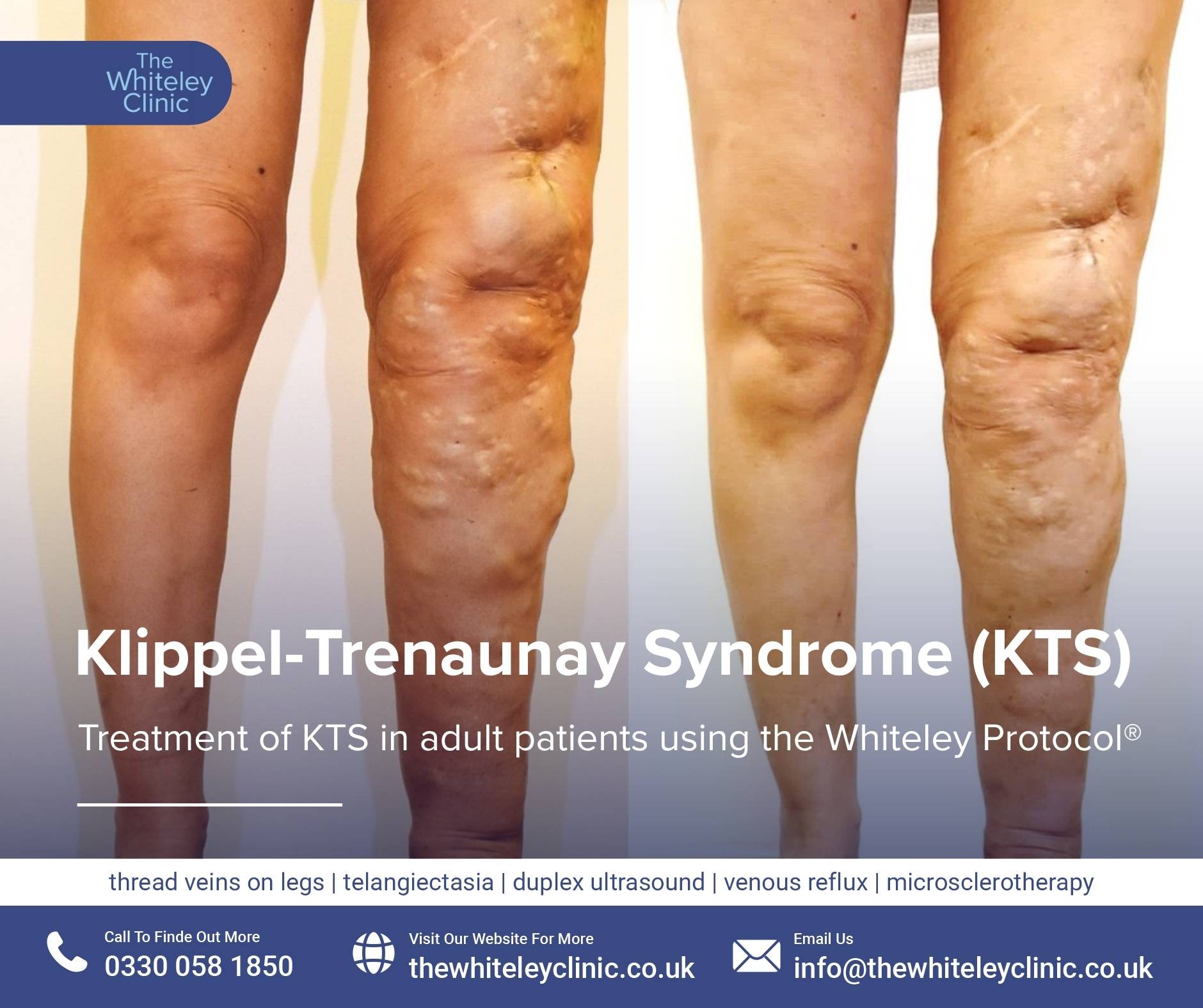
Klippel-Trenaunay Syndrome (KTS)
March 26, 2026
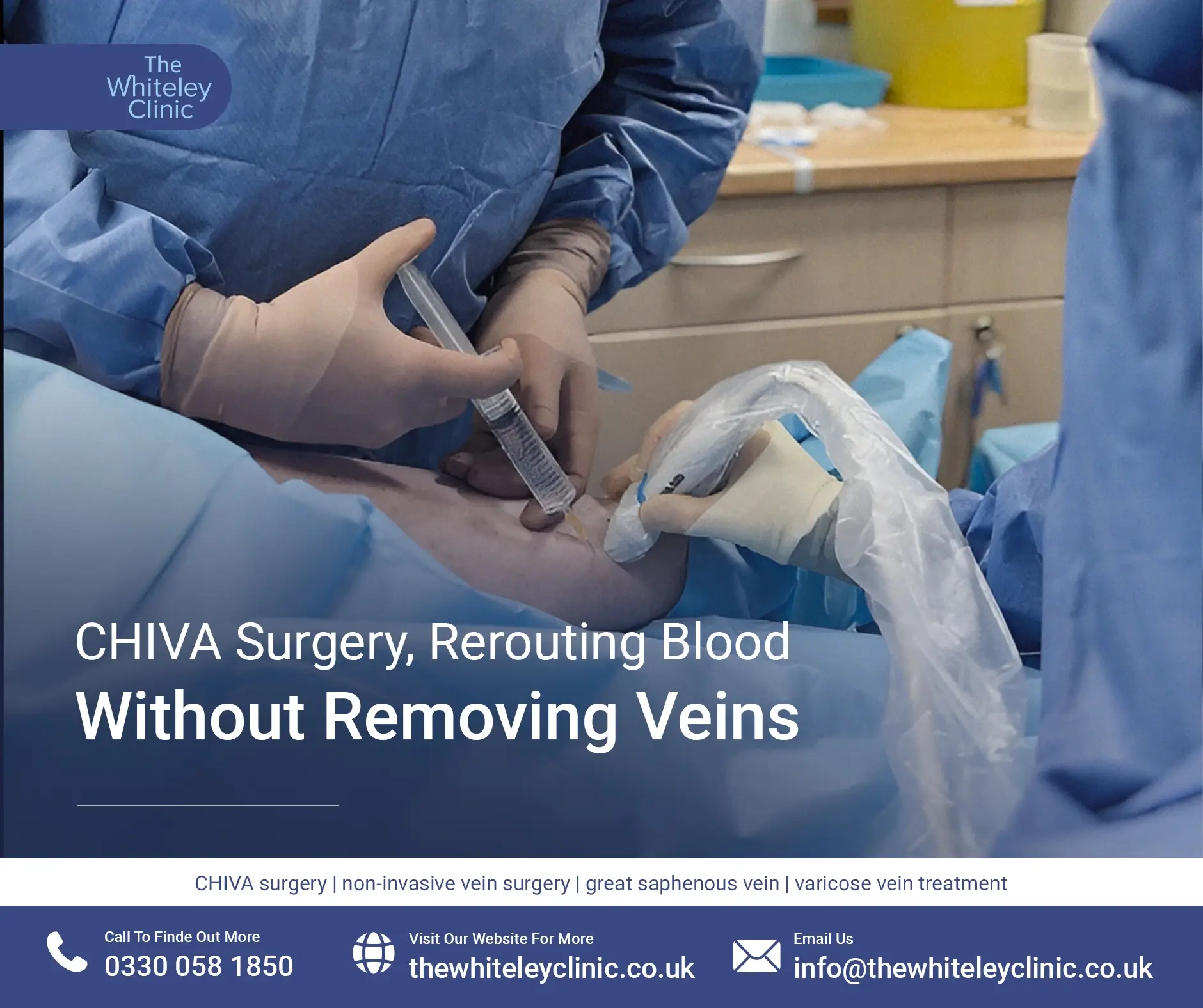
CHIVA surgery had been suggested to be an alternative for patients suffering from varicose veins. Unlike traditional treatments such as thermal ablation or vein stripping, CHIVA focuses on preserving the main vein - the Great Saphenous Vein. It aims to correct abnormal blood flow without destroying or removing the vein. This conservative approach is gaining attention among some venous specialists.
Although many specialists see it as both patient-friendly and effective in preserving long-term vascular health, the theory of how it works does not stand up to scrutiny, particularly in the way CHIVA considers blood flows through perforating veins in the legs.
Given the growing interest in CHIVA, it's important to highlight why The Whiteley Clinic has rejected the technique from The Whiteley protocol.
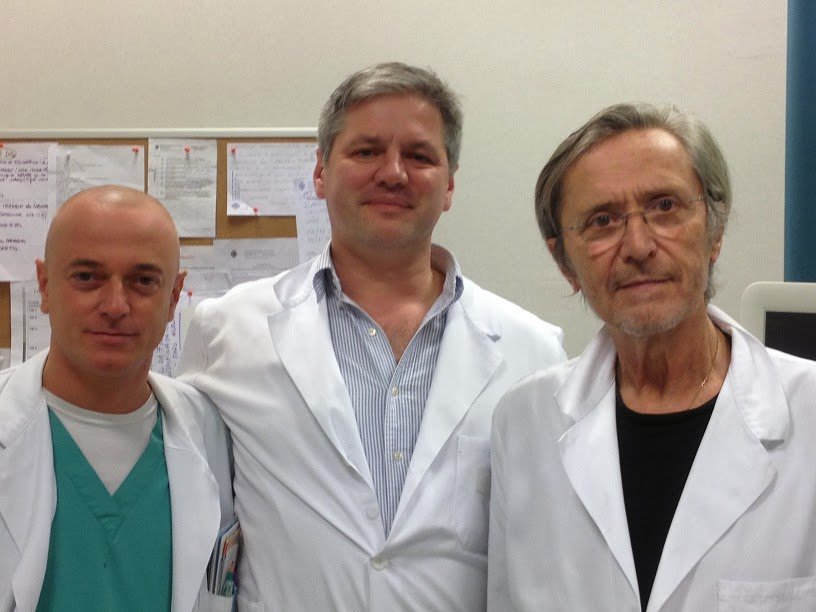
In 2013, Professor Mark Whiteley, founder of The Whiteley Clinic and a leading expert in venous disease, attended a four-day CHIVA surgery training course in Cremona, Italy. The course was led by Professor Claude Franceschi, the creator of the CHIVA technique.
He was joined by Dr Roberto Delfrate and Dr Massimo Bricchi. This high-level training allowed Mark to observe the technique and question the experts. Moreover, This training enabled the Mark to identify the drawbacks of CHIVA surgery for Whiteley Clinic patients.
The Whiteley Clinic continues to support education and research in minimally invasive venous procedures, and is always happy to explore potential new approaches to investigating and treating venous disease.
CHIVA stands for Conservative Haemodynamic Treatment of Venous Insufficiency in Ambulatory Care.
This technique treats venous reflux by rerouting blood through healthy veins.
Instead of removing the diseased vein, the CHIVA approach isolates faulty segments. Then it redirects the abnormal blood flow. This correction happens while keeping the main veins, including the great saphenous vein, intact.
Although this sounds advantageous, unfortunately there are 2 main problems with this approach. The first is that the surgery used to tie the veins at the required points, use old open surgery techniques. We know that these lead to re-growth of the veins (Neovascularisation) as well as bigger scars, slower healing and increased risk of infection.
The second is that CHIVA requires that all 150 perforating veins in the leg, only take blood inwards from veins under the skin, to the veins deep in the muscle, in order to be pumped back to the heart. Unfortunately, this is not the case. Increasing evidence from The Whiteley Clinic shows that significant perforators are incompetent - meaning blood is forced outwards through them when the muscle contracts. This means that the basic premise of CHIVA is wrong and so ultimately it will fail.
Although advocates point to the equivalence between CHIVA and the old stripping procedure, the new Whiteley Protocol approach has far lower recurrence rates than stirpping - and so will also out-perform CHIVA. As such we would not perform a treatment on our patients that we know would give poorer outcomes than we can achieve using our other techniques.
Read more: How Do Veins Work & What Do They Do
Enthusiasts claim:
However these are not bourne out by experience, and hence the rejection of CHIVA by The Whiteley Clinic.
We do not believe that CHIVA has a place in modern day venous practice and have never seen a patient where we believe that it is the optimal treatment.