





How Can You Effectively Treat Calluses and Corns on Feet?
August 15, 2026
Many women suffer from chronic pelvic or abdominal pain. Doctors often diagnose them with Irritable Bowel Syndrome (IBS) or Endometriosis. However, in some cases, the real cause is different. It comes from a vascular condition called Pelvic Congestion Syndrome (PCS).
Although PCS like symptoms can closely resemble those of IBS, the two conditions differ entirely in their origin and treatment. Understanding this difference is essential for accurate diagnosis and lasting relief.
Pelvic Congestion Syndrome (PCS) develops when varicose veins form inside the pelvis. These veins don’t let blood flow properly, so pressure builds up and causes venous congestion in the surrounding area.
Over time, the increased pressure can result in chronic pelvic pain, discomfort, and a range of PCS like symptoms that may easily be mistaken for other disorders.
The condition is more common in women who have had multiple pregnancies, as hormonal changes and increased pelvic blood flow can weaken the vein walls.
Nevertheless, women who have never experienced pregnancy can also develop PCS. Because PCS like symptoms are often vague and overlap with those of other conditions, Pelvic Congestion Syndrome can easily go unrecognised for years.
PCS like symptoms often mimic those of IBS or Endometriosis, making diagnosis challenging. These symptoms may include:
These signs closely resemble gastrointestinal or gynaecological problems, so doctors often assume the patient has IBS or Endometriosis. Both conditions are much better known than PCS. As a result, PCS remains underdiagnosed, even though it is a recognised cause of chronic pelvic pain in women.
Unfortunately, many women receive repeated treatment for IBS or Endometriosis without seeing significant improvement. This happens because doctors often do not address the underlying cause of their discomfort. Some gynaecologists or gastroenterologists may overlook PCS as a possible diagnosis, mainly because Pelvic Congestion Syndrome remains under-taught and rarely discussed in routine medical practice.
Without proper imaging of the pelvic veins, PCS can remain hidden. As a result, women continue to suffer from persistent pain, fatigue, and emotional distress. Living with undiagnosed PCS can also lead to secondary issues such as anxiety and depression, which further reduce quality of life.
At The Whiteley Clinic, clinicians use the TransVaginal Duplex Ultrasound (TVS) to diagnose Pelvic Congestion Syndrome accurately. This advanced scan serves as the gold standard for identifying the condition.
Unlike other scans that focus only on organs, this advanced ultrasound technique allows clinicians to visualise the pelvic veins in real-time, checking for reflux and venous congestion.
Highly skilled sonographers at The Whiteley Clinic pioneered this diagnostic method and specialise in venous imaging. Their expertise allows them to identify even subtle cases of PCS like symptoms accurately, preventing years of misdiagnosis and unnecessary treatments.
The procedure is completely non-invasive and gives clinicians detailed information about blood flow patterns in the pelvis. Once doctors confirm PCS, patients can follow a targeted treatment plan instead of receiving only general symptom management.
Dr David Beckett, an Interventional Radiologist at The Whiteley Clinic, appeared in The Express newspaper for his pioneering research and expertise in Pelvic Congestion Syndrome. His work continues to influence how clinicians recognise and treat PCS like symptoms today.
Through his research and clinical practice, Dr Beckett has shown how identifying these PCS like symptoms early can lead to accurate diagnosis and highly effective treatment.
The Whiteley Clinic has been at the forefront of research into pelvic vein reflux and Pelvic Congestion Syndrome for over 23 years. The team regularly publishes peer-reviewed studies and presents new findings at international medical conferences, helping healthcare professionals better recognise and manage this often-overlooked cause of chronic pelvic pain.
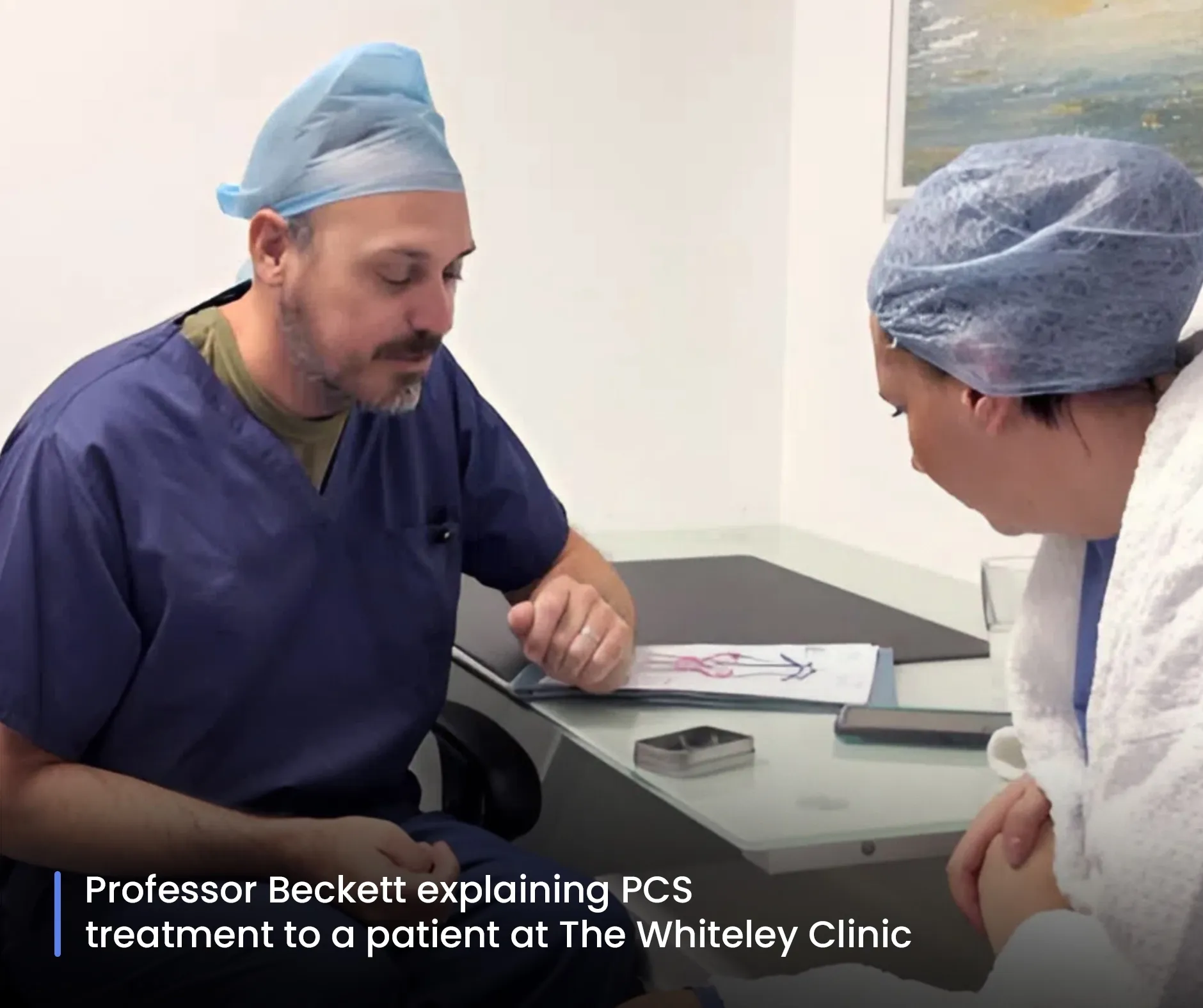
Raising awareness about PCS like symptoms is crucial, especially since many women still live with unexplained pelvic pain without knowing that treatment exists. Unlike IBS, which currently has no definitive cure or diagnostic test, PCS can be both diagnosed and effectively treated.
At The Whiteley Clinic, doctors perform Pelvic Vein Embolisation, a minimally invasive procedure that closes problematic veins and restores healthy blood flow. Once the venous congestion is treated, symptoms usually improve, and many women regain their normal quality of life.
If you or someone you know has been struggling with ongoing pelvic or abdominal pain that has not improved despite treatment for IBS or Endometriosis, it may be time to consider another possibility Pelvic Congestion Syndrome.
For more information or to book a consultation, contact The Whiteley Clinic via [email protected] or call 01483 477180. Early diagnosis can make all the difference.