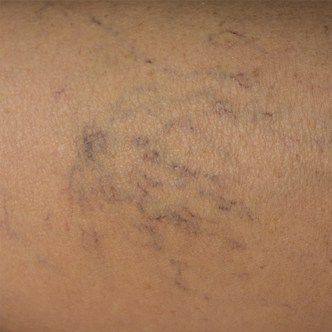
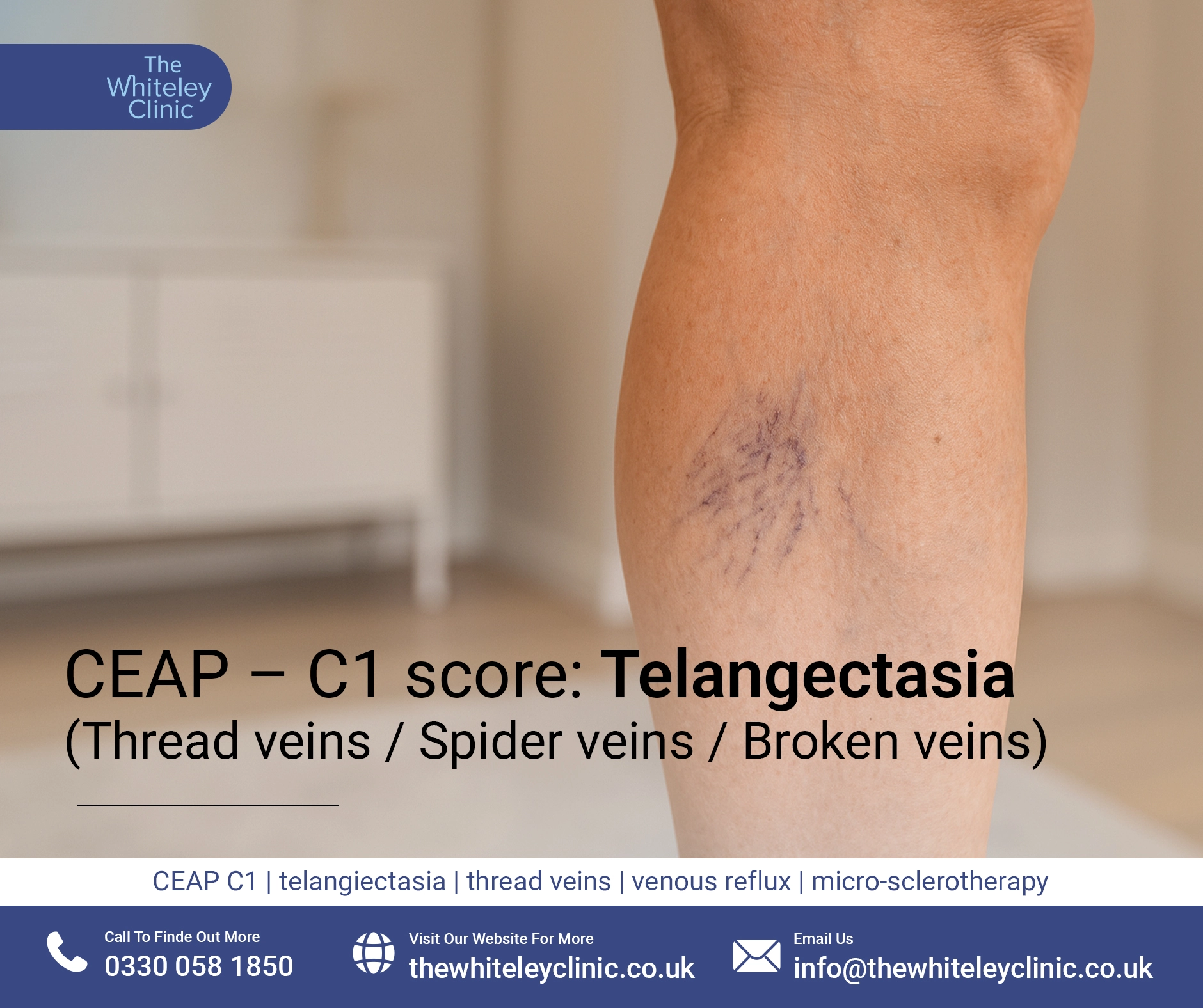
Thread veins are the very fine, red veins that can occur on the surface of the lower or upper leg. They are also referred to as broken veins or spider veins. Thread veins are very common, affecting
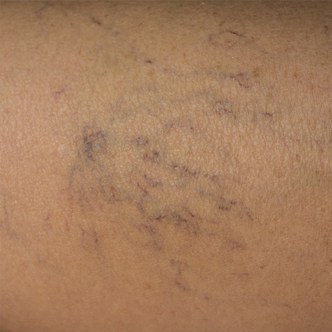
around 80% of both men and women at some point in life and they are usually associated with underlying vein problems.
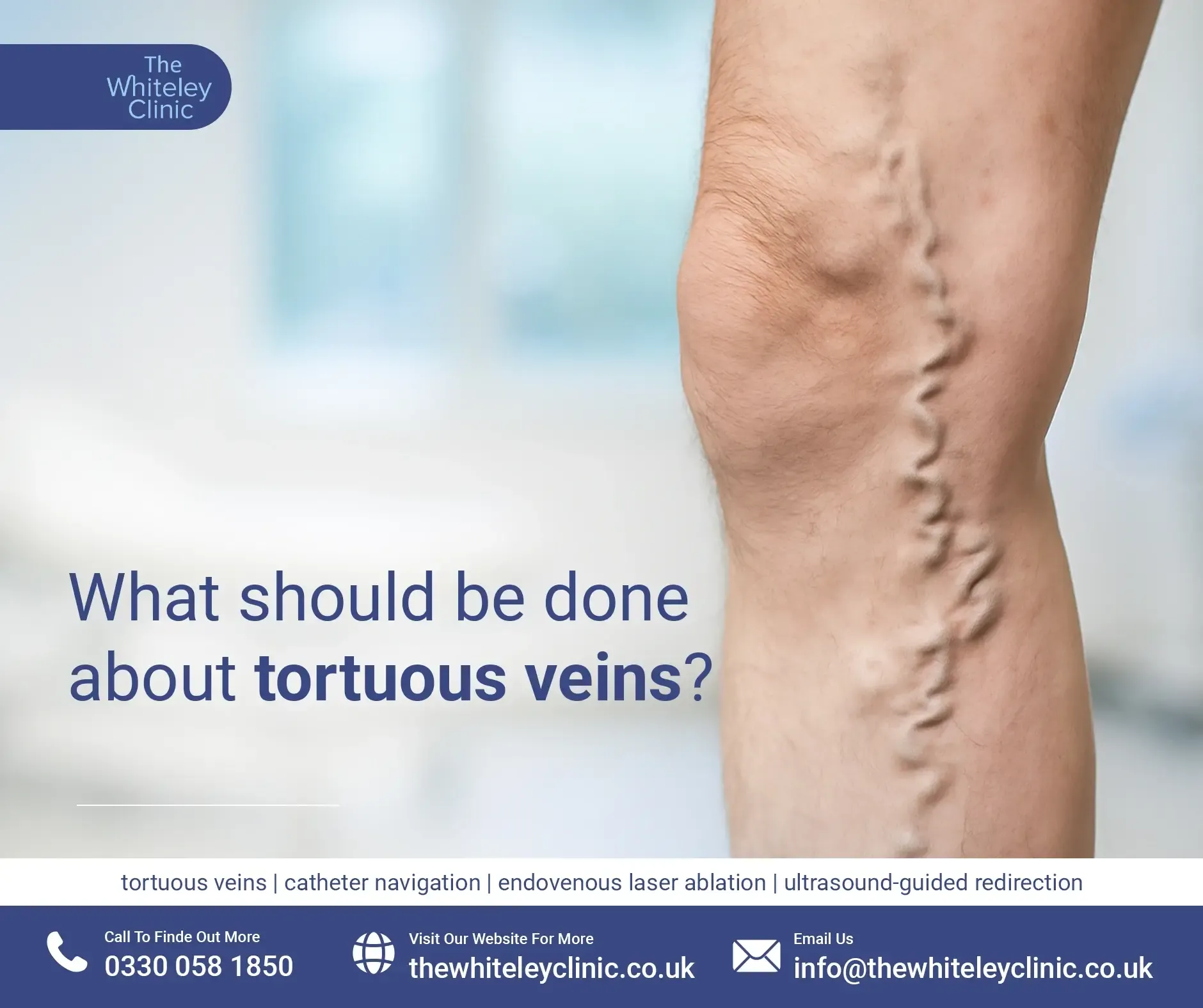
Wrongly considered a cosmetic issue, they are very often an indicator of a hidden varicose vein loitering underneath and, if left untreated, the thread veins will remain and may even continue to increase in number and size.
There are many techniques used to treat Thread Veins however at The Whiteley Clinic we have discovered that other treatments do not deliver the same results that we produce at The Whiteley Clinic under The Whiteley Protocol. Some other treatments that are on the market include:
CreamsThere is no good evidence at all that any cream will have any lasting effect at all on thread veins on the leg. It is possible to make thread veins look better temporarily either with a formulation of cream that causes contraction of the veins, or acts as ‘cover-up’ on the skin above the veins, making them more difficult to see. But that’s not a long-term solution to getting rid of the thread veins.
Tablets or dietary supplementsMany tablets or dietary supplements boast about containing vitamin K, claiming that this ‘promotes blood clotting to help broken veins’. However, thread veins are not ‘broken’; they are merely normal veins which have become dilated, and extra Vitamin K has no measurable effect on them whatsoever.
Electrolysis or radiofrequency treatmentsMany operators use devices that heat the vein by passing an electric current through a needle and, via the dermis, directly into the thread vein. This heating can indeed destroy a small section of the thread vein with each pinprick, and the immediate effect is often dramatically impressive. However these methods fail to treat the underlying ‘feeding veins’ or hidden varicose veins. Electrolysis or radiofrequency treatment is targeted solely at the visible branches of a cluster of thread veins will still miss any of the branches lying deeper under the skin, significantly increasing the likelihood of recurrence in the future.
Laser or pulsed lightMany clinics use laser or pulsed light devices to treat thread veins on the legs across the skin. However just like Electrolysis or radiofrequency treatments it fundamentally misses the vital step of treating ‘feeding’ veins or hidden varicose veins. Additionally, with virtually every laser or pulsed light system, getting enough power into any thread vein to actually destroy it effectively seriously increases the risk of skin burns.
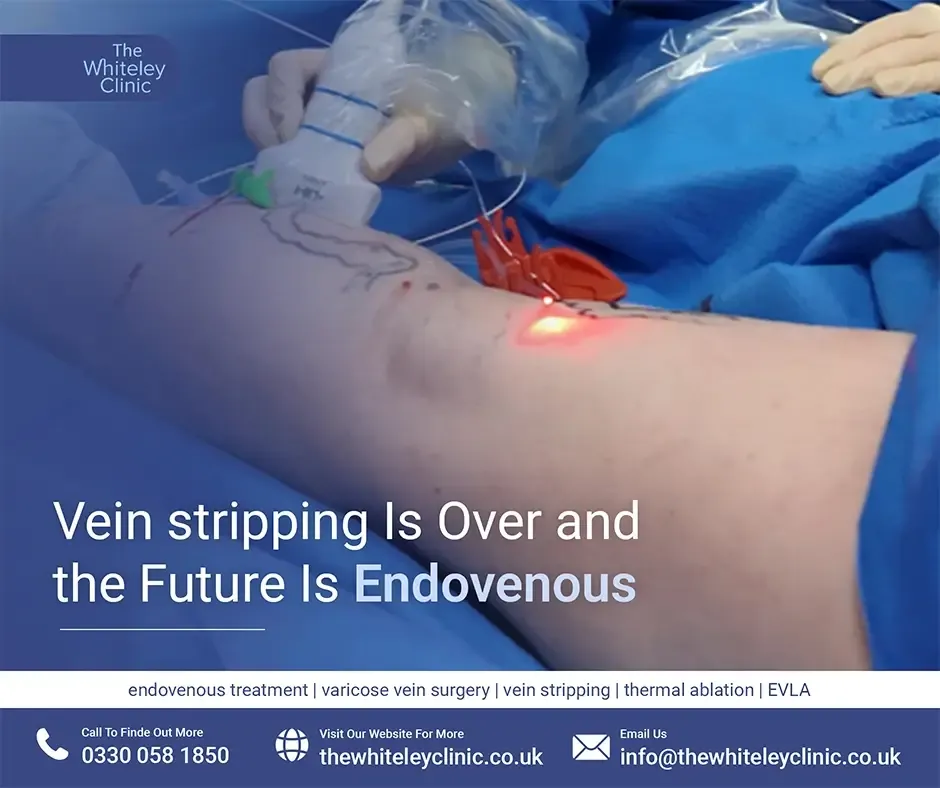
The most effective treatment is MicrosclerotherapyFollowing The Whiteley Protocol®, treatment of the thread vein clusters by microsclerotherapy overcomes all the problems noted above, enabling whole clusters of thread veins on the legs to be treated with a single injection, effectively treating both the visible and invisible parts of the thread vein cluster and delivering a far more complete treatment.
Using The Whiteley Clinic
microsclerotherapy technique, around 80% of patients report an ‘excellent result’ when the treatment has been completed, with a further 15% of patients reporting ‘good improvement’ in the visible signs.
To book a consultation and to find out more about The Whiteley Protocol® please call 0843 902 2007 or email
[email protected]