
How Can You Effectively Treat Calluses and Corns on Feet?
August 15, 2026
Spider thread veins are a common vascular concern that affects a large proportion of adults and often leads to cosmetic dissatisfaction and reduced self-confidence. These fine, visible veins usually appear on the legs or face and may worsen over time if left unaddressed. This article provides a comprehensive overview of the condition, including its medical background, underlying causes, diagnostic approach, and the most effective treatment options available today, with a clear focus on evidence-based care and long-term outcomes.
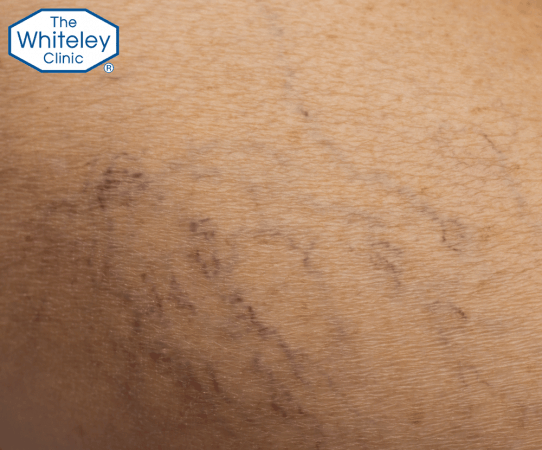
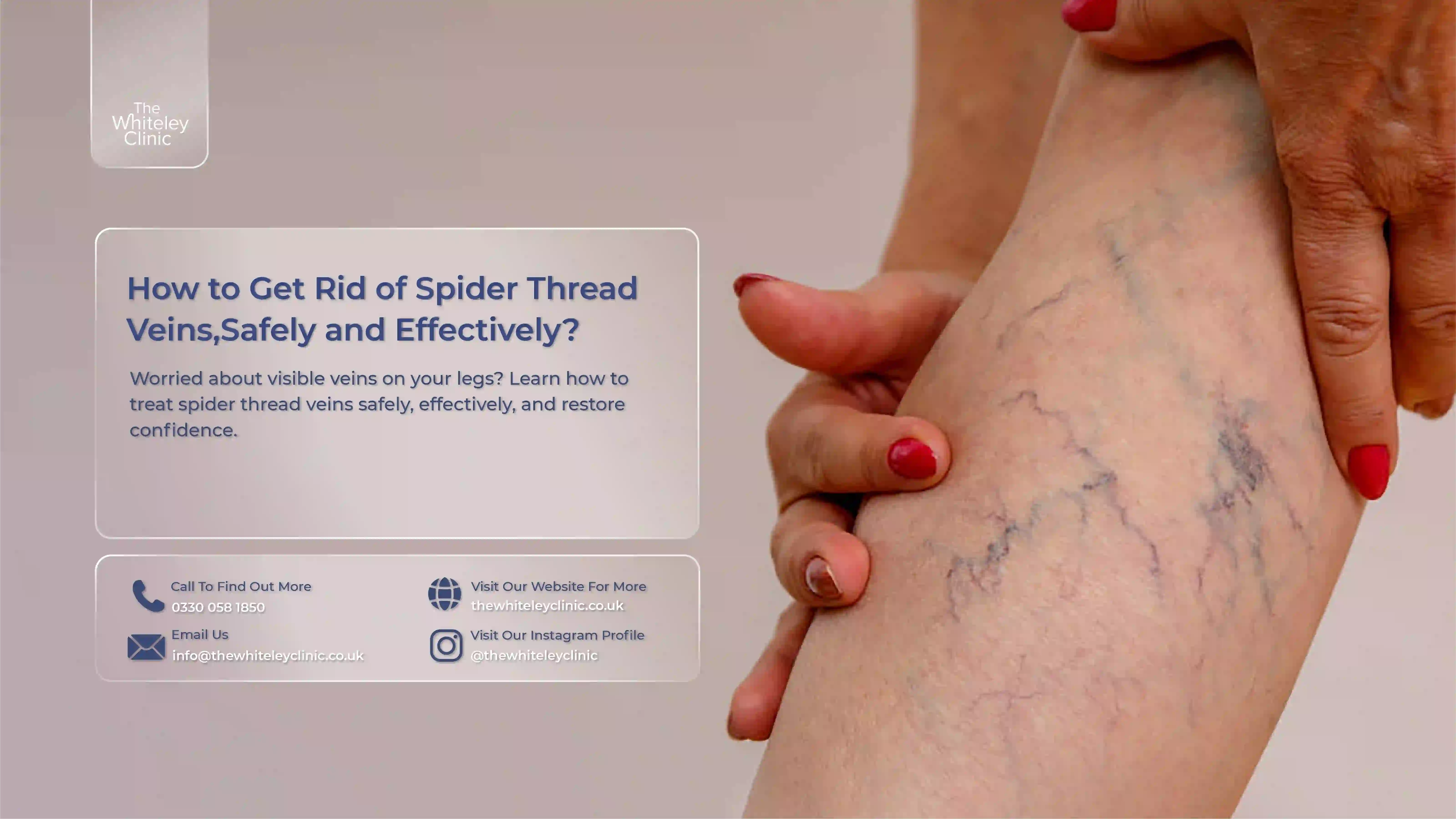
Spider thread veins, medically referred to as telangiectasia, are dilated superficial blood vessels located within the dermis, the outer layer of the skin. They typically appear as red, blue, or purple lines and may resemble a web or fine branches under the skin surface. These veins differ from varicose veins in both size and depth. Specifically, while varicose veins are larger and often raised, these are flat and much smaller. However, despite their size, they can nevertheless signal a more complex venous issue beneath the surface.
Spider veins are exceptionally prevalent. Indeed, epidemiological data suggests that up to 80% of adults may develop them at some stage in life. Both men and women are affected; however, women may report symptoms more frequently due to hormonal influences and pregnancy.
Importantly, their presence does not always indicate a purely cosmetic issue. In many cases, these veins coexist with underlying venous disease that requires clinical attention.
Several contributing factors influence the development of spider thread veins. Most cases result from a combination of genetic predisposition and circulatory stress.
Key causes include:
In addition, it is important to note that up to 90% of spider thread veins on the legs are associated with hidden varicose veins, clinically known as Superficial Venous Reflux (SVR) or Chronic Venous Insufficiency (CVI). Moreover, these deeper abnormalities often remain invisible without specialised imaging techniques.
Accurate diagnosis plays a critical role in successful treatment. Treating visible spider thread veins without addressing underlying venous reflux often leads to poor or short-lived results.
A Duplex Ultrasound Scan remains the gold standard for assessing venous blood flow. Specifically, this non-invasive test identifies faulty valves, reversed blood flow, and deeper vein involvement. Consequently, clinicians can design a targeted treatment plan that addresses both surface veins and root causes.
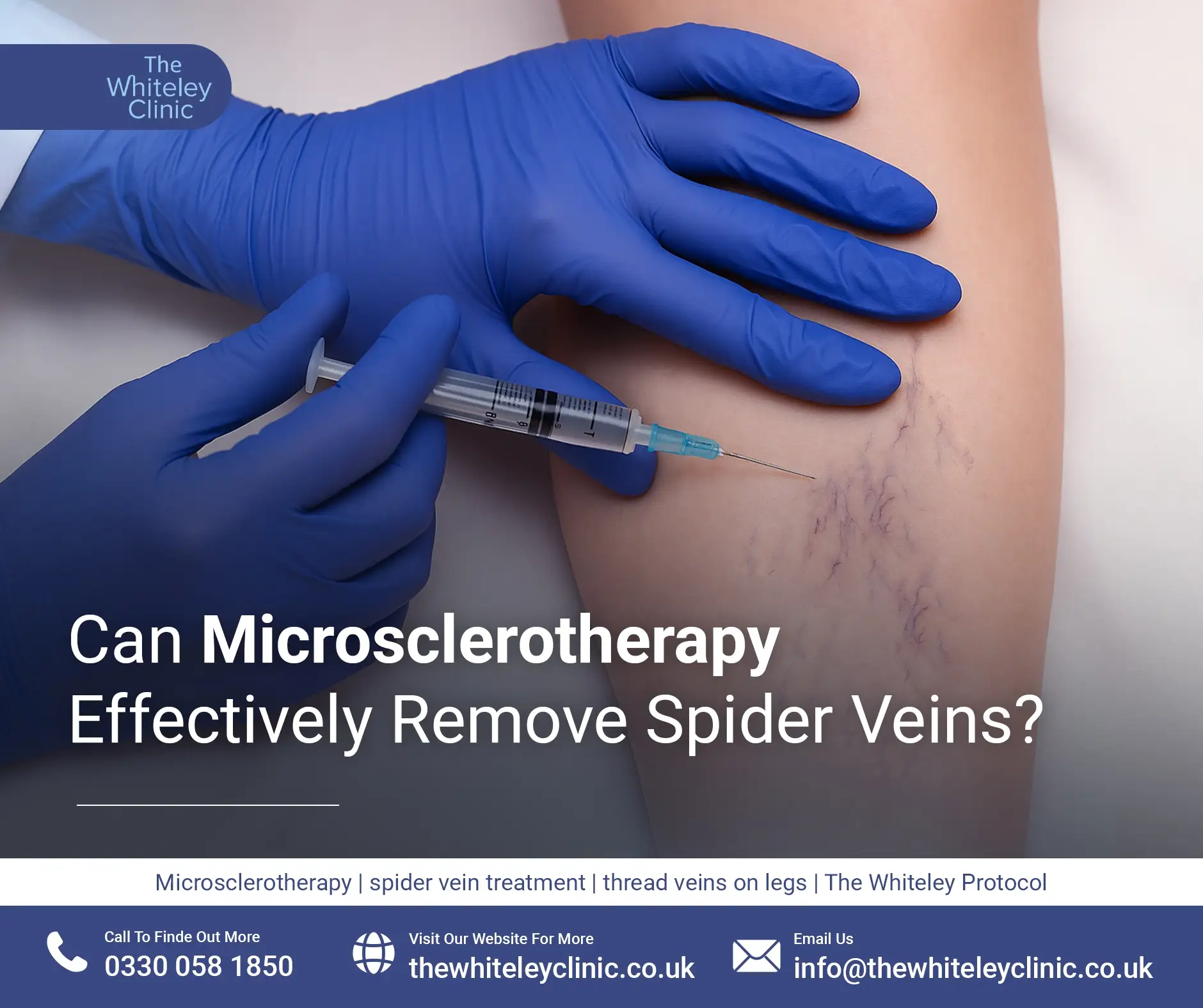
Microsclerotherapy stands as the most effective and widely accepted treatment for spider thread veins on the legs. This minimally invasive procedure targets abnormal veins directly and promotes their natural disappearance over time.
During treatment, a clinician injects a sclerosant solution into the affected veins using an ultra-fine needle. Specifically, the solution irritates the inner vein lining, causing controlled inflammation. As a result, the vein walls collapse and seal shut. Consequently, blood reroutes through healthier veins, and the treated vessels gradually reabsorb into the body.
This technique delivers high success rates, especially when clinicians first correct any underlying venous reflux. By addressing root causes initially, the effectiveness of the subsequent treatment is significantly enhanced.
After microsclerotherapy, patients must follow a structured aftercare plan to optimise results. Compression therapy plays a central role in recovery.
Medical-grade compression stockings should be worn continuously for up to two weeks. These garments support vein closure, reduce inflammation, and improve circulation. Moreover, light walking encourages healthy blood flow and speeds up the healing process.
Mild bruising, redness, or tenderness may occur temporarily after the procedure. These effects usually resolve within weeks. Most individuals resume daily activities immediately, making microsclerotherapy a practical option for busy lifestyles.
Thread veins on the face differ significantly from those on the legs. Notably, they do not associate with venous reflux or varicose disease. Instead, environmental and lifestyle factors typically drive their development.
Effective causes include:
Electrosurgery and laser therapy offer effective treatment solutions for facial spider thread veins. These methods target vessels with precision and deliver excellent cosmetic outcomes with minimal downtime.
While prevention cannot guarantee complete avoidance, certain strategies can significantly reduce risk and progression. For instance, maintaining a healthy weight supports venous function. In addition, regular physical activity improves circulation. Furthermore, avoiding prolonged immobility also helps reduce venous pressure.
Additionally, wearing compression hosiery during long periods of standing or travel offers protective benefits. For facial veins, sun protection remains essential.
Spider thread veins should not be dismissed as a purely cosmetic issue. Persistent or worsening symptoms, such as aching, heaviness, or swelling, warrant professional assessment. Early intervention improves outcomes and prevents progression to more advanced venous disease.
A specialist vascular consultation ensures accurate diagnosis, appropriate treatment sequencing, and long-term management.
Spider thread veins are common, visible, and often misunderstood. Although they may seem superficial, they often point to deeper circulation issues that need careful assessment. By accessing advanced diagnostic services and modern, minimally invasive treatments at The Whiteley Clinics, both visible veins and underlying venous reflux can be treated properly. This structured approach helps achieve effective, long-lasting results while significantly reducing the risk of recurrence. With accurate diagnosis and evidence-based care delivered by specialist clinics, spider thread veins can be managed successfully, improving both comfort and confidence.