

Unveil the Hidden Causes of Varicose Veins for Permanent Treatment Results
February 19, 2026
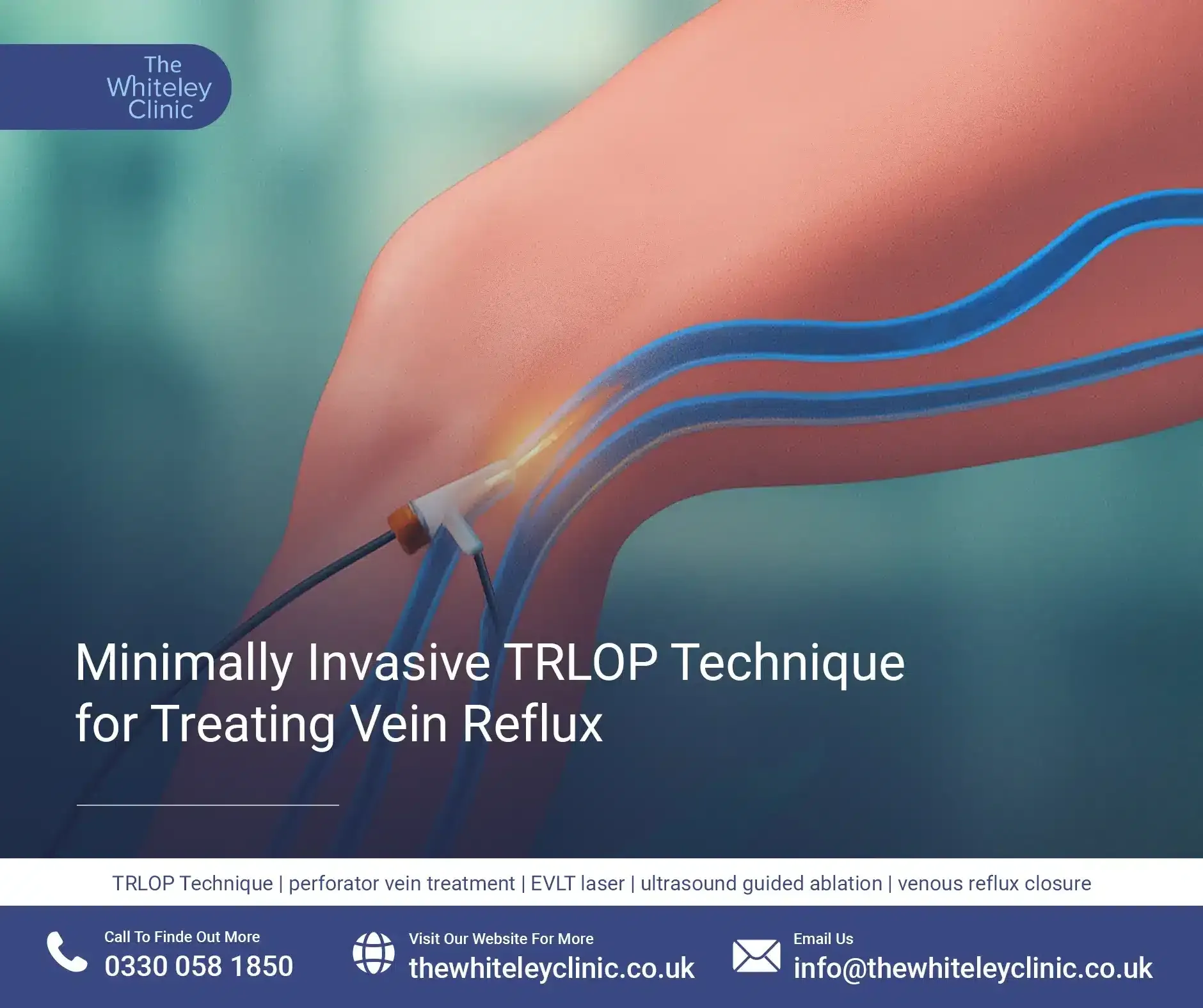
Professor Mark Whiteley demonstrates the TRLOP Technique using the Angiodynamics NeverTouch Direct (NTD Venacure EVLT) laser. This educational video, produced by the College of Phlebology, shows each step of the procedure under ultrasound guidance. TRLOP means Transluminal Occlusion of Perforators. The TRLOP Technique targets incompetent perforator veins using a minimally invasive laser treatment. Notably, Professor Whiteley and Judy Holdstock developed this method in 2002. In this newly released training video, Professor Whiteley shows how to close a faulty perforator vein using the NTD laser. The video clearly demonstrates the technique’s accuracy, safety, and success when performed correctly.
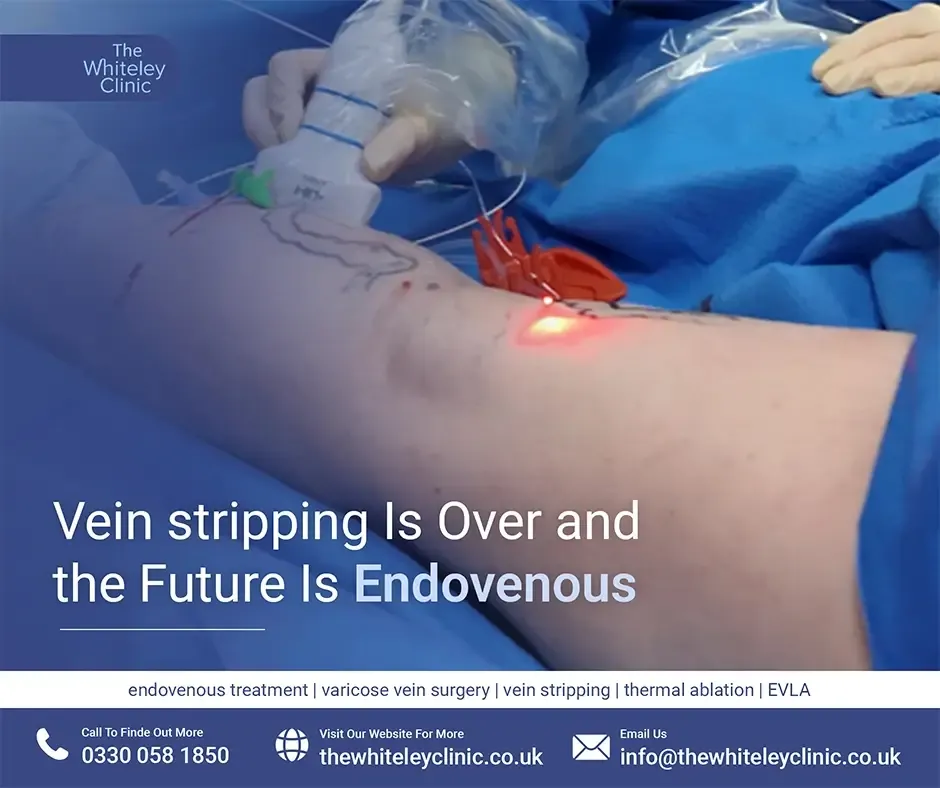
The TRLOP Technique targets refluxing incompetent perforator veins with precise laser energy. These small veins connect the deep and superficial veins in the leg. Normally, they allow blood to flow one way from superficial to deep veins. However, when these veins fail, blood flows backwards. Consequently, patients may develop varicose veins, leg swelling, skin discolouration, venous eczema, or even ulcers. Using ultrasound guidance, a fine laser fibre is inserted directly into the perforator vein. Then, energy is applied via the Venacure EVLT system, sealing the vein from within. This technique uses local anaesthetic and requires only one needle entry point. Therefore, patients benefit from minimal pain, quick recovery, and no surgical incisions.
The Angiodynamics NeverTouch Direct laser offers key advantages during TRLOP procedures:
Thanks to these benefits, the TRLOP Technique suits challenging areas such as the popliteal fossa. This results in precise treatment and excellent outcomes.
At The Whiteley Clinic, the TRLOP Technique forms a routine part of the comprehensive vein treatment protocol. Every patient undergoes a detailed duplex ultrasound scan to detect underlying causes of venous disease, including incompetent perforator veins. If refluxing perforators are detected, we offer TRLOP as part of a personalised treatment plan. Moreover, the clinic was the first in the UK to introduce this method and continues to lead worldwide in its development and training. 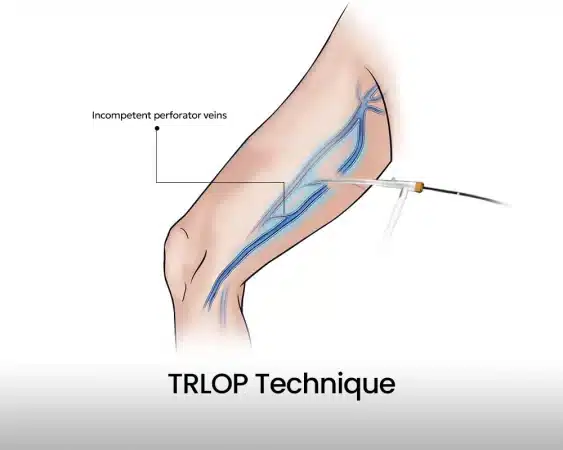
This technique is recommended for:
It is important to remember that perforator veins are a normal part of leg anatomy. Therefore, we only treat them when they are incompetent and cause venous reflux.
The College of Phlebology training video features a real-life demonstration of the TRLOP Technique. Professor Whiteley:
This procedure causes minimal trauma and leaves only a small puncture mark on the skin. In contrast, traditional surgery requires larger incisions.
This TRLOP training video serves as an invaluable resource for vascular surgeons, phlebologists, and medical professionals. It guides them to master the latest vein care techniques effectively. The step-by-step demonstration reflects the years of experience and innovation led by Professor Whiteley and his team. Watch the full procedure in the video above. For more training and resources, visit:www.collegeofphlebology.com