



How Can You Effectively Treat Calluses and Corns on Feet?
August 15, 2026
Vaginal varicose veins affect many women, particularly after pregnancy. Although this condition can seriously impact health, comfort, and quality of life, it is often misunderstood or overlooked. As a result, many women suffer in silence, unaware that effective treatment is available.
At The Whiteley Clinic, Professor Mark Whiteley and his team have pioneered advanced techniques to diagnose and treat these hidden pelvic vein problems. Their work has helped many women regain comfort, confidence, and control over their bodies.
In 2014, the Daily Mail published a compelling feature telling the story of a woman who endured vaginal varicose veins for years, until she finally found effective treatment at The Whiteley Clinic.
Her story shows that no one should have to live with pain or embarrassment.
To read a patient’s powerful story featured in the Daily Mail, visit:
👉 The agonising – and very embarrassing – varicose veins that ruin your sex life

These are swollen, twisted veins that form around the vaginal or vulval area. These veins commonly appear during or following pregnancy, primarily because of the increased pressure exerted on the pelvic veins. Hormonal fluctuations during this time also contribute to their development.
While many women believe this discomfort is normal or untreatable, that is no longer the case.

Women with vaginal varicose veins may experience:
These symptoms often link to an underlying condition called pelvic congestion syndrome.
Pelvic congestion syndrome arises when the veins in the pelvis fail to drain blood efficiently.
This poor circulation increases pressure in the area, which often results in the formation of varicose veins.
Moreover, PCS often causes vaginal or vulval varicose veins. This is especially true in women who have had children.
Standard scans like MRI or CT may miss these faulty veins. That’s why The Whiteley Clinic uses a more accurate diagnostic method.
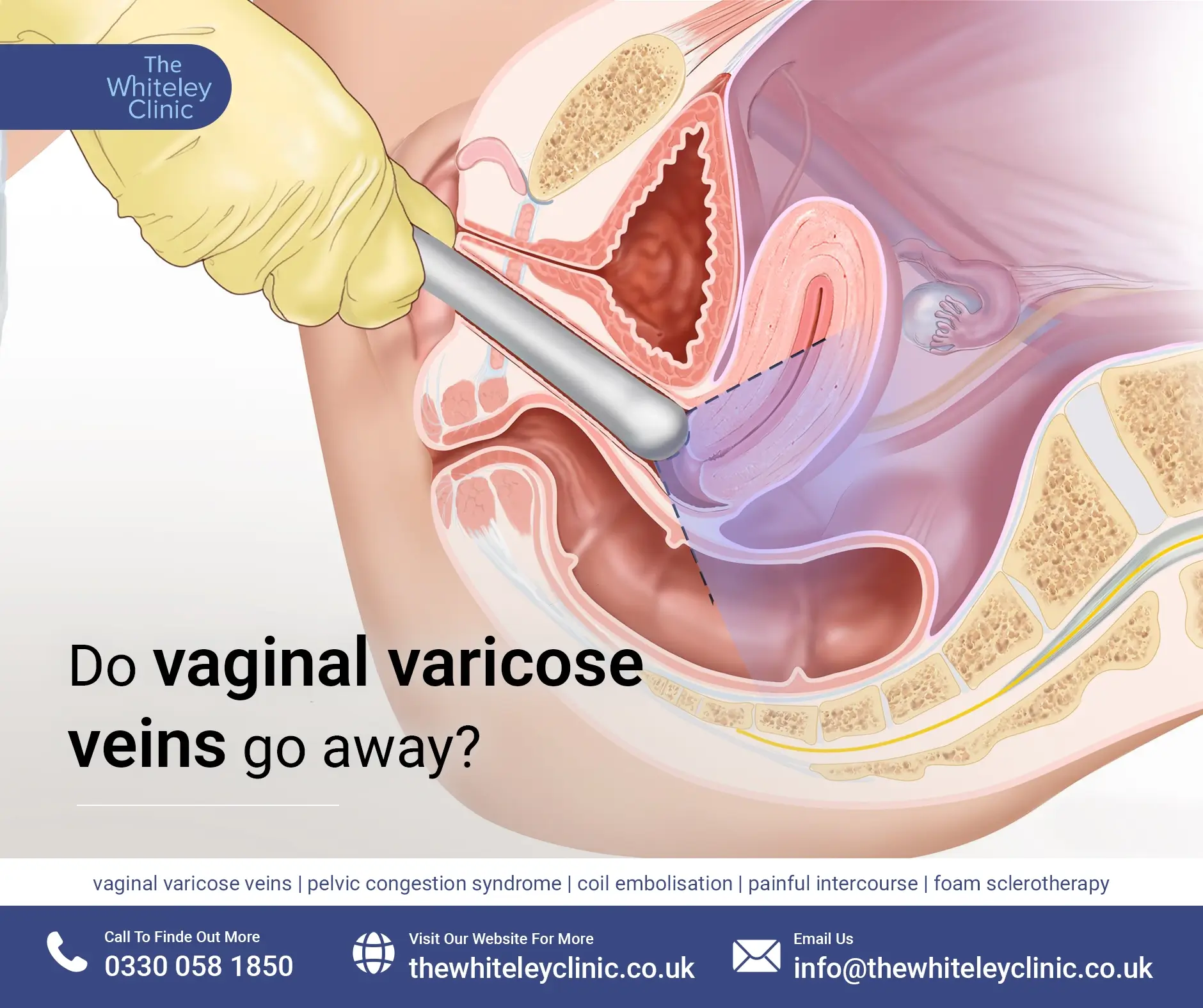
At The Whiteley Clinic, diagnosis is performed with exceptional accuracy by following the Whiteley Protocol, which includes the use of Transvaginal Duplex Ultrasound to detect pelvic varicose veins. This advanced scan visualises blood flow in real time, helping to pinpoint the exact source of the problem.
Unlike older methods such as venograms, CT, or MRI, it identifies the underlying cause with far greater precision. As a result, patients benefit from highly targeted and effective treatment.
Once diagnosed, patients can undergo minimally invasive treatment at The Whiteley Clinic. In fact, the most common approach is coil embolisation.
This procedure takes place under X-ray guidance and usually does not require general anaesthetic. Most patients return home the same day.
Read more: Pelvic Vein Embolisation Procedures & Treatment
Six weeks after coil embolisation, many women report a dramatic reduction in symptoms. However, in some cases, a few varicose veins may remain.To treat this, The Whiteley Clinic uses foam sclerotherapy prepared with a carbon dioxide and oxygen blend, a technique considered safer than conventional foams made with air.
Furthermore, this extra step helps to eliminate any remaining visible veins. As a result, it improves both comfort and appearance.
Sadly, many gynaecologists and midwives are not aware that vaginal varicose veins can be treated. Consequently, women are often told their symptoms are “normal after childbirth” and must be endured. This lack of awareness therefore delays diagnosis. As a result, it increases long-term suffering.
For more than 20 years, Professor Mark Whiteley has dedicated his career to the study and treatment of pelvic vein disorders. His efforts have led to greater awareness and better care for many women. By combining research, education, and community engagement, The Whiteley Clinic continues to make a lasting difference in patients’ lives.
Vaginal varicose veins are far more common than most people realise.
These veins can significantly impact physical comfort, emotional well-being, and intimate relationships. Fortunately, effective diagnosis and treatment options are now available in the UK.
At the forefront of this progress is The Whiteley Clinic, which continues to lead advancements in pelvic vein research and care. Under the guidance of Professor Mark Whiteley, the clinic is constantly refining treatments that help restore women’s quality of life.
Women no longer need to suffer in silence; with accurate diagnosis and expert care, they can reclaim their wellbeing and confidence.