
Klippel-Trenaunay Syndrome (KTS)
March 26, 2026
It is now universally accepted that warts or verrucae are caused by a virus called Human Papilloma Virus (HPV). When you get a human papilloma virus of the skin, if it is on the hands or face it commonly looks like a small “cauliflower” of skin – which is easily recognizable to most of us as a wart.
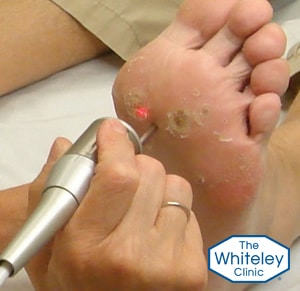
When the same thing occurs on the sole of the foot, due to pressure, the wart cannot grow outwards from the skin surface. As such, it presses back into the surface of the skin becoming a verruca. Therefore warts and verrucas are essentially the same – only their appearance changes.
Warts or verrucas can be found anywhere there is skin. Verrucas are found on the feet. Usually, verrucas are found on the weight bearing areas – the heel, side and ball of feet or the underside of the toes.
However they can be found between the toes or on the tips, sides or tops of the toes. They are rarely found on the top of the foot itself – although this is possible.
The distribution of verrucas if determined by where a human papilloma virus infection is most likely to be caught.
A verruca develops where human papilloma virus affects the skin. The human papilloma virus is spread by direct contact. Therefore areas of our body that come into contact with either other people’s bodies or areas where other people have been, are most prone to get this infection.
Therefore when we are thinking of warts, there are most commonly found on the hands but can also be found on the face – particularly around the mouth and nose area. Of course in sexual contact, they can be found around the sexual organs.
As far as verrucas are concerned, the same principles apply. Although it is unlikely that someone is going to have direct contact with another person’s foot, human papilloma virus can be spread by either walking on wet ground where someone with a human papilloma virus infection (or verruca) has previously walked (classically in swimming pools and in changing rooms), or wearing other peoples shoes, socks or other footwear.
For the human papilloma virus to get into the skin and cause a wart or verruca, the chance of getting a verruca increases if the skin is damaged. This might be direct damage such as a cut or graze but also can be a breakdown of the skin by maceration – this is what happens to your skin when it has been wet for a long period of time and starts to get crinkly or look white. You will see this if you have been lying in the bath for a long time and your hands and feet get crinkley and turn white.
Many verrucas do not cause any problems at all to the person with them. However they are socially unacceptable in that by having a verruca, a person is very contagious and is highly likely to be spreading verrucas to other people.
If a verruca is on weight-bearing area, such as the hardened skin on the heel, side of the foot or ball of the foot, or on the underside or tips of toes, then they verruca can be very uncomfortable on standing or walking.
Verrucas, and warts, are known to disappear spontaneously. This is thought to be the body creating antibodies against human papilloma virus. Therefore the body’s immune system can fight the virus and after time, the wart or verruca can disappear.
However, in other people, the verruca can remain for quite some time and even develop other verrucas found it – causing an “mosaic” effect.
Treatments for verrucas are varied and depend on the site of the infection, age of the patient and whether they are multiple or singular.
Laser treatment or cryotherapy is the most commonly used methods for effective and fast treatment. However, the use of drugs can be a little less harsh, but equally effective.
Treatment of all of these conditions by your chiropodist, with modern surgical equipment, will make for a positive experience.
Visiting a chiropodist brings constant relief to patients with chronic and acute conditions. Early diagnosis can prevent more serious problems developing especially with diabetics.
Having a podiatry/chiropody surgery within a vascular clinic provides the benefits of a complete interface of lower limb specialists working together giving an opportunity for speedy, seamless referrals if required.
Ideally all verrucas should be treated to prevent transmission to other noninfected people. However, not everybody is able to, or wants to, get treatment.
The verrucas that need treatment are:
The verrucas that are found on the thicker skin, on the weight bearing areas of the foot, are deeper than those found elsewhere on the foot. This means that they may take more treatment than those in other areas. Also, as noted above, they may cause pain on standing on them.
Verrucas on the toes can cause discomfort due to the skin on the toes being more sensitive and due to them rubbing on footwear or the other toes.
Many people wish to have their verrucas treated to prevent them being a risk of spreading them to others.
There are several treatments available for verrucae all focusing on the destruction of the cells. The destruction of the cells is thought to release the human papilloma virus into the bloodstream, allowing the body to create antibodies against this, and then be able to fight the verruca itself using its immune system.
Treatments include:
Homoeopathic remedies are infrequently used. A podiatrist or chiropodist may recommend that a young child or diabetic uses a homoeopathic remedy at home. This generally entails applying an oil to the affected area. A homoeopathic remedies, by their very nature, takes longer to produce results.
Caustics, otherwise known as chemical cauterisation, plays a major part in the treatment of verrucas. This treatment offers minimum discomfort to the patient and in most cases giving rapid results. Extreme care needs to be taken when using some of the stronger chemicals. While application control can be taken on the skin surface, it may not be controlled as it is absorbed into the deeper tissues.
The patient needs to be made aware, that on occasions tissue breakdown does occur, this can be dealt with quickly by the practitioner.
Cryotherapy is the name given to freezing. “Cryo” means cold and “therapy” means service done to the sick. The most common cryotherapy used for the treatment of verrucas is liquid nitrogen.
Cryotherapy is a treatment frequently used by doctors and the podiatrists. This treatment freezes the cells, the dead cells are removed by the podiatrist and further appointments made if necessary. This treatment can generally take between six to eight weeks.
Electrosurgery is an alternative to cryotherapy. Using heat, electrosurgery destroys the cells of the verruca, releasing the human papilloma virus into the circulation and allowing an immune response to start. However, electrosurgery has little benefit over cryotherapy. It is generally too painful to be used on the sole of the foot, it often leaves scar tissue behind and also cannot be used if the patient has a pacemaker as this may cause an interference.
At The Whiteley Clinic, we use an Nd:YAG laser. This has revolutionised our treatment of verrucas – particularly verrucas that have been resistant to other treatments. It has been so successful we now recommend it as our treatment of choice.
Being a laser treatment, the actual treatment session itself is quick.
The chiropodist may need to clear some to the dead skin overlying the verruca, but the actual laser treatment of the verruca itself is quick.
Pulses of laser energy are used to destroy the verruca cells – and research has shown that the 1064nm Nd:YAG laser that we use, also destroys the virus that causes the verruca in the first place.
Research has been published showing that when verruca treatments were compared, cryotherapy (freezing verrucas) and chemical therapy both destroyed the verruca cells, but still left active virus particles (HPV or Human Papilloma Virus) behind.
In contrast, the 1064nm Nd:YAG laser destroyed the cells AND the active virus particles.
Of course laser heats the area, and so we use ice or a cold air blower to cool the skin down as we treat it.
Laser is also more expensive per session than other treatments as the laser is an expensive bit of kit. However, as 60 – 70% of verrucas disappear within 3 sessions, overall it usually works out both quicker and less expensive than other treatments.
Your podiatrist or chiropodist will assess your verruca to see firstly whether it is appropriate to treat, and if so, which is the best treatment option.
Treatment entails an ongoing situation where different destructive treatments are applied, dead cells are removed, and the response of the verruca is monitored insuring no adverse event, until there is complete resolution of the problem.
For speed of resolution, and for the best chance of getting rid of difficult verrucas, we have found that our Laser treatment for verrucas to be the best way to treat them.