Unveil the Hidden Causes of Varicose Veins for Permanent Treatment Results
February 19, 2026
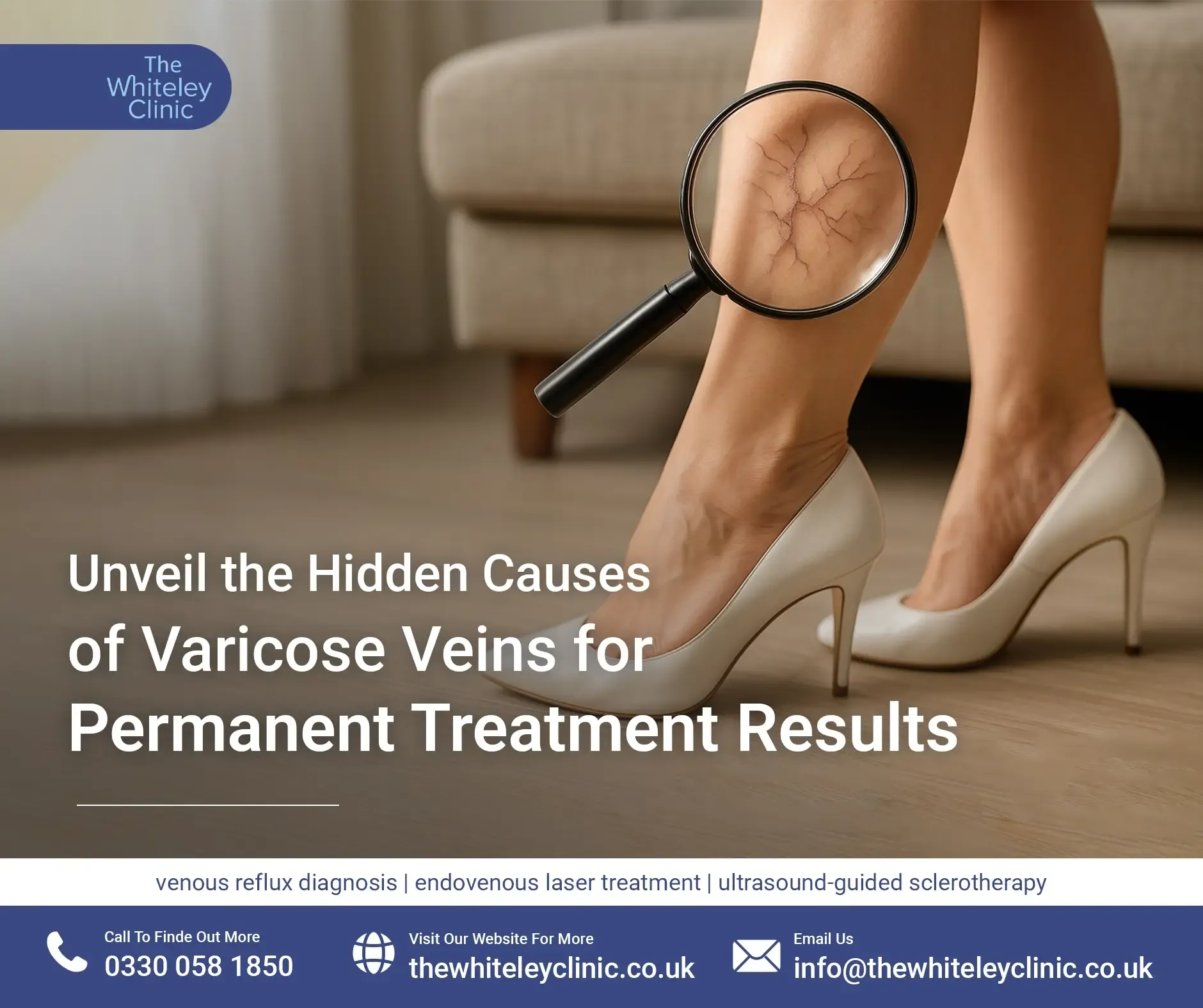
Many people think varicose veins are just a cosmetic issue, but in reality, they often point to more serious vein problems. These veins affect nearly one in four adults and may cause pain, swelling, skin discolouration, blood clots, bleeding, and even leg ulcers. Many people, and some doctors, believe varicose veins are only those that can be seen on the surface of the legs. However, recent research now shows otherwise. There are usually deeper, less obvious reasons behind them. These hidden causes of varicose veins include incompetent perforator veins and pelvic varicose veins, also known as pelvic congestion syndrome.
Most routine treatment for varicose veins concentrate on addressing axial reflux, commonly located in the great and small saphenous veins However, this approach often misses the real problem in many patients. Studies, particularly from The Whiteley Clinic, show that this limited focus overlooks the hidden causes of varicose veins. These underlying causes are located deep within the body and are not visible at the surface. Incompetent perforator veins and incompetent pelvic veins both allow blood to flow backwards, the wrong way through the veins, called venous reflux. When all the causes of venous reflux are not treated, even the best treatment of the visible leg veins will fail. The patient may experience a recurrence of their varicose veins months or years later. This hidden mechanism plays a central role in triggering varicose vein recurrence.
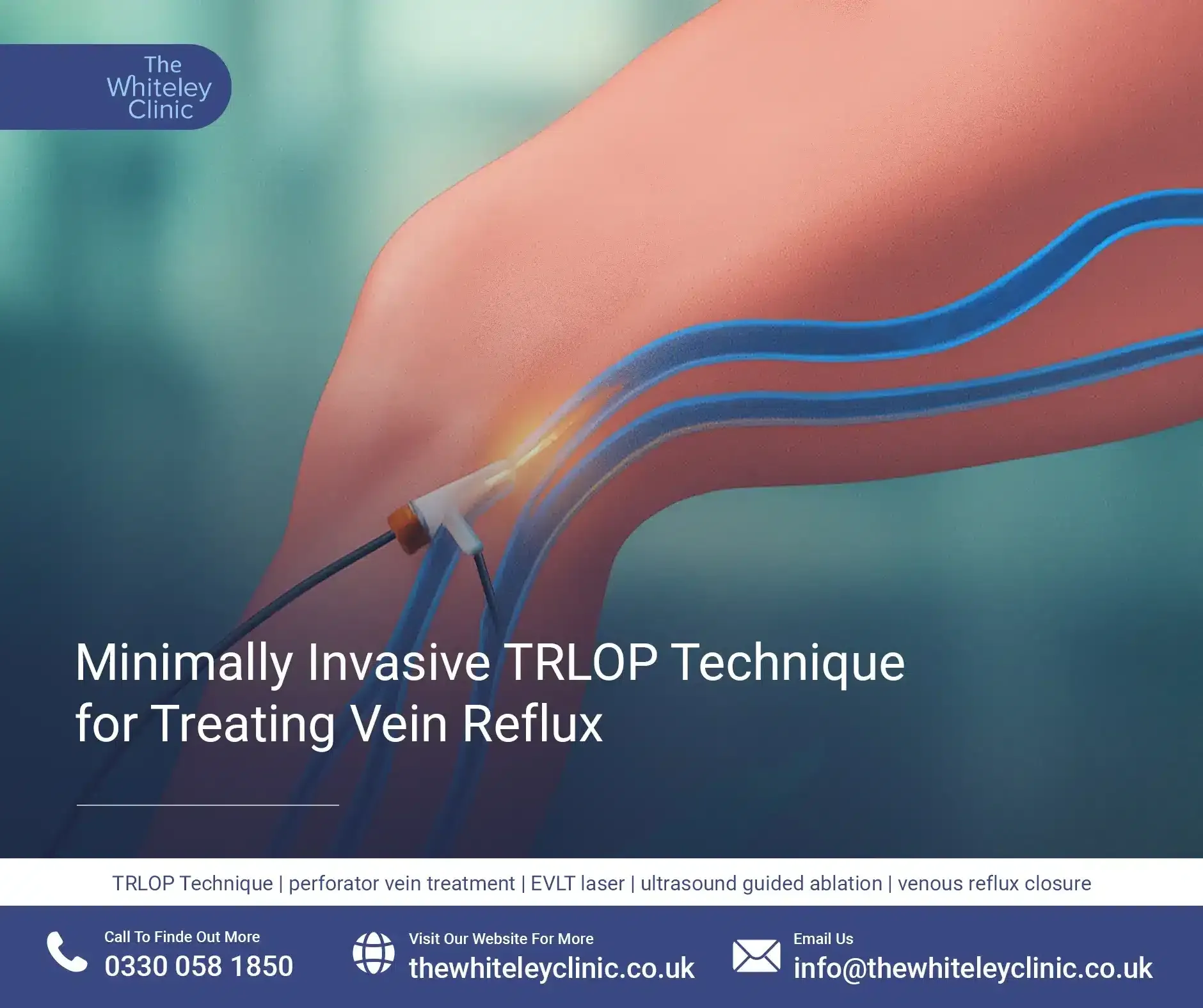
Perforator veins normally function as channels between the superficial veins under the skin and the deep venous system situated in muscle tissue. In a healthy system, small one-way valves keep blood moving inwards, into the muscle, to be pumped up toward the heart. But when these valves fail, the direction of blood flow reverses. High-pressure blood from the deep veins shoots outward into the surface veins. This backwards flow happens under pressure, especially when the leg muscles contract during walking or running. Although the amount of blood may be small, its velocity is high. Blood flow energy depends more on velocity than on mass, following the physical principle E = ½ mv². The result is forceful jets of blood that damage nearby veins and tissues. Over time, this damage causes varicose veins, inflammation, skin discolouration, and even leg ulcers. These incompetent perforator veins are often missed unless doctors use specialised imaging like duplex ultrasound, and are either trained and experienced to find these, or work with clinical vascular scientists (vascular technologists) who are. Their presence is one of the most common hidden causes of varicose veins that go undiagnosed and untreated. Aside from incompetent perforator veins, another often overlooked cause is found deeper in the pelvis.
What was once described as Pelvic Congestion Syndrome (PCS) is currently recognised under the more inclusive and accurate term, Pelvic Venous Disorders (PeVD). Pelvic Congestion Syndrome (PCS) is another major but often missed cause of varicose veins. This condition arises when valves in the pelvic veins become incompetent—similar to the mechanism that leads to varicose veins in the legs. This allows blood to reflux down the pelvic veins, and this can lead to the pelvic veins enlarging. As a result, blood flows backwards and pools in the pelvic area. This can cause pain, heaviness, and varicose veins in places like the vulva, buttocks, or upper thighs. Because pelvic veins lie deep inside the body, doctors can’t see them with the naked eye. Many misdiagnose PCS/PeVD as a gynaecological, urinary, or bowel problem. As a result, they often overlook the true venous cause. PCS / PeVD is especially common in women who develop symptoms during or after pregnancy. In men, varicoceles are an outward sign of pelvic congestion. Similarly, in both sexes, haemorrhoids (piles) may reflect the same issue. However, despite this new understanding of pelvic veins, specialists often treat these problems separately. Consequently, they often don’t understand the pelvic veins and so rarely investigate the underlying pelvic vein disorder.
Failing to address hidden causes of varicose veins such as PCS / PeVD and incompetent perforators always leads to recurrence. Treating only the main leg saphenous veins gives short-term results at best. That’s why full diagnostic imaging using duplex ultrasound is essential before any treatment begins. At The Whiteley Clinic, patients undergo a detailed assessment based on The Whiteley Protocol®. This method looks beyond the surface to find all the possible sources of reflux. Targeted treatment of both perforator and pelvic vein abnormalities leads to a marked reduction in long-term recurrence. This comprehensive approach directly addresses the hidden causes of varicose veins, offering better long-term outcomes and patient satisfaction.
For over two decades, Professor Mark Whiteley has focused his research on uncovering the underlying causes of varicose veins. His work has changed how experts think about the condition. He argues that to stop recurrence, doctors must treat the cause, not just the symptom.
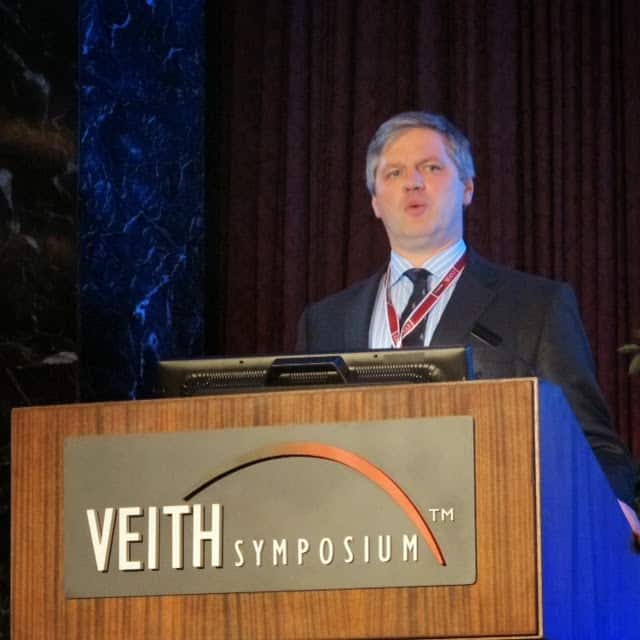
Professor Whiteley presented his research at the Veith Symposium in New York, one of the most prominent international conferences in the field of vascular surgery.
These talks focused on the importance of identifying and treating the hidden causes of varicose veins. His presentation underscored the fact that pelvic congestion syndrome and perforator vein incompetence are underdiagnosed conditions—not rare ones.
The true story of varicose veins goes beyond the visible bulges in the legs. Many of these cases begin with hidden causes of varicose veins that doctors often overlook. Incompetent perforators and pelvic congestion syndrome / pelvic venous disorders play a key role and require proper attention. Ignoring these causes leads to recurrence and incomplete care. However, with researchers like Professor Whiteley and The Whiteley Protocol®, patients can now get better diagnosis and longer-lasting results. The future of successful vein care lies in uncovering and treating the root causes of varicose veins for lasting results.