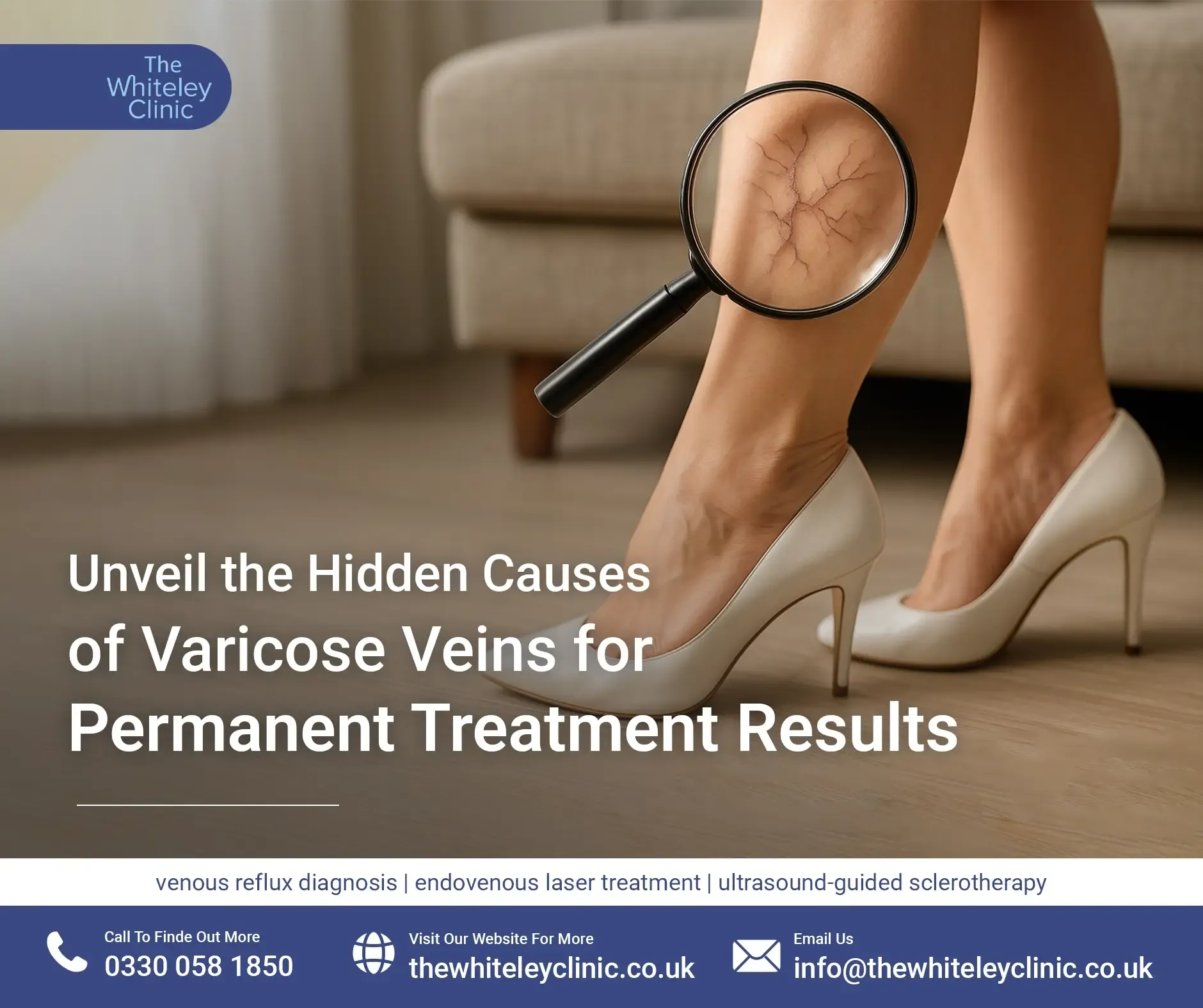
Unveil the Hidden Causes of Varicose Veins for Permanent Treatment Results
February 19, 2026
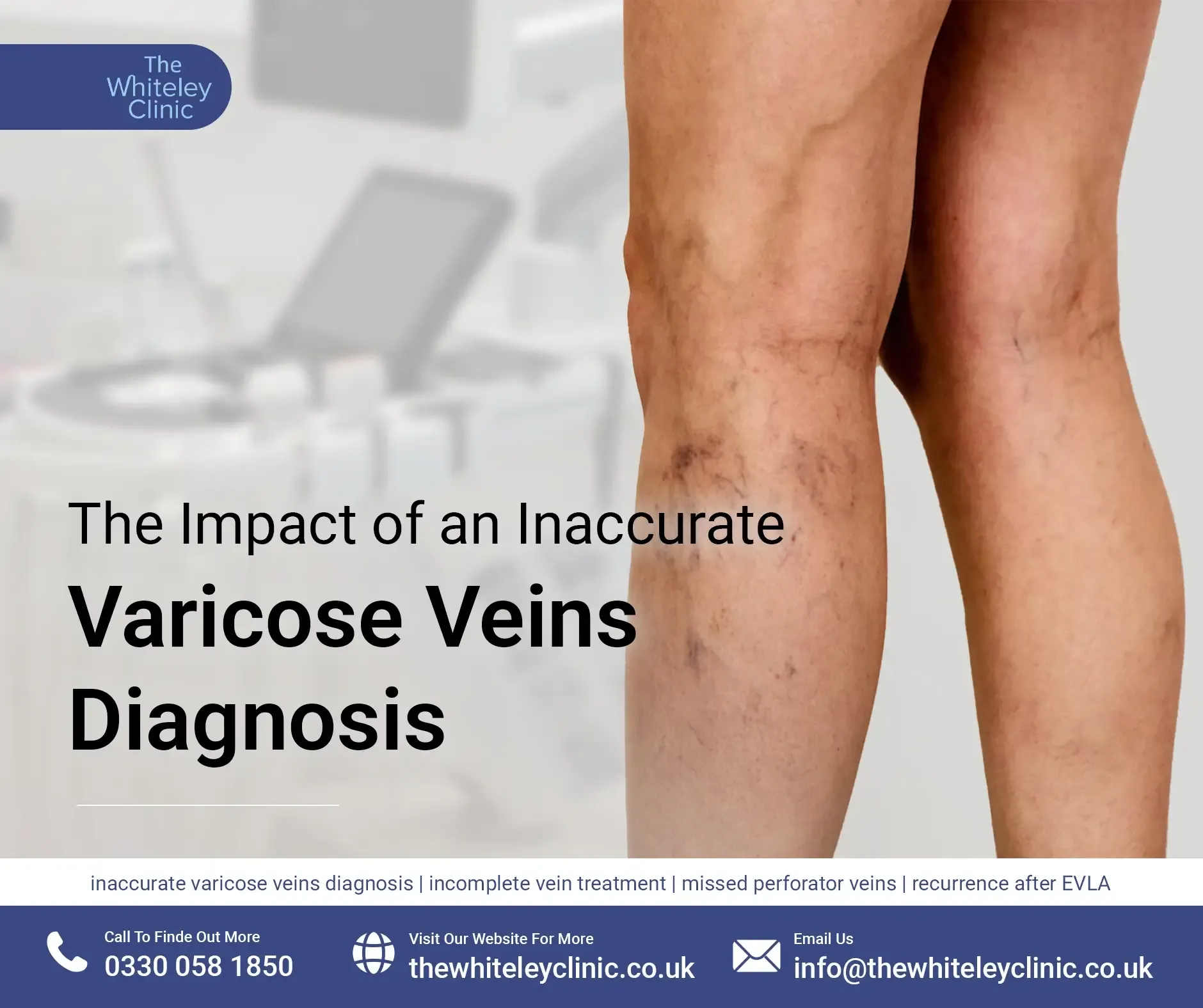
An Inaccurate Varicose Veins Diagnosis can affect both your health and your wallet. When quick and simple scans miss the real cause of your varicose veins, treatment may be inadequate and incomplete. This allows your symptoms to worsen as not all of the vein problems have been addressed. If the initial diagnosis is incorrect, you may require repeated treatments later. In many cases, these end up costing more than getting the right treatment from the start. Getting the correct diagnosis in the first place allows the optimal treatment to be planned, helping you avoid these problems. It leads to faster, more effective, and longer-lasting results.
This article shares the story of a 27-year-old patient. She booked a visit to The Whiteley Clinic, having had an early recurrence of her varicose veins following treatment elsewhere. Two years earlier, she had gone to a clinic that boasted cheaper treatments. She had a quick duplex scan by the same doctor who consulted her and, had endovenous laser treatment for her varicose veins. However, her veins reappeared just six months later. After doing some online research, she came across The Whiteley Clinic and The Whiteley Protocol. During her visit, a vascular scientist trained at The Whiteley Clinic performed an in-depth duplex ultrasound. They specifically looked for all possible causes of varicose veins, not just the obvious ones.
The proper in-depth scan showed that although the original doctor had only scanned the large veins in the thigh and calf (called the “Great Saphenous Vein” and “Small Saphenous Vein” respectively) and had tried to treat them, the varicose veins were also coming from a large veins that emerge through the muscles in the legs called “incompetent perforator veins”. As such, she had undergone surgery that was incomplete as the scan had not been thorough enough to find all of the causes.. The scan also showed additional issues: in one leg, doctors had only closed 2 cm of the Great Saphenous Vein, whilst in the other leg, they had treated just 7 cm. Ideally, doctors should have treated 35 to 40 cm of this vein. This incomplete treatment highlights both the risks of an inaccurate varicose vein diagnosis and the resulting inadequate treatment. Without the correct diagnosis and a robust protocol for treatment, patients may receive ineffective treatment that fails to address their problem fully. 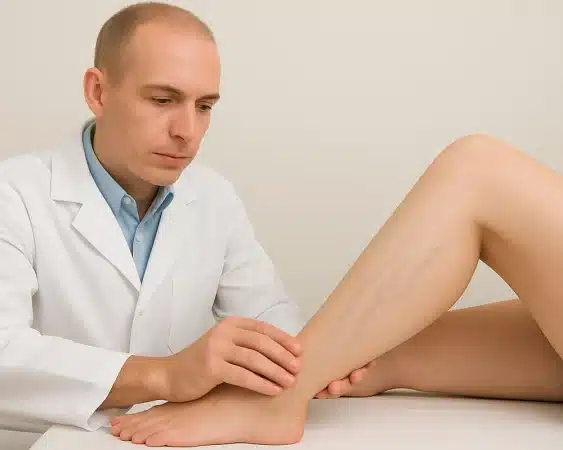
To avoid an inaccurate varicose vein diagnosis, you should visit a clinic that uses a team approach; an experienced venous specialist doctor who checks that the problem is venous and both plans and performs the treatment, working closely with a trained vascular scientist (or “vascular technician”) who specialises only in the diagnosis of vein problems and then guides the surgery in theatre. Indeed, the NICE Clinical Guidelines CG168 recommend such a team approach. Although duplex ultrasound remains the “gold standard test,” its accuracy depends on the skill of the operator. A doctor performing their own scans while also consulting with patients, performing surgery, and other procedures such as sclerotherapy, does not have the same level of training and experience as a vascular scientist who specialises in venous scans all day, every day. Hence, a 5-minute scan by a doctor will not give the same level of detail as a 40-minute scan by a fully trained vascular scientist. In complex cases, vein specialists may also request other investigations, such as air plethysmography or MRI. With a correct diagnosis, vein specialist doctors can recommend the most appropriate and effective treatments based on The Whiteley Protocol.
The earlier varicose veins are diagnosed in patients with symptoms or signs of venous disease, the sooner treatment can begin, offering much-needed relief and a better prognosis for a good quality of life. This is why this approach is recommended by the National Institute for Health and Care Excellence (NICE Clinical Guidelines CG168). Delaying diagnosis can lead to more serious complications. It can also make symptoms worse and require more complex treatments later. Early diagnosis of varicose veins allows doctors to offer less invasive options like EVLA (endovenous laser ablation), foam sclerotherapy, or Sonovein. A precise diagnosis ensures that doctors treat all affected veins correctly. As a result, this reduces the chances of the veins returning and leads to better long-term results.
Although referrals from family doctors or insurance companies are commonly made, they are often made for contractual, historical or commercial reasons, rather than a considered medical opinion as to the optimal outcome for the patient. Therefore, patients need to actively research their treatment options. For example, this case outlined above shows what can go wrong. It is only one of many that we see regularly at The Whiteley Clinic. An inaccurate varicose veins diagnosis wastes time and money. It also causes stress and frustration. To achieve the best results, patients should select a clinic with the appropriate staffing, equipment, protocols, and a proven track record of published audits and research to support their outcomes. They should look for specialists who offer clear, accurate, and complete diagnoses, utilizing vascular scientists / technologists who do the diagnostic duplex ultrasound scans, which should be in-depth and take about 40 minutes for both legs. Prioritising a full and accurate varicose veins diagnosis helps you achieve lasting results. It also leads to a healthier, more comfortable life. At all of The Whiteley Clinics in the UK, expert specialists provide the best care using the principles outlined above. The clinic uses the latest treatments and technologies to treat varicose veins correctly the first time. If you would like to read the full article published in The Huffington Post, please click this link.