Other facial vein conditions
Facial vein conditions include visible thread veins, prominent veins on the forehead and temples, and other superficial vascular changes. Although these usually cause cosmetic concerns rather than serious health problems, their appearance can affect confidence. Understanding the different types of facial vein conditions helps explain why they develop, how specialists assess them and which treatments may be suitable. Options range from vascular laser treatment for fine vessels to minimally invasive procedures for larger, bulging veins.
What Causes Facial Vein Conditions?
Facial veins become more noticeable when superficial blood vessels dilate or lie close to the skin's surface. Ageing, genetic factors and naturally thin skin can make them more visible. Heat, exercise, alcohol consumption and facial expressions may also temporarily increase their prominence.
Visible facial veins are usually harmless and do not point to an underlying health problem. If a vein becomes noticeable for the first time or changes in appearance, it is worth having it checked to rule out other vascular conditions.
Prolonged sun exposure can contribute to visible facial blood vessels, while long-term use of topical corticosteroids may also cause or worsen superficial vascular changes in some people.
What Are the Different Types of Facial Vein Conditions?
Facial vein conditions vary in appearance, size and location. Identifying the type of vessel or lesion helps determine the most appropriate treatment.
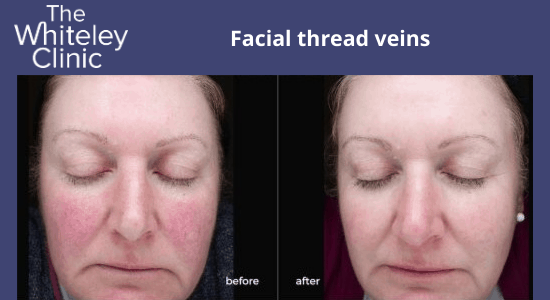
- Facial thread veins (telangiectasia) are fine red, purple or blue vessels that commonly appear on the cheeks and around the nose. They may develop alongside rosacea, although the two conditions are not the same.
- Forehead veins can appear as prominent vertical vessels between the eyebrows or across the forehead. They may become more visible during exercise, smiling or exposure to heat.
- Temporal veins run across the temple and may appear blue or green beneath the skin. Larger veins can bulge and become particularly noticeable.
- Reticular veins: These are larger blue or green superficial veins that may become visible around the temples, eyes or jawline. Their depth, size and location can influence which treatment is appropriate.
- Periorbital veins are visible vessels around the eyes. The thin skin in this area can make underlying veins more apparent.
- Venous lakes Other visible vascular changes include spider naevi, cherry angiomas and venous lakes. These are not all true venous conditions. Cherry angiomas, for example, are small, benign vascular growths, whereas telangiectasia refers to dilated superficial blood vessels. Accurate diagnosis helps determine the most appropriate treatment.
How Are Facial Vein Conditions Diagnosed?
A specialist usually begins with a clinical examination. The assessment considers the vessel's colour, size, depth, location and whether it bulges beneath the skin. The clinician may also ask when the vein first appeared and whether its appearance changes with activity or temperature.
The distinction between a vein and an artery is particularly important around the temples. The superficial temporal artery carries a pulse, unlike a typical superficial vein. A clinician may recommend further investigation, including duplex ultrasound where appropriate, if the vessel's nature or underlying anatomy remains uncertain.
What Are the Treatment Options for Facial Vein Conditions?
Treatment depends on the type, size and depth of the vessel. Fine, superficial veins often respond to non-surgical treatments, whereas larger, bulging veins may require a different approach.
- Vascular laser treatment directs light energy towards the blood within selected vessels, causing them to close. It can treat certain facial thread veins and small, non-bulging blue or green veins. A 2024 systematic review found promising results for vascular laser treatment of veins around the eyes, although the available evidence remains limited.
- Intense pulsed light (IPL) delivers pulses of broad-spectrum light to target selected superficial blood vessels. It may help with facial redness and certain thread veins, depending on the diagnosis and skin type.
- Phlebectomy involves removing a prominent vein through tiny incisions under local anaesthetic. Specialists may consider this approach for larger, bulging veins that cannot be treated effectively with an external laser.
- For selected prominent forehead veins, endovenous laser ablation offers another option. The surgeon introduces a fine laser fibre into the vein and uses laser energy to close it. This specialist procedure differs from external laser treatment used for small superficial vessels.
Each method carries potential risks, including bruising, swelling, skin irritation, pigment changes or scarring. A specialist should explain the expected results, limitations and recovery time before treatment.
Is Sclerotherapy Safe for Facial Veins?
Sclerotherapy involves injecting a solution into a vessel to damage its lining and close it. Although clinicians commonly use this technique for certain veins elsewhere in the body, its use on the face requires particular caution.
Veins in the face connect with vessels around the eyes and deeper veins, which makes sclerotherapy in this area more complicated. If the solution enters the wrong vessel or travels beyond the intended site, it can cause serious harm. In some cases, this may damage the surrounding tissue or affect the blood supply to the eye.
A 2026 review found that evidence for facial sclerotherapy remains limited and that no standardised treatment protocol exists. It also highlighted the risk of serious complications following inadvertent arterial injection. The Whiteley Clinic therefore regards facial sclerotherapy as a high-risk approach and advises against its routine use. Treatment decisions require careful assessment of the vessel's anatomy and the available alternatives.
Where Can You Seek Treatment for Facial Vein Conditions?
The appropriate clinic depends on the type of facial vein condition and the treatment required.
The Whiteley Clinic assesses prominent veins that may require specialist vascular procedures, including phlebectomy or endovenous laser ablation for selected forehead veins. Its clinicians can determine whether a bulging vessel requires surgical assessment rather than a non-surgical cosmetic treatment.
For selected superficial thread veins and other suitable vascular skin concerns, Absolute Aesthetics offers aesthetic treatments, including vascular laser procedures. Its website provides further information about available facial treatments.
A clinical assessment can help determine whether laser or light-based treatment is suitable, or if the vein would be better treated with a specialist vascular procedure. The decision should take account of the vessel's anatomy as well as its appearance, helping to reduce the risk of complications and ensure that the chosen treatment is appropriate.