Varicose Veins treatment
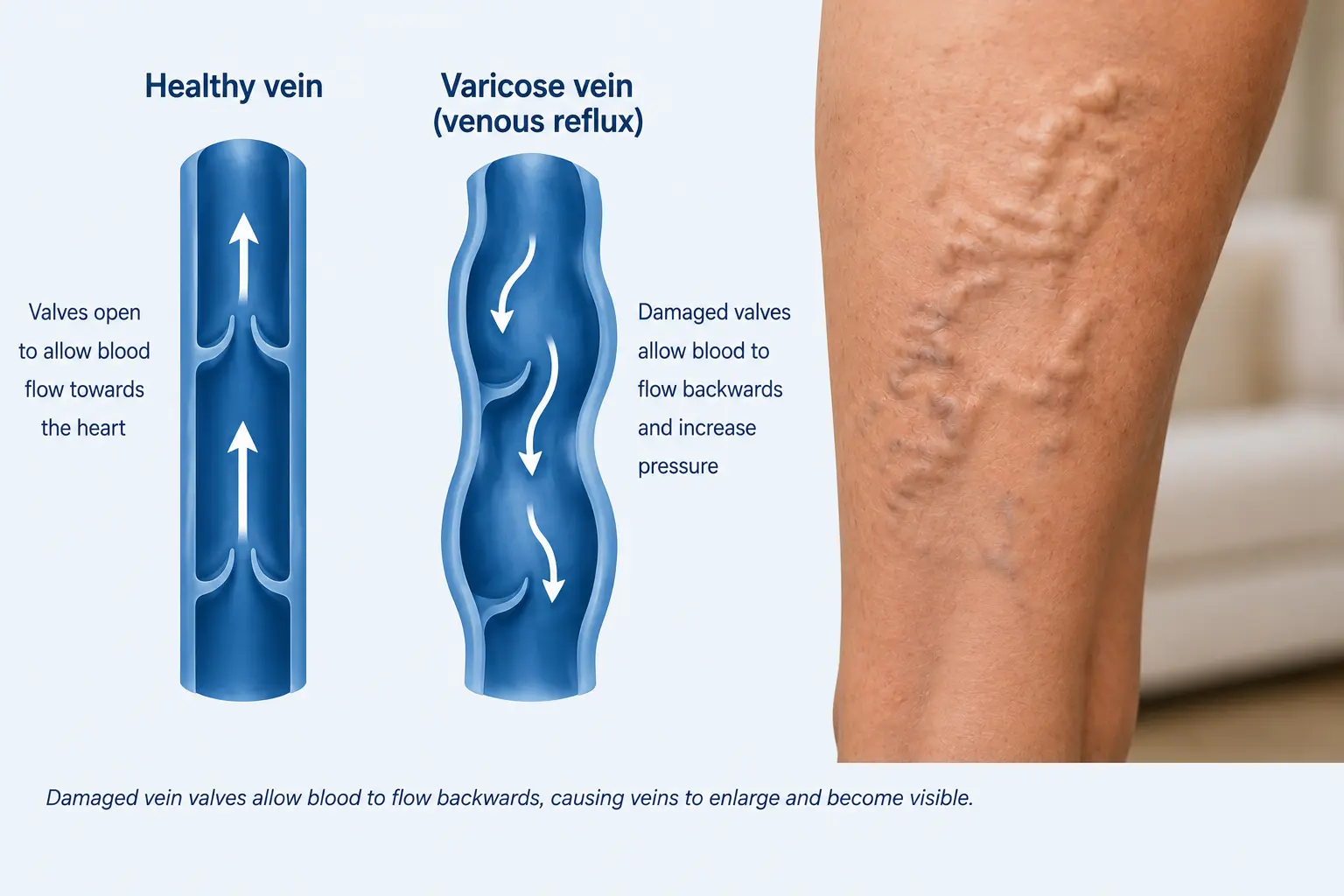
Varicose veins are more than just visible enlarged veins on the legs. They usually develop because of an underlying problem called venous reflux, where damaged vein valves allow blood to flow backwards and increase pressure inside the veins. Although some people view varicose veins as only a cosmetic concern, many patients actually have underlying venous problems that can progress over time. Accurate diagnosis using venous Duplex ultrasound helps identify the cause of the condition and allows treatment to focus on correcting the source of the problem rather than only treating visible veins.
What are varicose veins?
Varicose veins develop when the small valves inside the veins stop working effectively, causing the veins to become enlarged and twisted. Functional vein valves maintain normal venous circulation by allowing blood to move towards the heart while limiting backward flow.
When these valves become weak or damaged, blood can collect in the lower limbs, causing venous reflux.
Venous reflux is the underlying cause of most varicose veins. The increased pressure created by backward blood flow can gradually stretch the vein walls, making surface veins become enlarged and visible beneath the skin.
Many people notice varicose veins when standing or sitting because gravity increases pressure within the leg veins. However, when lying down or raising the legs, the veins may become less prominent because blood drains away more easily.
In some cases, venous reflux can also affect the skin around the ankle. The area may appear darker, redder or more bluish after prolonged standing. Raising the leg often improves the colour because blood drains more easily from the veins. Although this simple observation may suggest an underlying venous problem, only a venous Duplex ultrasound performed by a specialist can provide an accurate diagnosis.
What is the cause of varicose veins?
Understanding Venous Reflux the Cause of Varicose Veins and Venous Leg Ulcers ISBN: 9781908586001
Are varicose veins only a cosmetic problem?
Many people consider varicose veins a cosmetic issue because of their appearance. However, the visible veins are not always the main problem. In many patients, they develop because deeper veins have lost their normal valve function and allow blood to flow in the wrong direction.
A detailed venous assessment identifies the source of venous reflux behind the visible veins. This is important because treating only the surface veins without correcting the underlying cause may not provide a complete solution.
The veins responsible for reflux can include the main superficial veins, tributary veins, incompetent perforator veins and, in some cases, pelvic veins. Pelvic vein reflux can contribute to leg symptoms and may be associated with conditions such as pelvic congestion syndrome or vulval and vaginal varicose veins.
For this reason, modern varicose vein treatment focuses on understanding the complete venous system rather than simply removing the veins that can be seen from the outside.
When should varicose veins be assessed?
A specialist assessment is recommended when varicose veins are associated with symptoms such as:
- Persistent leg aching
- Swelling around the ankle
- Skin colour changes
- Heaviness or discomfort
- Increasingly visible or enlarged veins
- Recurrent inflammation around veins
A venous Duplex ultrasound scan provides detailed information about vein structure and blood flow. This allows treatment decisions to be based on the actual cause of the condition.
Modern approaches to varicose vein treatment aim to identify the source of the problem, tailor care to each patient and achieve effective long-term outcomes.
By identifying venous reflux and treating the underlying problem, patients can achieve improvement in both symptoms and appearance.
Uncomfortable varicose veins cured by Mr Barrie Price using The Whiteley Protocol®
Can Varicose Veins Be Completely Cured?
Specialists can successfully treat varicose veins with long-lasting results when they identify and manage the underlying cause. However, inherited vein structure and natural changes in vein function over time can still influence venous disease. For this reason, specialists describe treatment as successful long-term management rather than a simple cure.
At The Whiteley Clinic, treatment begins with a comprehensive venous Duplex ultrasound scan performed by specialist Vascular Scientists. This assessment creates a detailed map of the veins, identifies areas of venous reflux and helps develop an individualised treatment plan.
The Whiteley Protocol® follows a structured approach that combines examination, investigation, diagnosis and personalised treatment. The aim is to treat the underlying cause of varicose veins while achieving effective long-term outcomes.
The Whiteley Clinic approach to varicose vein treatment is based on award-winning research and published clinical outcomes. The focus is not only on improving the appearance of veins but also on reducing the likelihood of recurrence and improving long-term patient satisfaction.
How are varicose veins treated today?
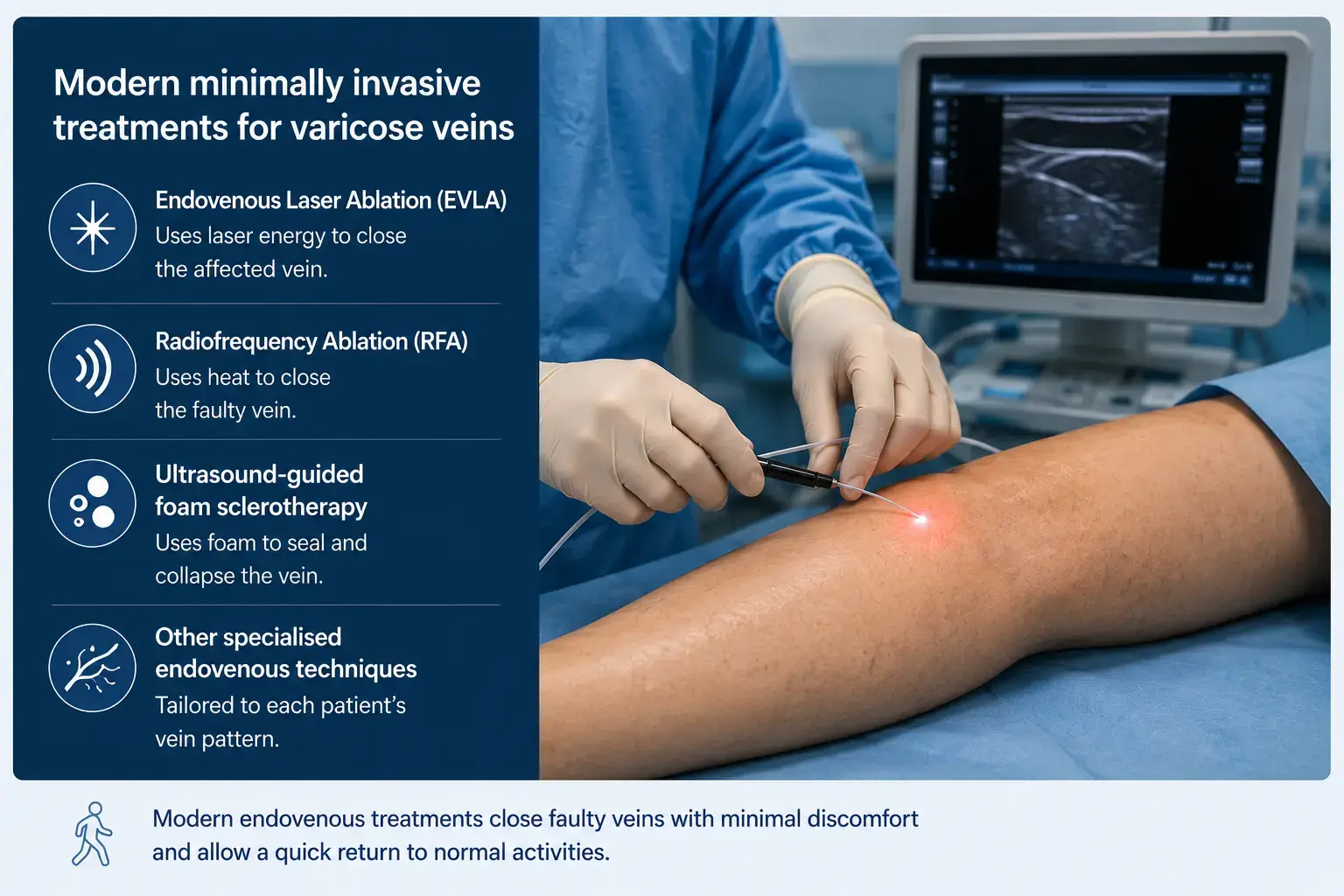
Treatment for varicose veins has changed significantly compared with traditional surgical approaches. Modern techniques focus on minimally invasive endovenous procedures that treat abnormal veins while allowing patients to return to normal activities quickly.
Depending on the results of the Duplex ultrasound scan, treatment options may include:
- Endovenous Laser Ablation (EVLA)
- Radiofrequency Ablation (RFA)
- Ultrasound-guided foam sclerotherapy
- Other specialised endovenous techniques when clinically appropriate
The most suitable treatment depends on the individual pattern of venous reflux, the veins involved and the patient’s overall condition.
Surgeons previously used traditional vein stripping to remove problematic veins. Although surgeons widely used this procedure for many years, patients often experienced more discomfort, bruising and a longer recovery period than they do with modern endovenous techniques.
Today, endovenous treatments allow many patients to receive effective treatment under local anaesthetic and return to normal activities shortly afterwards.
Why does accurate diagnosis matter before varicose vein treatment?
A successful treatment plan depends on identifying every important source of venous reflux. A limited assessment may miss problems in veins that contribute to recurrence, including incompetent perforator veins or pelvic vein reflux.
A comprehensive venous Duplex ultrasound scan allows specialists to examine the full venous system and identify the exact pattern of abnormal blood flow.
This is one of the key principles behind The Whiteley Protocol®. Instead of using a standard treatment approach for every patient, the protocol creates an individual treatment pathway based on detailed investigation.
Research into long-term outcomes has highlighted the importance of complete diagnosis and treatment planning.
Failing to identify all sources of venous reflux may leave the underlying problem untreated and increase the risk of varicose veins returning after treatment.
Why does The Whiteley Clinic approach varicose veins differently?
Varicose vein treatment is not only about removing visible veins. Specialists must first identify and treat the underlying cause of abnormal blood flow to achieve effective long-term results. Professor Mark Whiteley developed The Whiteley Protocol® around this principle by combining specialist assessment, advanced investigation and personalised treatment planning. Specialists create an individual treatment pathway for each patient based on the specific pattern of venous reflux identified during Duplex ultrasound assessment.
The Whiteley Clinic’s approach is based on published research and focuses on achieving the lowest possible risk of recurrence while maintaining high levels of patient satisfaction over the long term.
Patients who choose a varicose vein clinic based only on the lowest cost may not always receive the comprehensive assessment required for the best long-term results.
A comprehensive assessment, specialist expertise and evidence-based treatment planning are essential because incomplete diagnosis or treatment may leave the underlying cause untreated. Research and clinical experience have shown that a detailed approach can help reduce the risk of recurrence and the need for further procedures.
Varicose veins treatment and pelvic vein embolisation - The Whiteley Protocol®
Why Do My Legs Feel Heavy and Aching After Long Periods of Standing?
Many people experience aching, heaviness or swelling in their legs after standing for several hours. Standing itself does not directly cause varicose veins. However, it can make symptoms more noticeable in people who already have underlying venous insufficiency.
When vein valves do not function properly, gravity increases pressure inside the leg veins. When blood pools in the lower legs, patients may experience symptoms such as:
- Aching or tired legs
- A feeling of heaviness
- Swollen ankles
- Throbbing discomfort
- Visible or hidden varicose veins
People who spend long periods standing at work, including teachers, healthcare professionals or those working in retail and hospitality, may notice symptoms more clearly because prolonged standing increases pressure inside the leg veins.
However, the standing position is usually not the original cause. Instead, it often reveals an existing problem with venous circulation.
Venous Duplex ultrasound assessment helps specialists identify whether venous reflux is contributing to symptoms and guides the selection of an appropriate treatment plan.
Compression Socks for Varicose Veins: Do They Really Work?
Although compression socks and stockings may help reduce symptoms such as swelling and discomfort, they do not treat the underlying venous reflux that causes varicose veins.
They apply graduated pressure to the legs, helping improve venous return and reducing swelling or discomfort.
However, compression does not repair damaged vein valves or remove the underlying cause of venous reflux. Therefore, compression stockings should be considered a supportive measure rather than a definitive treatment for varicose veins.
Compression may be useful:
- While waiting for assessment or treatment
- After certain vein procedures
- When symptoms require additional support
- When intervention is not suitable
When specialists correct the underlying cause of treatable venous reflux, patients may achieve more effective long-term results compared with using compression alone.
Does pregnancy cause varicose veins?
Pregnancy can make varicose veins more noticeable, but it is not always the original cause.
Hormonal changes, increased blood volume and pressure from the growing uterus can place extra strain on the veins during pregnancy and may worsen existing venous reflux.
Some women may believe that varicose veins appeared for the first time during pregnancy, while an underlying venous problem may have already existed.
Pregnancy-related venous changes can also contribute to specific conditions such as vulval or vaginal varicose veins. These veins are often associated with pelvic venous problems and may require specialist assessment.
For women planning pregnancy who already have symptoms of venous disease, assessment before pregnancy can help identify underlying problems and discuss suitable treatment options.
Do varicose veins run in families?
Inherited factors can influence a person’s tendency to develop varicose veins, particularly when the condition affects close relatives.
People with close relatives who have experienced venous problems may have a higher likelihood of developing similar conditions.
However, varicose veins are not determined only by genetics. If inherited factors were the only cause, all veins would be affected equally. In reality, some people develop varicose veins in one leg but not the other, or in specific veins rather than throughout the entire venous system.
This suggests that multiple factors influence whether varicose veins develop, including vein structure, valve function and other individual characteristics.
Common myths about varicose veins
Does crossing your legs cause varicose veins?
Research has not shown a link between crossing your legs and the development of varicose veins.
This belief developed from older concerns about pressure on the legs and circulation problems. However, the position of the legs while sitting does not damage the valves inside the veins or create venous reflux.
Varicose veins develop because of problems with vein valve function, not because of normal sitting positions.
Do hot baths cause varicose veins?
No. Hot baths do not cause varicose veins.
Heat can temporarily make veins appear more visible because blood vessels naturally expand when exposed to higher temperatures. This is a normal response and does not damage the vein valves.
However, after some vein treatments, particularly sclerotherapy, patients may be advised to avoid very hot baths, saunas or excessive heat during the healing period.
Do you need to walk five miles a day after varicose vein treatment?
Walking after varicose vein treatment is encouraged because gentle movement supports healthy circulation and reduces the risk of complications.
However, there is no requirement to walk a specific distance every day after treatment. The recommendation for long daily walks developed from historical observations rather than modern evidence-based guidance.
Most patients treated with modern minimally invasive techniques can walk immediately after treatment and gradually return to normal activities according to medical advice.
Are varicose veins caused by poor circulation?
Varicose veins are sometimes described as a sign of poor circulation, but this phrase can be misleading.
The arterial and venous systems have different functions. Arteries deliver oxygen-rich blood from the heart to the body, while veins return blood back towards the heart.
Problems with arteries can affect blood supply, whereas venous conditions such as venous reflux can lead to varicose veins, swelling, skin changes and venous leg ulcers.
Having varicose veins does not mean that the heart or arterial circulation is unhealthy. It indicates a problem within the venous system that requires appropriate assessment.