First Specialist Pelvic Pain Clinic in the UK to combine Gynaecology and Venous Disorder specialist treatments
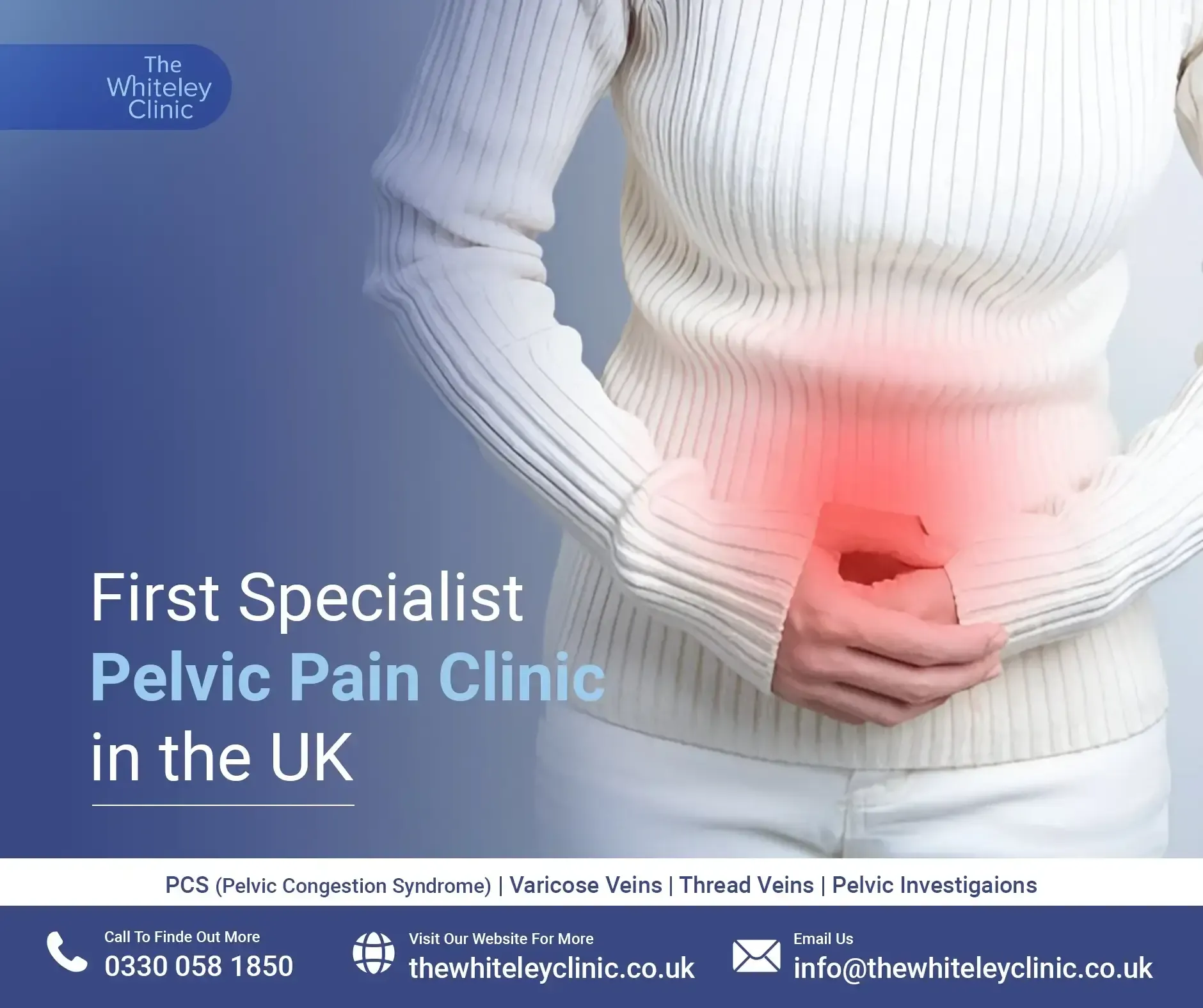
The Whiteley Clinic has opened London’s first dedicated Pelvic Pain Clinic for women. This specialist clinic brings together gynaecology and vein expertise in one place. It offers advanced diagnosis and treatment for causes of chronic pelvic pain, including pelvic congestion syndrome (PCS), endometriosis and adenomyosis.
The clinic is led by Dr Sophie Strong, a consultant gynaecologist with a specialist interest in pelvic pain. She has worked closely with The Whiteley Clinic for several years, first as a research fellow. Over time, she combined her background in gynaecology with training in venous disease. As a result, she now leads a unique service that addresses both visible and hidden causes of pelvic pain.
Dr Strong is passionate about improving care for women who have often been misunderstood or misdiagnosed. She believes that pelvic pain deserves focused, personalised attention. Her expertise covers not only gynaecological causes such as fibroids, cysts and endometriosis, but also venous conditions like PCS that are often missed.
🎥 In the short video below, Professor Mark Whiteley introduces Dr Sophie Strong and explains why this new Pelvic Pain Clinic is such a vital step forward for women’s health in the UK:
Understanding Chronic Pelvic Pain and Pelvic Congestion Syndrome
Chronic pelvic pain is a common issue that affects a large proportion of women at some point in their lives, though men can also experience it. One of the commonest, but usually ignored causes of this condition is PCS, which occurs due to varicose veins in the pelvis or around the ovaries.
Who is most at risk of pelvic congestion syndrome?
PCS is usually quoted as being most commonly seen in women aged 20 to 45, particularly those who have had multiple pregnancies. However, recent research published by The Whiteley Clinic shows that 10% of women with PCS have not yet had children, and 25% are post-menopausal. Repeated pregnancies are thought to weaken the venous walls and cause blood to pool in the pelvic area, increasing the risk of varicose veins. However, as men can also get PCS, pregnancy is clearly not the only cause. Women with a family history of varicose veins or those who already suffer from varicose veins are also at a higher risk of developing PCS. Additionally, women with polycystic ovary syndrome are more likely to develop PCS due to hormonal changes and circulation problems. Chronic pelvic pain, often misdiagnosed, requires proper identification of its underlying causes. In the Pelvic Pain Clinic at The Whiteley Clinic, specialists are dedicated to diagnosing and treating PCS, helping women find relief from persistent pelvic discomfort.
What are the common signs of PCS?
Dull pelvic pain or a tugging/dragging sensation in the pelvic area or lower back, particularly when standing, with symptoms worsening during menstruation
An irritable bladder, occasionally leading to stress-related urinary incontinence
Irritable bowel syndrome (recurrent abdominal pain and alternating episodes of diarrhoea and constipation)
Deep pelvic pain during or after sexual intercourse
Swollen veins in the vaginal area or near the urinary passage
Varicose veins on the inner thigh or the back of the thigh
Rapid Diagnosis, Effective Treatment
The Female Pelvic Pain Clinic at The Whiteley Clinic provides rapid diagnosis and effective treatment for conditions such as pelvic congestion syndrome (PCS), based on over 20 years of our research and experience. Many women suffering from pelvic pain face years of misdiagnosis or ineffective treatments. The Pelvic Pain Clinic aims to change that by using advanced diagnostic techniques. including specialised ultrasound scans developed at The Whiteley Clinic, to identify the root cause of the pain quickly. Once diagnosed, personalised treatment plans are offered, including minimally invasive procedures designed to relieve symptoms and improve quality of life. By combining medical expertise with cutting-edge technology, The Whiteley Clinic’s Pelvic Pain Clinic is transforming the way pelvic pain is managed, ensuring that women receive the care they need without unnecessary delays. Rapid diagnosis, effective treatment, because every woman deserves relief.
Is pelvic varicose veins dangerous?
Pelvic varicose veins are generally not considered dangerous. but they can lead to chronic pain and a significant decrease in quality of life. In some cases, if left untreated, complications such as the extension of varicose veins to the legs, impaired venous function, and worsening of pain can occur. Although the condition itself is not life-threatening, it can significantly affect daily activities and emotional well-being. Fortunately, with early diagnosis and appropriate treatment options, it is possible to manage symptoms effectively and prevent further complications. Timely medical intervention can greatly improve the quality of life for those affected, minimising the risk of long-term issues.
Effective Treatment Options at The Pelvic Pain Clinic
At The Whiteley Clinic, a range of effective and minimally invasive treatment options are available for managing PCS and related conditions:
Embolisation and Sclerotherapy: These minimally invasive procedures are performed under X-ray guidance, providing an effective solution for varicose veins in the pelvic area. Patients are typically able to return home the same day, with minimal recovery time.
Venous Stenting: In certain cases, a venous stent may be used to address pelvic venous insufficiency. This procedure helps to maintain blood flow and reduce symptoms associated with PCS.
Hormonal Intrauterine systems (IUS) (Mirena coil) can be inserted to help manage period pain, provide reliable contraception and help with pain outside of the period from endometriosis, adenomyosis or heavy menstrual bleeding.
Laparoscopy and other surgical interventions can also be performed if needed, via our direct streamlined referral partnership with The London Gynaecology Clinic.
Additionally, lifestyle modifications such as pelvic floor strengthening exercises, including Kegel exercises, are recommended to alleviate symptoms. Weight management and constipation prevention are also important in controlling pelvic pain and improving overall condition.
These treatments, under expert supervision and care, help to provide lasting relief and improve the quality of life for those suffering from PCS.