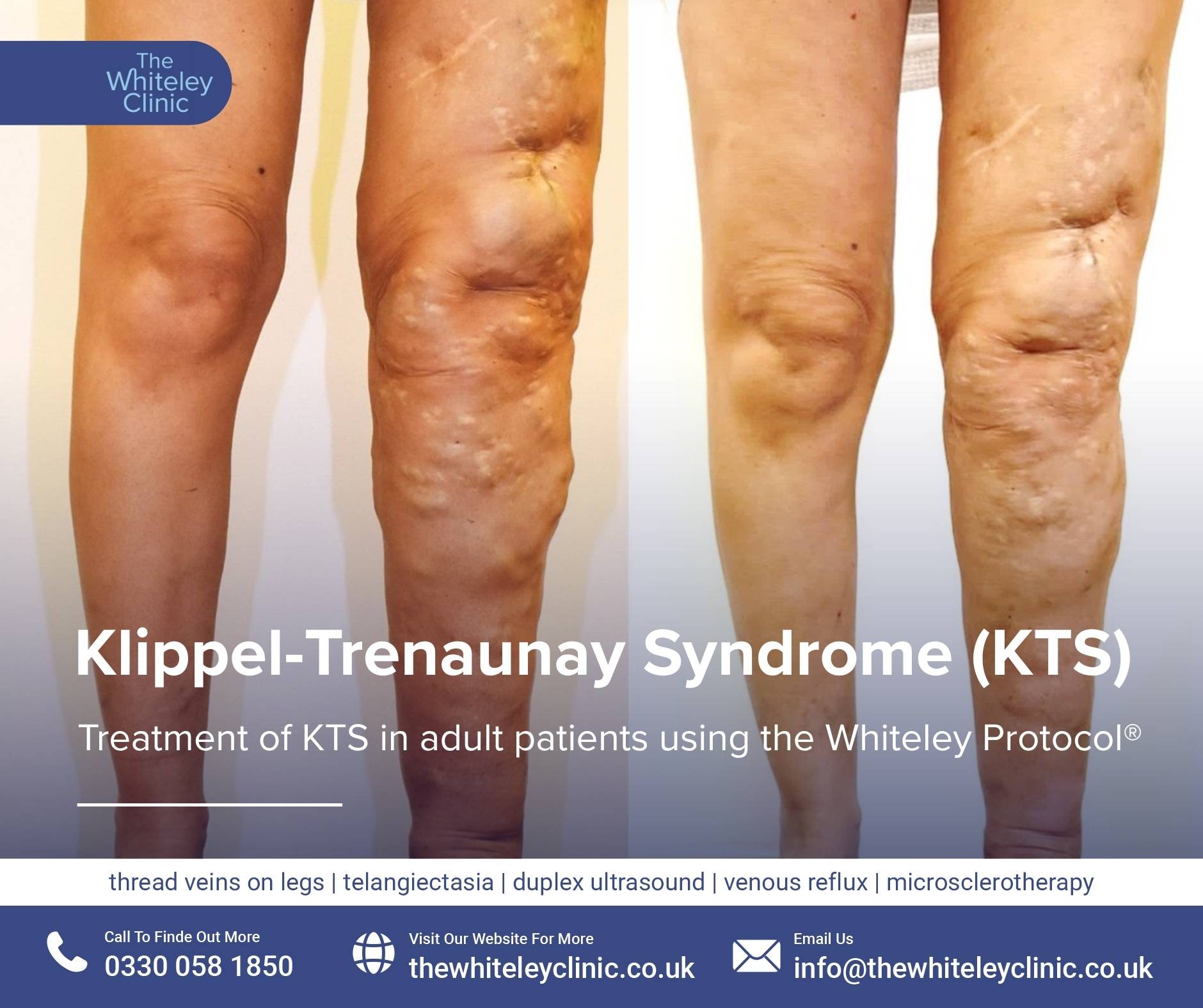
Klippel-Trenaunay Syndrome (KTS)
March 26, 2026
Pelvic congestion syndrome (PCS) is becoming a "hot topic" in the world phlebology (venous surgery).
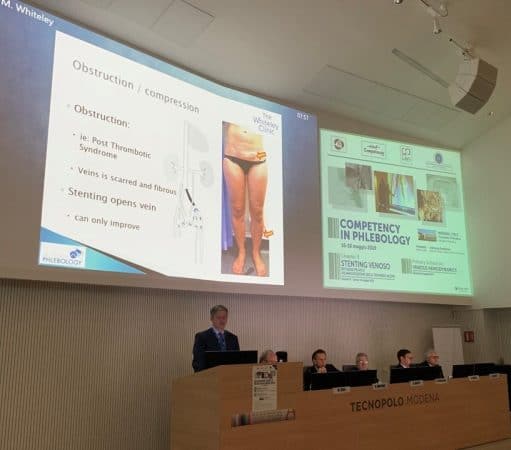
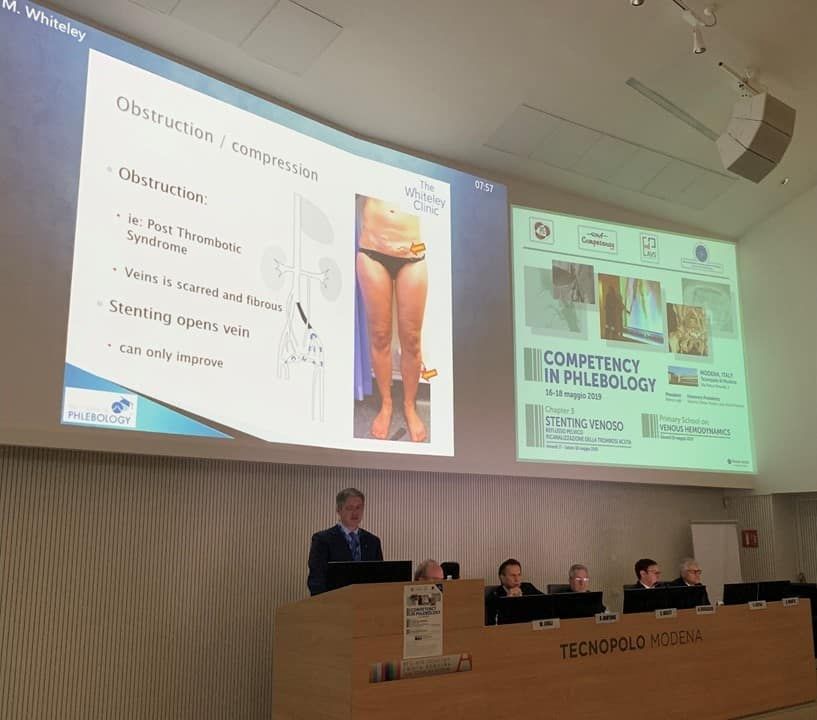
Pelvic reflux compression outflow obstruction - Mark Whiteley of The Whiteley Clinic - Modena May 2019
The Whiteley Clinic started its research projects into pelvic congestion syndrome and pelvic vein reflux 20 years ago. Our research has been presented all around the world and has won international prizes. We also have over 15 peer-reviewed research papers on pelvic congestion syndrome and pelvic vein reflux. In 2000, when we started treating pelvic congestion syndrome, very few doctors in the world were interested in this condition. Over the last two decades, it has been increasing in popularity as more doctors come to understand patients suffer from these problems. Over the last 5-10 years, many "experts" have appeared and started presenting their ideas at meetings. Hopefully, they will start to publish in peer-reviewed journals so that we will be able to identify more hard science in this area. At the moment there are too many opinions that are not based on science.
Consultant venous surgeon Prof Mark Whiteley, and vascular technologist Angie White presented research on pelvic congestion syndrome. Prof Whiteley first started by giving a talk on which patients should be offered embolisation of pelvic veins. He then gave an overview of which techniques should be used:
Angie White then gave a presentation on the optimal way of performing duplex ultrasound for pelvic congestion syndrome. She explained the transvaginal duplex ultrasound using the Holdstock protocol. She also explained how this has now been expanded to look for compression and obstruction. From the published research, this appears to be the gold standard test for pelvic congestion syndrome:
Finally, Prof Mark Whiteley gave a presentation explaining the difference between pelvic vein reflux, compression, and obstruction. He explained that reflux is by far the most common presentation of pelvic vein problems. He showed that obstruction of the veins is usually pretty obvious and causes considerable problems. The difficulty in pelvic congestion syndrome is those patients who have compression as well as reflux. He explained that treatments used to relieve compression can cause severe problems in the medium to long term. Therefore it is essential to only treat patients with compression if this has been proven beyond a shadow of a doubt.
He explained and showed evidence that the simple MRI, CT, IVUS and other imaging techniques that do not show function can overdiagnosed compression. Patients who are treated for compression without clear evidence need to be counseled clearly as to the medium and long-term effects of treatment.
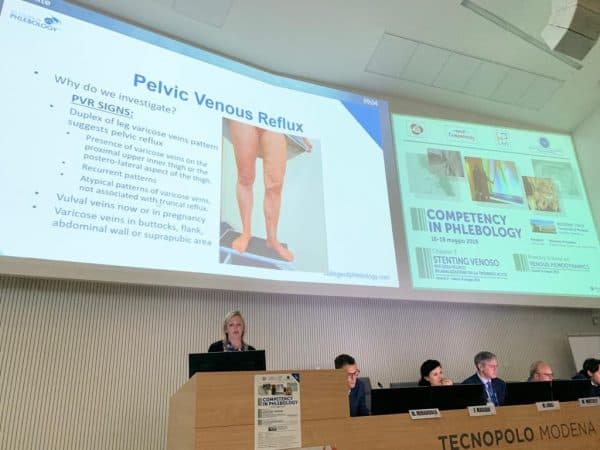
Ultrasound Assessment of Pelvic Reflux - Angie White of The Whiteley Clinic - Modena May 2019
For the last 20 years, Mark Whiteley has been advocating personalised treatments for leg varicose veins, venous leg ulcers, and pelvic congestion syndrome. This has led to the development of The Whiteley Protocol. Traditionally vascular surgeons used to think that leg varicose veins just came from one of two veins in the legs-the great saphenous vein or the small saphenous vein. This is now shown to be completely wrong. Patients with venous reflux problems can have reflux in these two veins, in the anterior or accessory saphenous veins, in up to 150 incompetent perforators, and in four pelvic veins. Any combination of reflux in any of these veins can occur and so treatments have to be individualised. In a small number of patients, they can also be compression on the vein causing the reflux and in patients with severe disease, they can be obstruction. As such, The Whiteley Protocol has been developed so that every patient gets an individualised treatment plan depending on their tests. There is no such thing as a "standard" treatment nowadays for leg varicose veins, venous leg ulceration or pelvic congestion syndrome.