
How Can You Effectively Treat Calluses and Corns on Feet?
August 15, 2026
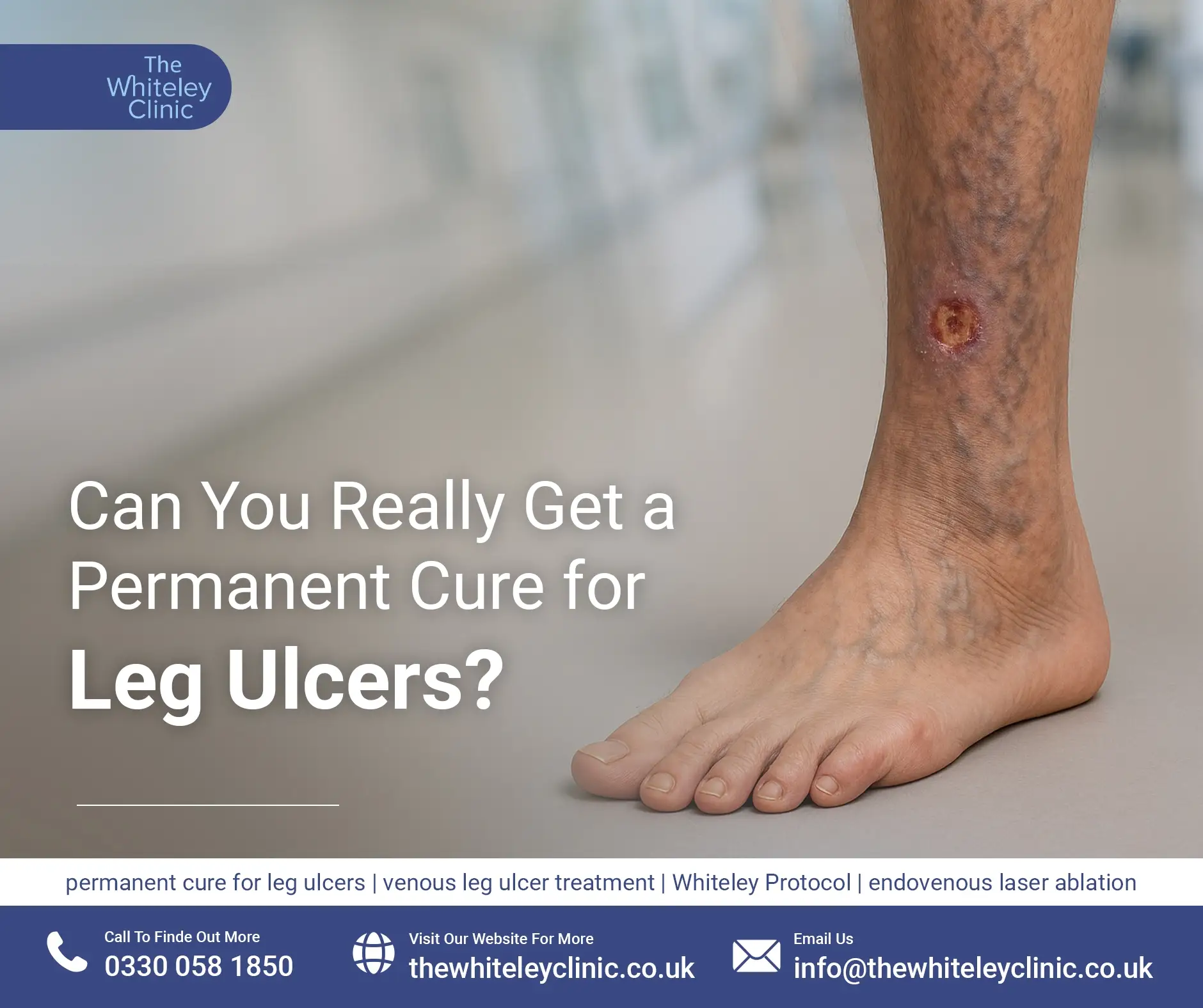
A permanent cure for leg ulcers is possible for most patients, thanks to modern vein treatments and research from The Whiteley Clinic. Leg ulcers caused by vein disease often fail to heal with traditional bandaging alone. Vein disease often prevents traditional bandaging from healing leg ulcers. However, when doctors identify and treat the underlying problem, ulcers heal, and patients return to normal life. Research led by Professor Whiteley has proved that long-term healing is achievable for the majority of sufferers.
When vein valves are incompetent, blood refluxes down the leg instead of moving upwards. This persistent backflow raises pressure in the lower-leg veins and sets the scene for ulceration.
Over time, the skin becomes damaged, fragile, and prone to breaking down. Even a minor knock can cause a wound that refuses to heal. Without treatment, the ulcer often becomes painful, infected, and life-limiting.
Before an ulcer develops, several warning signs actively signal underlying venous disease. For example, patients often notice swelling around the ankle, brown or red skin discolouration, itching, or a gradual hardening of the skin. Together, these early symptoms clearly show that venous hypertension is already straining the skin. If patients ignore these signs, the condition progresses to a chronic open ulcer. Therefore, recognising and acting on these signs early helps prevent long-term complications.
The Whiteley Clinic carried out a landmark study that transformed how doctors understand venous ulcers.
Between March 1999 and June 2011,using The Whiteley Protocol®, which identifies and treats the underlying cause of each ulcer.
This research, published in the Phlebology journal and presented at the 2011 National Medical Student Research Conference in London, showed that leg ulcers are not always incurable, as many patients had been told.
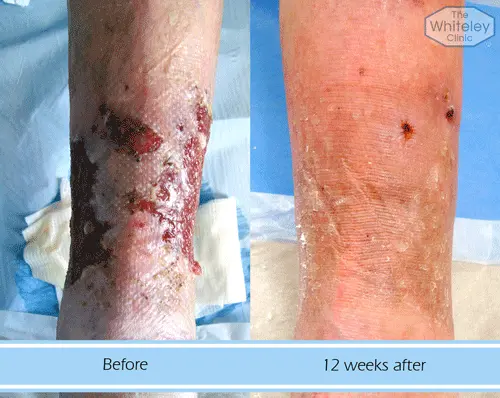
The study tracked 72 patients over 12 years, all of whom had active venous leg ulcers and had previously been told that only conservative care, such as compression bandaging, was possible. Remarkably, the results proved highly successful: eighty-five per cent of ulcers healed permanently, and most did not recur. Even more encouraging, over half of the patients no longer needed compression stockings and were able to return to a normal lifestyle.
For those who did not fully recover, almost all experienced noticeable clinical improvements, including reduced pain and smaller ulcer size. Overall, this research demonstrated that doctors can achieve a permanent cure for leg ulcers when they apply the correct investigations and treatments.
At The Whiteley Clinic, the Whiteley Protocol® was established as a systematic plan for vein treatment. It ensures that every patient with a venous leg ulcer undergoes a detailed duplex ultrasound scan. This high-resolution imaging identifies the hidden cause of the ulcer.
First, once doctors identify the underlying cause, they then apply the latest minimally invasive techniques to treat the faulty veins. Specifically, these approaches include endovenous laser ablation (EVLA), TRLOP closure of perforator veins, and other advanced methods. By addressing the problem at its source, rather than merely managing symptoms superficially, ulcers heal from within.
As a result, recovery is both longer-lasting and more efficient for patients. Treating the underlying cause ensures improved long-term benefits.
This comprehensive approach explains why patients treated with the protocol are far more likely to achieve a permanent cure for leg ulcers.
In the UK, many patients with leg ulcers still receive only compression, dressings, and lifestyle advice from their doctors. Although these measures can temporarily ease discomfort, they rarely deliver lasting results. By contrast, The Whiteley Clinic focuses on achieving a permanent cure for leg ulcers, rather than simply providing short-term relief. As a result, patients benefit from a treatment approach that addresses the root cause and promotes long-term healing.
Treatment at The Whiteley Clinic offers clear advantages:

For patients, the benefits of a cure extend far beyond financial savings. Not only do leg ulcers cause pain, but they also restrict mobility and can lead to social embarrassment. Once patients are cured, they quickly regain independence and confidence, allowing them to enjoy a significantly improved quality of life.
They no longer live with the constant worry of infection, odour, or repeated hospital visits. Importantly, they gain the reassurance that a permanent cure for leg ulcers is achievable and realistic, not just a hope.
To clearly demonstrate the healing results, we have included clinical before-and-after photographs. However, please keep in mind that these images are medical in nature and might not be suitable for everyone.
On average, the cost of curing a leg ulcer is equivalent to one year of compression dressings including nursing care. From the second year onwards, curing the ulcer actually saves money. For those interested in the full details, the abstract on permanent cure for leg ulcers provides a comprehensive overview.