
How Can You Effectively Treat Calluses and Corns on Feet?
August 15, 2026
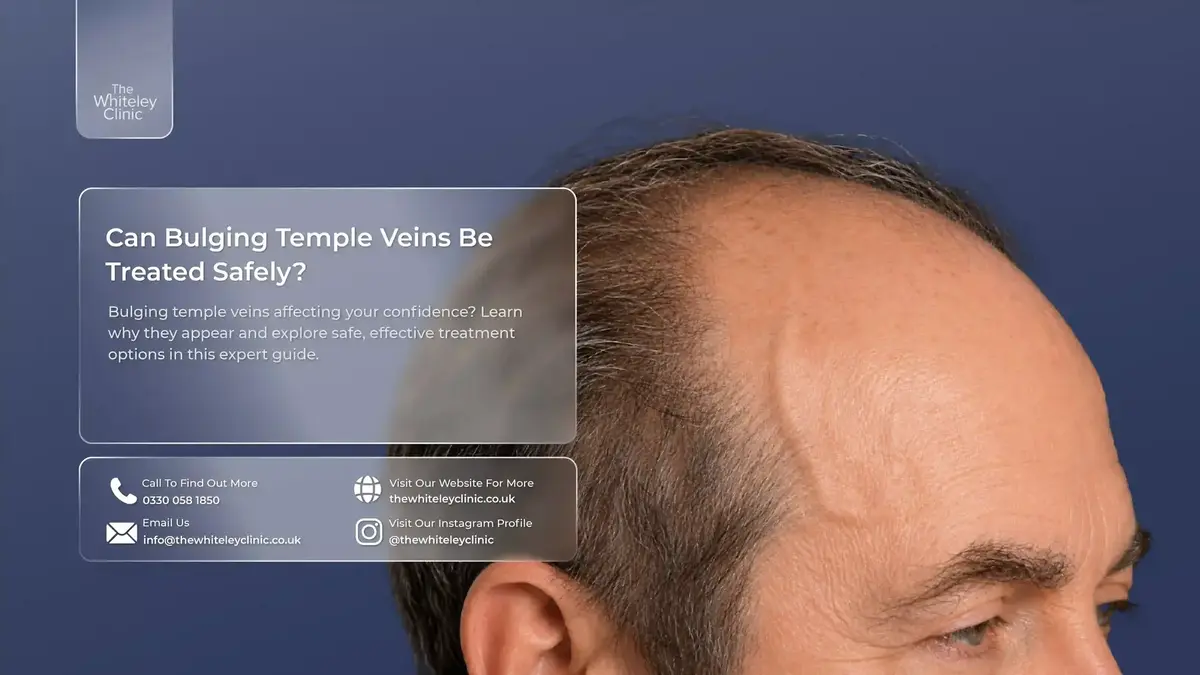
Bulging temple veins are a common aesthetic concern that becomes more noticeable with age, physical activity, or heat. These visible blood vessels on the side of the forehead often cause confusion, as they may be veins or arteries. Understanding the difference is essential, because each requires a different treatment approach. This article explains what bulging temple veins are, how they differ from temporal arteries, and which treatment options provide safe and effective results.
The temple is the flat area on the side of the head, just in front of the ear. Anatomically, this region lies over the temporal bone and contains both superficial veins and arteries. As the years pass, the skin in this area gradually loses its thickness and resilience. At the same time, subcutaneous fat reduces. As a result, blood vessels become more visible.
In addition, factors such as exercise, hot weather, alcohol consumption, and facial expressions can increase blood flow. This increase often causes bulging temple veins to stand out more clearly. Genetics also play a role, as some individuals naturally have more superficial vessels in this area.
Many people refer to any raised vessel on the temple as a vein. However, veins and arteries behave very differently. Correct identification is therefore critical before any treatment.
Bulging temple veins usually appear blue or green. They sit close to the surface of the skin and often flatten when gentle pressure is applied. These veins tend to enlarge with heat, physical exertion, smiling, or alcohol intake. On touch, they feel soft and do not have a pulse.
In contrast, a bulging temporal artery has no visible colour. Instead, it presents as a firm ridge beneath the skin. Pressure does not cause it to collapse, because arterial blood flows under higher pressure. A light touch often reveals a pulsation. Furthermore, temporal arteries usually follow a more tortuous path than veins.
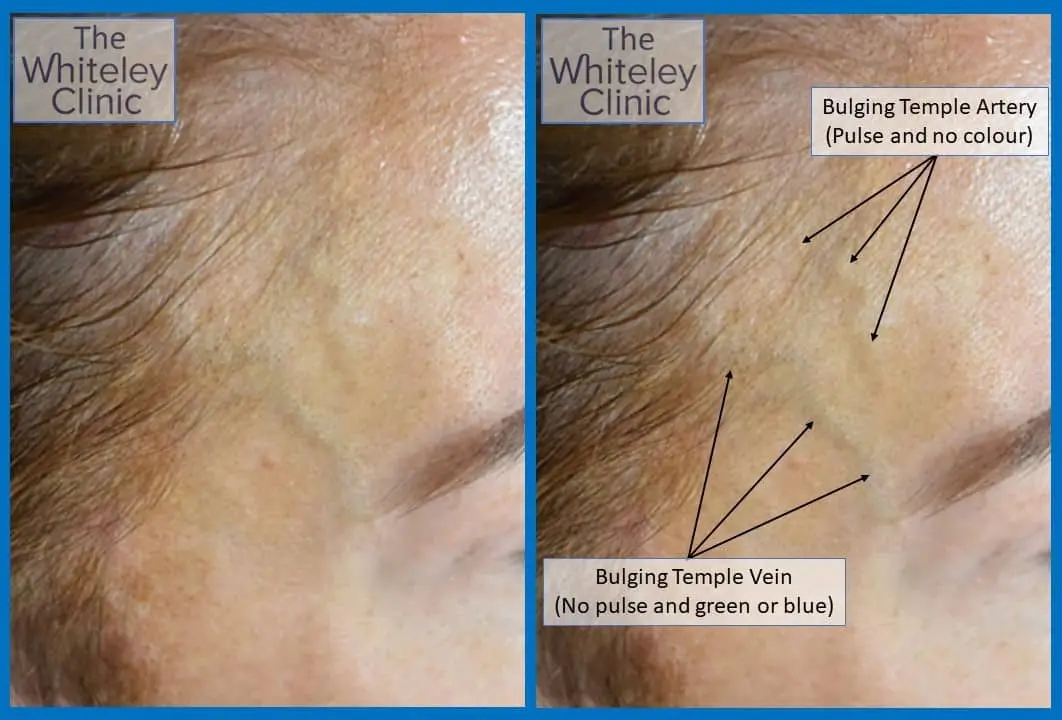
Treating the wrong type of vessel can lead to poor outcomes or unnecessary risk. Veins respond well to certain minimally invasive techniques. Arteries do not. Therefore, visual assessment alone is not enough. Clinical examination and, in many cases, duplex ultrasound help confirm whether bulging temple veins or arteries cause the visible change.
Once the correct structure is identified, an appropriate treatment plan can be selected.
Small bulging temple veins may respond well to laser treatment. Laser therapy delivers focused energy through the skin into the blood inside the vein. When sufficient heat is generated, the vein wall becomes damaged and the vein gradually disappears.
However, this option only suits small and superficial veins. Larger veins carry a higher blood volume. As a result, blood flow dissipates heat too quickly. In addition, increasing laser energy risks skin burns. For these reasons, laser treatment often fails in cases of large bulging temple veins.
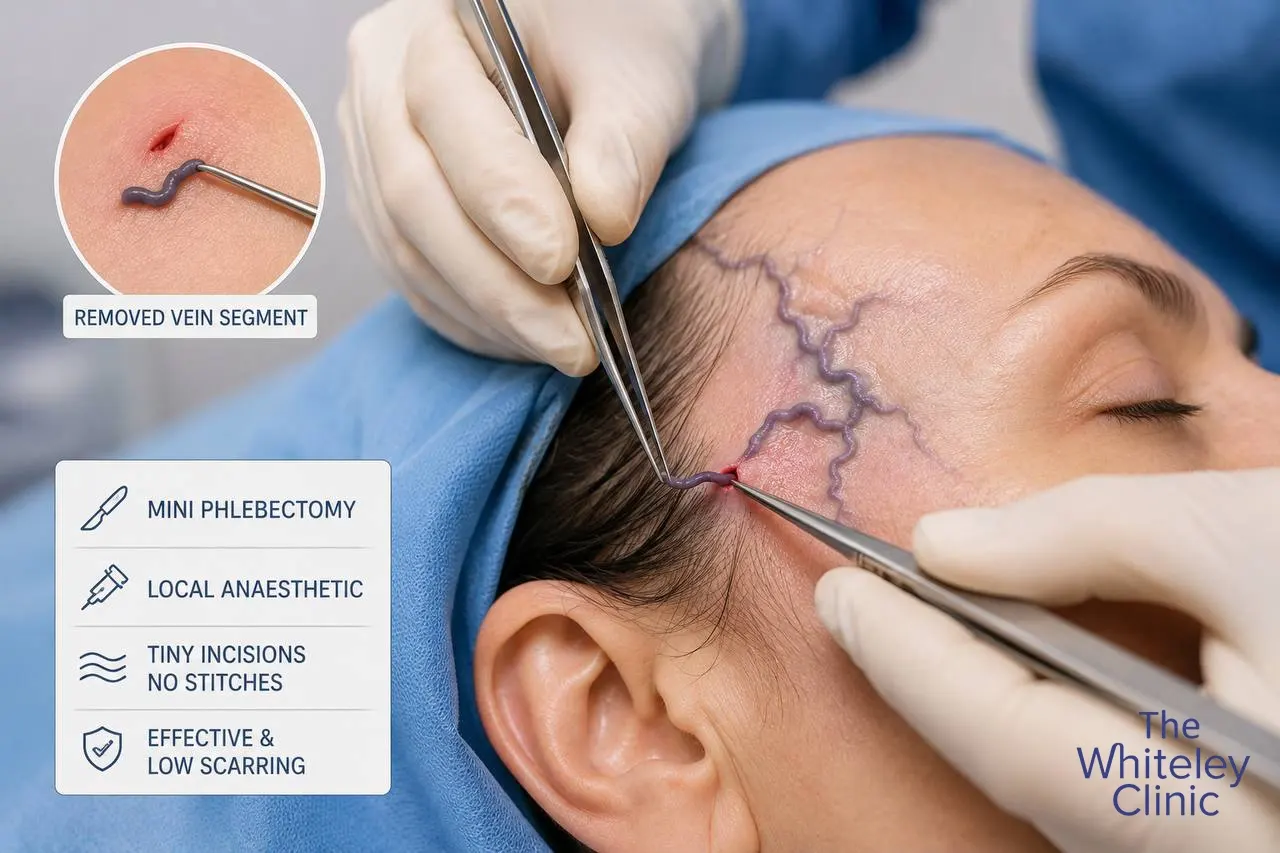
When laser treatment is unsuitable, minor surgical techniques offer a reliable solution. One such method is mini phlebectomy. This procedure removes the vein through very small skin openings under local anaesthetic.
The surgeon extracts the affected vein segments directly. Because the incisions are tiny, stitches are not required. Over time, the marks fade and often become barely visible. This approach effectively eliminates large bulging temple veins that do not respond to external treatments.
Arteries present a different challenge. Their thicker walls, higher pressure, and constant pulsation make them harder to manage. In addition, arteries are less visible than veins, which increases the importance of precise localisation.
Ultrasound guidance allows accurate mapping of the artery. This imaging identifies the safest and most effective point for intervention. Treatment focuses on stopping blood flow through the prominent section without affecting surrounding structures.
A specialised surgical technique achieves this goal by ligating the artery with a permanent, non-absorbable suture. The incision remains minimal and follows natural skin lines to reduce scarring. High-magnification visual aids support precision during the procedure.
Recovery varies depending on whether veins or arteries are treated. After removal of bulging temple veins, bruising is common. It may last from a few days up to three weeks. However, make-up usually conceals discolouration after the initial healing period. Scar marks typically fade within three to six weeks, especially when sun exposure is avoided.
Following arterial treatment, bruising tends to resolve more quickly. Small firm areas may appear under the skin near the treatment site. These usually soften and disappear within four to six weeks. In rare cases, resolution can take up to three months.
Importantly, neither procedure requires removal of skin stitches, as closure occurs naturally.
Modern management of bulging temple veins relies on accurate diagnosis and targeted intervention. Ultrasound imaging improves safety by ensuring that the correct vessel is treated at the correct location. This precision reduces complications and improves cosmetic outcomes.
Equally important, treatment should always consider facial anatomy and aesthetics. The goal is not only to remove the visible vessel but also to preserve natural appearance and symmetry.
Visible vessels on the temple are usually harmless. However, their appearance can cause distress or self-consciousness. A professional assessment helps clarify whether bulging temple veins or arteries are responsible. It also allows discussion of suitable treatment options based on vessel size, depth, and blood flow characteristics.
Early consultation often prevents ineffective treatments and unnecessary procedures.
Bulging temple veins are a frequent cosmetic concern with clear anatomical causes. Although small veins may respond to laser therapy, larger veins and arteries require more advanced techniques. Accurate differentiation between veins and arteries remains the foundation of safe and effective treatment.
Careful assessment, appropriate technology, and precise technique allow clinicians to manage visible temple vessels successfully while preserving natural facial aesthetics.