
How Can You Effectively Treat Calluses and Corns on Feet?
August 15, 2026
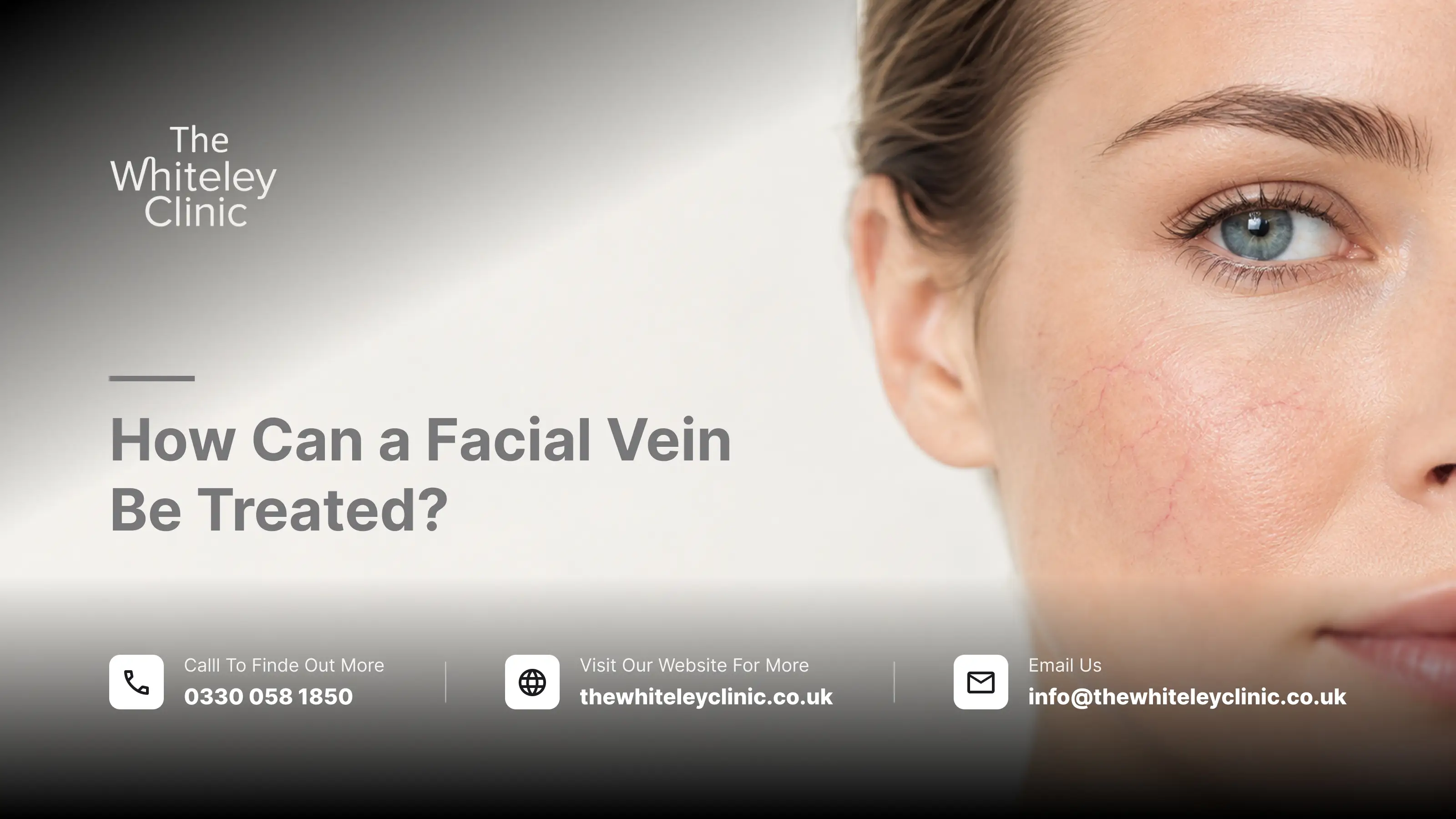
Facial vein changes are common and often cause cosmetic concern rather than medical risk. A facial vein may appear as a fine red thread on the cheeks, a cluster of telangiectasia around the nose, or a larger blue-green vessel across the forehead or temple. Although these veins rarely indicate serious disease, many individuals seek treatment to improve skin clarity and confidence. Management depends on size, colour, depth and whether the facial vein is flat or bulging. Modern vascular techniques allow precise, targeted treatment with predictable outcomes.
A facial vein is part of the superficial venous network that drains blood from the skin and subcutaneous tissues. Under normal conditions, these vessels remain discreet. However, several factors increase their visibility.
First, genetic predisposition plays a role. Individuals with fair or thin skin often show superficial vessels more clearly. Secondly, chronic sun exposure weakens dermal collagen and makes a facial vein more apparent. In addition, hormonal fluctuations, pregnancy and ageing reduce skin thickness and elasticity.
Rosacea frequently contributes to persistent facial redness and visible thread veins. Repeated vasodilation leads to permanent telangiectasia. Furthermore, previous facial surgery or trauma may alter local venous drainage and cause enlargement of a superficial vessel.
Importantly, most facial vein presentations are cosmetic. Nevertheless, assessment by a clinician with expertise in venous disease ensures accurate diagnosis and appropriate treatment planning.
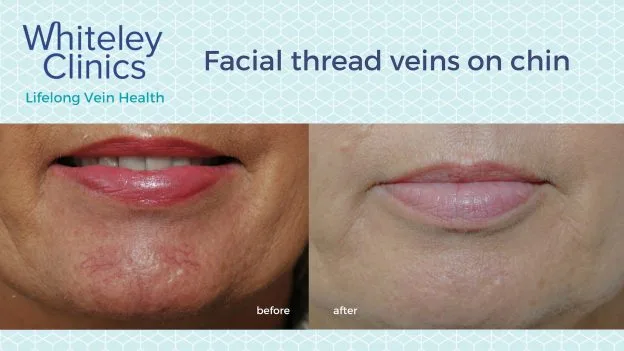
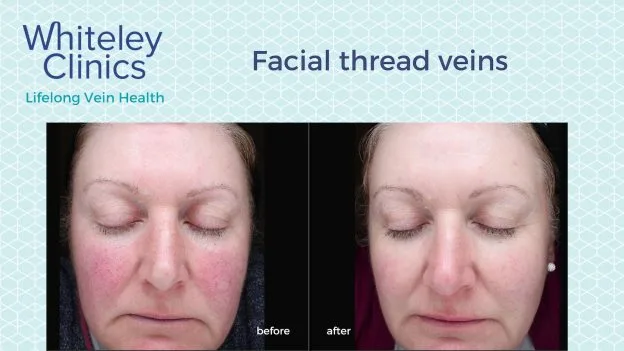
Small red vessels on the cheeks or chin are commonly described as thread veins. In medical terminology, these represent telangiectasia. They usually lie within the superficial dermis and measure less than 1 mm in diameter.
When redness is widespread rather than focal, Intense Pulsed Light (IPL) offers an effective option. IPL delivers broad-spectrum light energy that targets haemoglobin within superficial vessels. As a result, thermal damage causes vessel collapse while sparing surrounding tissue. IPL also benefits patients with rosacea-associated erythema.
For more discrete and defined red vessels, electro surgery provides precise treatment. A fine probe delivers controlled electrical current to the targeted facial vein. The heat coagulates the vessel wall and induces thrombosis. Subsequently, the body reabsorbs the treated vein and the skin gradually heals. This method suits well-demarcated telangiectasia that do not respond adequately to light-based therapy.
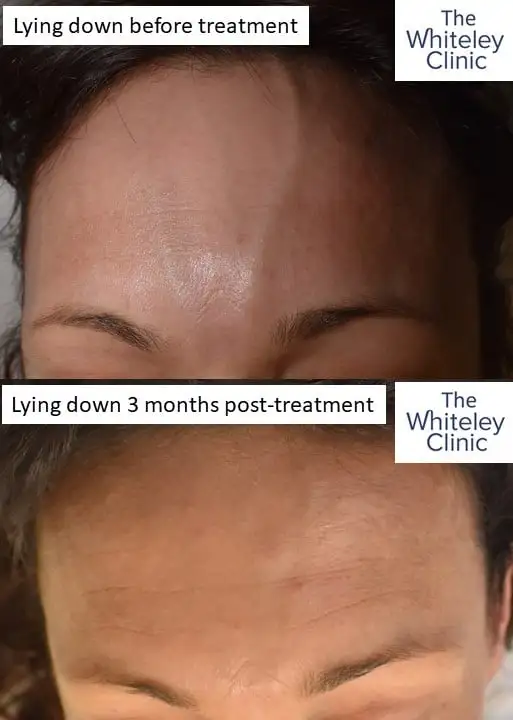
A larger facial vein on the forehead or temple often appears blue or green. These vessels typically lie deeper than thread veins. They may remain flat, or in some cases become visibly raised.
When the vessel is not bulging, Nd:YAG laser treatment can be appropriate. This laser emits a wavelength that penetrates more deeply into tissue compared with IPL. It selectively targets haemoglobin and generates thermal energy within the vessel lumen. Consequently, the treated facial vein collapses and undergoes gradual resorption.
However, vessel diameter determines suitability. Laser energy cannot always deliver sufficient thermal effect in larger calibre veins. Therefore, careful assessment remains essential before selecting treatment.
Further clinical information about prominent forehead veins and temple veins can be found on the dedicated condition pages for forehead veins and temporal veins.
A bulging facial vein often indicates a larger superficial vein with higher blood volume. Non-surgical options may prove ineffective in these cases. Instead, ambulatory phlebectomy offers a definitive solution.
Phlebectomy involves removing the vein through very small skin incisions under local anaesthetic. The technique requires meticulous anatomical knowledge because facial veins communicate with deeper venous structures. Precision reduces trauma and supports optimal cosmetic healing.
Removal of veins on the temple and forehead presents particular technical challenges. The region contains important vascular and neural structures. For this reason, treatment should be undertaken only by clinicians experienced in venous surgery of the face.
Emerging endovenous laser techniques have also expanded treatment possibilities for selected patients. These approaches treat the vein internally using controlled laser energy delivered within the vessel lumen.
Some practitioners use sclerotherapy to treat a facial vein. This technique involves injecting a sclerosant solution to irritate and close the vessel. Although widely used in the legs, facial application carries additional anatomical risk.
Veins in the cheek, temple and forehead can connect with the orbital venous system. In rare but serious circumstances, sclerosant could track retrograde towards deeper veins. Because of this anatomical relationship, sclerotherapy on the face should be reserved for exceptional cases and performed only with careful consideration of risk.
A thorough vascular assessment reduces the likelihood of complications and guides selection of the safest modality.
Most patients pursue facial vein treatment for aesthetic reasons. Visible veins may disrupt skin tone and create an aged or fatigued appearance. In addition, high-definition photography and social media have increased awareness of subtle vascular changes.
Treatment planning should consider skin type, vessel diameter, colour and anatomical location. Moreover, expectations must remain realistic. While modern techniques achieve significant improvement, individual healing responses vary.
Those primarily interested in aesthetic facial treatments can explore additional options at Absolute Aesthetics, where broader cosmetic services are available.
Although a facial vein rarely signals dangerous pathology, accurate diagnosis remains crucial. Certain vascular lesions, such as venous lakes or cherry angiomas, require differentiation from simple telangiectasia. Furthermore, persistent unilateral enlargement may warrant further investigation.
Comprehensive assessment enables tailored treatment selection. It also ensures that any underlying venous abnormality receives appropriate management.
Facial vein concerns often stem from visible telangiectasia, enlarged temple veins or prominent forehead vessels. Modern vascular therapies, including IPL, electro surgery, Nd:YAG laser and phlebectomy, provide effective solutions when applied appropriately. The key lies in matching the technique to the specific characteristics of each facial vein.
With careful evaluation and evidence-based intervention, patients can achieve a clearer complexion and improved confidence while maintaining safety and anatomical integrity.