
How Can You Effectively Treat Calluses and Corns on Feet?
August 15, 2026
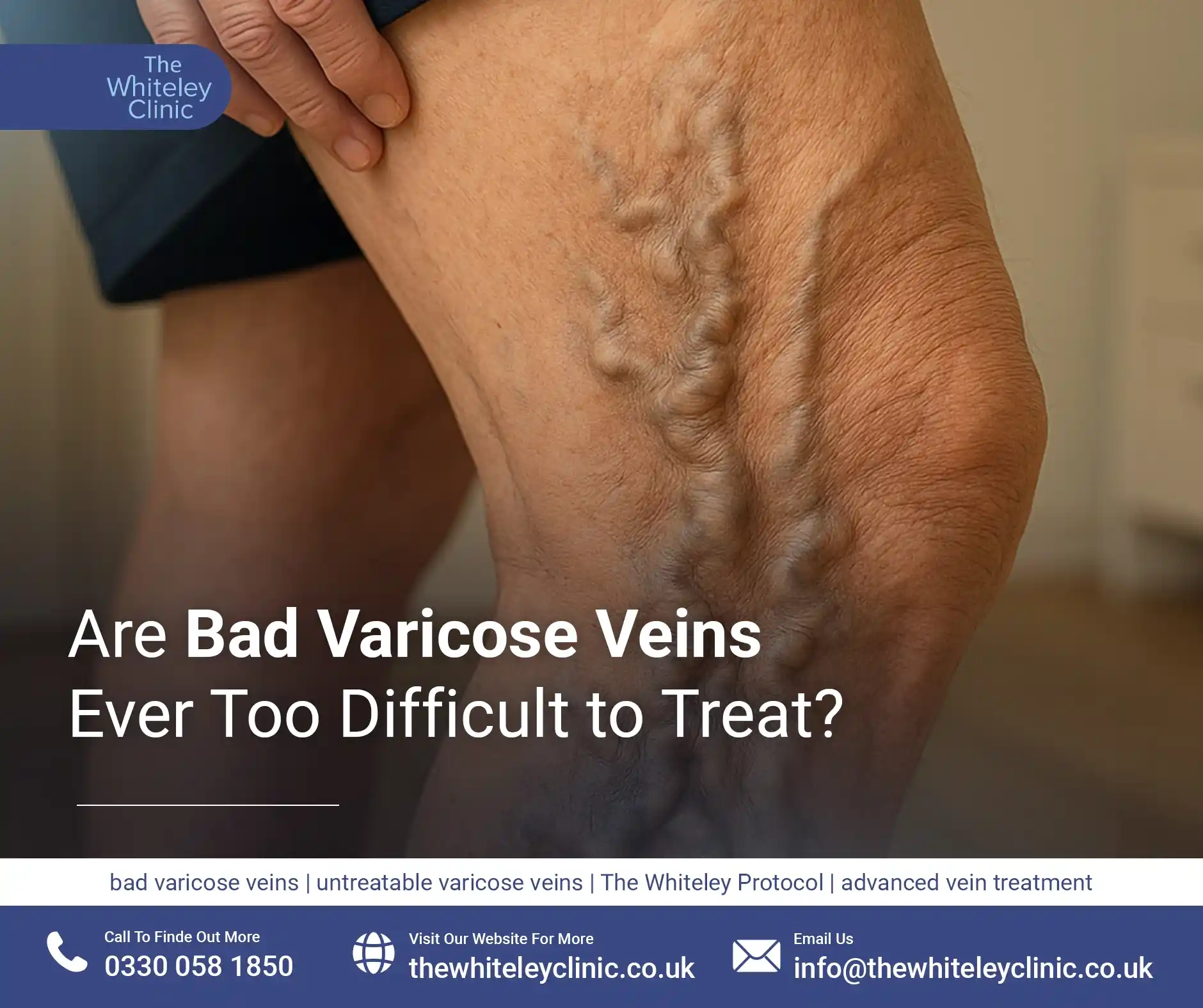
Many people believe that bad varicose veins are beyond treatment. In reality, modern vascular medicine proves the opposite. Even patients with severe or recurrent varicose veins can now achieve lasting relief through advanced diagnostic techniques and minimally invasive procedures. Over recent years, numerous individuals who were told their veins were “too bad to treat” have regained comfort and confidence through The Whiteley Clinic’s evidence-based approach, known as The Whiteley Protocol.
Across the UK, it is not uncommon for patients to hear that their varicose veins are too complicated or advanced for further treatment. This misconception usually stems from limited diagnostic assessment or outdated treatment methods. Traditional vein stripping and basic ultrasound evaluations can sometimes fail to identify the true source of the problem, leading to incomplete or temporary results.
However, the condition itself is rarely the issue, poor diagnosis and incomplete treatment are. Bad varicose veins usually signal that some veins, often deep or perforating ones, have not been properly assessed or treated. With accurate mapping using duplex ultrasound and the expertise of specialists trained in venous disease, even the most complex cases can often be resolved.
Developed by Professor Mark Whiteley, The Whiteley Protocol has transformed the management of venous disease in the UK and internationally. It is a structured system of diagnosis and treatment that ensures every possible underlying cause of bad varicose veins is identified and addressed.
The process begins with a detailed duplex ultrasound scan performed by a specially trained vascular technologist. Unlike standard scans, this comprehensive assessment evaluates not only superficial veins but also deeper and pelvic veins. Once the underlying issues are fully mapped, a personalised treatment plan is created, targeting every vein responsible for reflux or regrowth.
This precise and step-by-step approach explains why patients previously told their condition was untreatable often find complete relief at The Whiteley Clinic.
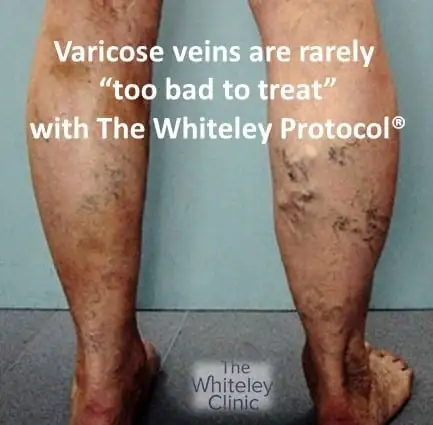
There are several key reasons why some patients are mistakenly informed that their bad varicose veins cannot be treated:
Perforating veins connect the superficial and deep venous systems. When their valves fail, high-pressure blood leaks into surface veins, causing bulging, pain, and recurrence after surgery. Many clinics overlook these veins entirely.
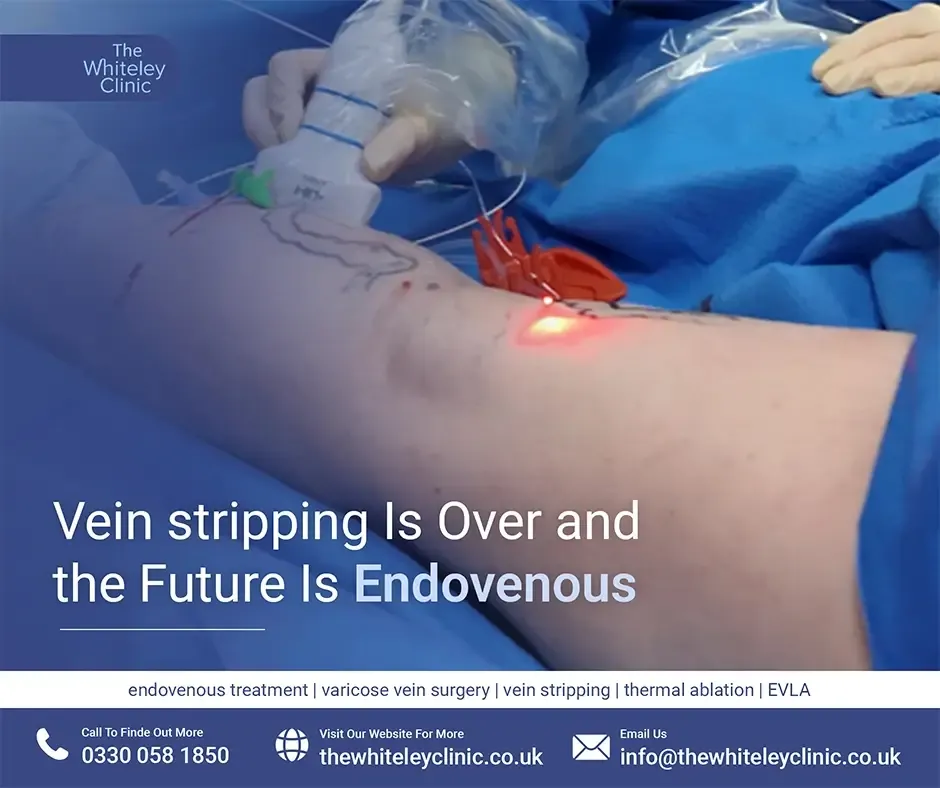
In 2001, The Whiteley Clinic introduced the TRLOP technique (TransLuminal Occlusion of Perforators). This minimally invasive procedure uses a fine needle to close faulty perforating veins under ultrasound guidance—without the need for open surgery or general anaesthetic.
Before endovenous treatments became available, open vein stripping was the standard method. Unfortunately, after stripping, new veins often grow back in a tangled and irregular pattern—a process called neovascularisation. These new veins are prone to leakage and recurrent symptoms.
To treat this complex regrowth, The Whiteley Clinic developed the Hedgehog Technique, which effectively seals these abnormal vessels using precise thermal energy, restoring healthy blood flow.
A frequently overlooked cause of bad varicose veins is reflux from the pelvic veins. This issue is especially common in women who have had pregnancies but can also affect men. If untreated, the pelvic veins continue to feed the varicose veins in the legs, leading to constant recurrence.
Using advanced imaging and targeted pelvic vein embolisation, specialists at The Whiteley Clinic can block these problem veins safely and effectively, preventing further regrowth.
Some patients who were told their varicose veins “came back” actually never had the problem veins removed or sealed properly in the first place. On scanning, many of these veins are still present. This is not because the condition is untreatable but because the earlier procedure was incomplete.
By performing a thorough ultrasound evaluation under The Whiteley Protocol, these residual veins can be located and successfully treated.
Only in rare cases do bad varicose veins fall into the category of being extremely difficult to manage. This typically occurs in patients suffering from post-thrombotic syndrome (PTS), a long-term complication following multiple deep vein thromboses (DVT). These patients often experience severe swelling, leg heaviness, and pain during walking, known as venous claudication.
Even in these challenging cases, modern venous stenting techniques now offer effective relief by reopening blocked deep veins and restoring circulation. This means that true treatment failure is extremely rare in 2025.
Most patients who believe they have “deep vein damage” or “untreatable varicose veins” are, in fact, misdiagnosed. A comprehensive duplex ultrasound performed according to The Whiteley Protocol often reveals treatable superficial or perforating vein reflux rather than deep venous obstruction. Once treated correctly, the symptoms usually disappear.
This highlights the importance of consulting a dedicated venous specialist rather than accepting the idea that bad varicose veins are permanent.
Under the guidance of Professor Mark Whiteley and a team of highly skilled vascular specialists, The Whiteley Clinic continues to pioneer safe, effective, and minimally invasive treatments for even the most complex varicose veins. Each patient receives a tailored plan based on accurate diagnosis and modern endovenous techniques, ensuring long-lasting results and reduced recurrence.
In the modern era, bad varicose veins are rarely too severe to treat. With correct diagnosis, advanced imaging, and evidence-based procedures such as TRLOP, the Hedgehog Technique, and pelvic vein embolisation, even long-standing cases can be cured or significantly improved.
Anyone told that their varicose veins are “too bad to treat” should seek a second opinion from specialists following The Whiteley Protocol. The results over recent years demonstrate that with expert care, almost all patients can achieve both medical and cosmetic recovery.