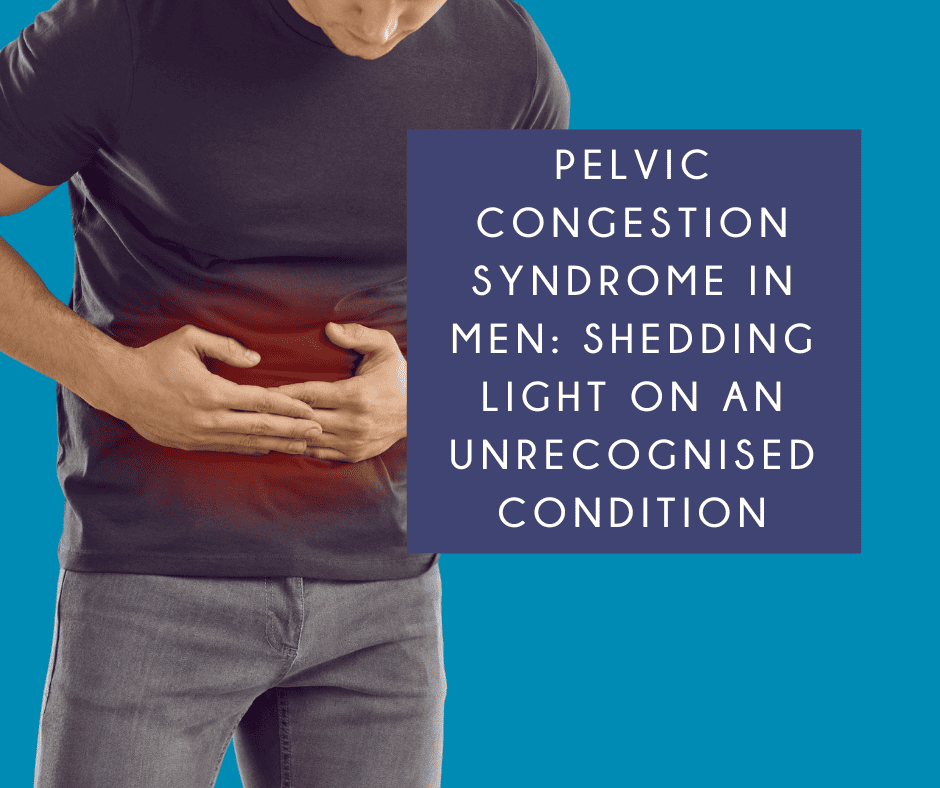
Shedding Light on an Unrecognised Condition
Pelvic Congestion Syndrome (PCS) is a condition commonly associated with women, but what many people don't realise is that men can also be affected by this often overlooked condition. While PCS is more prevalent in women, it's essential to raise awareness about its occurrence in men as well. In this blog post, we will explore the basics of Pelvic Congestion Syndrome, its symptoms, and best treatment option for men.
Understanding Pelvic Congestion Syndrome:
Pelvic Congestion Syndrome refers to the presence of chronic pelvic pain caused by
varicose veins in the lower abdomen. It occurs when the veins in the pelvic region, such as the gonadal veins and internal iliac veins, become dilated and dysfunctional. This venous insufficiency can lead to a range of symptoms and discomfort, affecting both men and women.
Symptoms of PCS in Men:
Men experiencing PCS may encounter several symptoms, including:
- Chronic pelvic pain: This pain is typically dull and aching, with varying intensity.
- Testicular pain: Discomfort or pain may radiate to the testicles or groin area.
- Pain during or after sexual intercourse: Engaging in sexual activity can trigger or worsen the pain.
- Lower back pain: A persistent ache in the lower back is a common symptom.
- Urinary and bowel problems: Some men may experience urinary urgency, frequency, or difficulty in emptying the bladder. Bowel irregularities, such as constipation, may also be present.
Diagnosis and Treatment:
Diagnosing Pelvic Congestion Syndrome in men requires a comprehensive
diagnostic scan utilising the Holdstock-Harrison technique to diagnose pelvic vein reflux.
At The Whiteley Clinic, our treatment option for Pelvic Congestion Syndrome is
Pelvic Vein Embolisation. This is a minimally invasive, walk-in walk-out procedure, that is performed by placing embolisation coils to block or close off the affected veins, effectively reducing and or stopping congestion and pain.
While Pelvic Congestion Syndrome is often associated with women, it is crucial to recognise that men can also experience this condition. Increasing awareness about Pelvic Congestion Syndrome in men is essential for early diagnosis and appropriate treatment. If you or someone you know is experiencing chronic pelvic pain or related symptoms, please contact our team of specialists so we can provide the necessary guidance for diagnosis and effective management of Pelvic Congestion Syndrome. Remember, seeking professional medical advice is crucial for accurate diagnosis and tailored treatment plans.
Don't let Pelvic Congestion Syndrome define you – trust The Whiteley Clinic to deliver the care and results you deserve and
book your consultation today