


How Can You Effectively Treat Calluses and Corns on Feet?
August 15, 2026
Microsclerotherapy offers a safe and effective solution for thread veins, also known as spider veins, particularly on the legs. Many people choose this treatment not only to improve their appearance but also to enhance their comfort.
This article explains what the treatment involves, who can benefit from it, how clinicians carry it out, the aftercare requirements, the potential risks, and why The Whiteley Protocol® plays a central role in achieving the best results.
Clinicians use Microsclerotherapy as a minimally invasive technique to treat thread veins or spider veins. During the procedure, they inject a special solution called a sclerosant into the affected veins. This approach directly targets the problem area, as the liquid damages the vein wall, causing it to collapse and allowing the body to absorb it naturally as it heals.
Unlike other treatments, this method targets the visible veins directly while also addressing the small hidden networks beneath them. For this reason, clinicians consider it more effective than laser or light-based techniques for veins located below the level of the heart, such as those in the legs, where gravity influences blood flow.
Microsclerotherapy is most appropriate for thread veins on the legs and body, provided they are below the level of the heart. Patients with thread veins on the face are usually advised to consider alternatives such as Electro Surgery, Intense Pulsed Light (IPL), or laser, since the skin on the face is more sensitive.
Research shows that many people with thread veins also have underlying varicose veins.
In a 2001 Australian study, researchers detected hidden varicose veins in 89% of patients who believed they only had thread veins, using duplex ultrasound. This is why clinicians must conduct a thorough investigation before starting treatment.
Before any Microsclerotherapy, it is essential to identify whether deeper varicose veins are present. At The Whiteley Clinic, all patients undergo a venous duplex ultrasound scan. This confirms if larger veins are feeding into the thread veins and keeping them open.
The Whiteley Protocol® was specifically developed to ensure patients receive the right treatment. By detecting and addressing hidden problems first, the clinic greatly improves the chance of long-term success. Without this step, treatment may fail in the majority of cases.
Clinicians perform Microsclerotherapy as an outpatient procedure. They do not require general anaesthesia. Instead, they use a very fine needle to inject tiny amounts of sclerosant directly into the veins. The needle is so delicate that patients usually feel little more than a small pinprick.
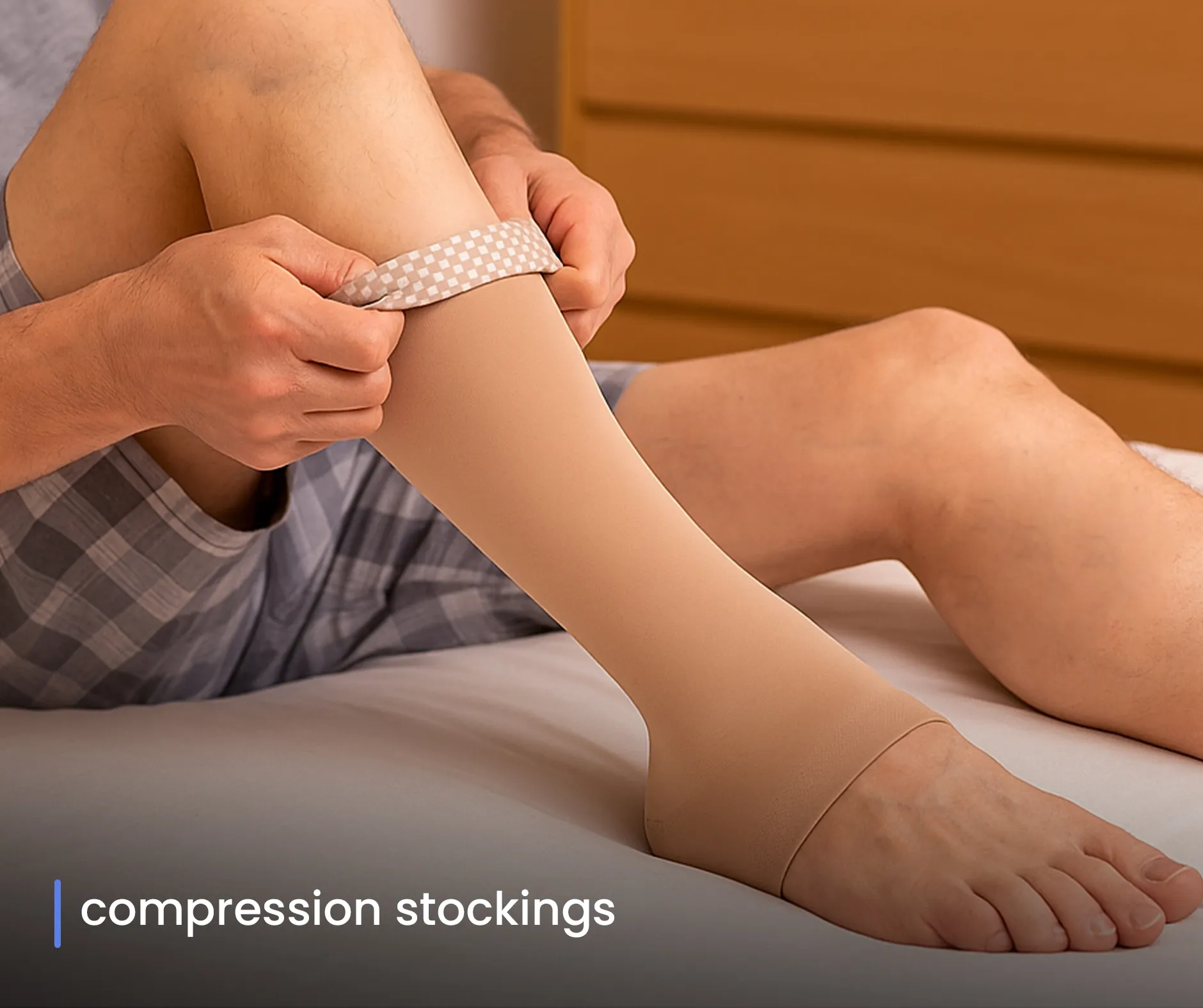
A powerful magnifying glass with bright circular lighting is used to ensure the clinician can see even the tiniest thread veins clearly. Once the sclerosant is injected into the vein, firm pressure is applied directly to the treated area using medical tape to prevent blood from returning. This compression is essential to allow the vein to collapse and be absorbed by the body. Finally, patients wear compression stockings continuously to maintain consistent pressure, which supports healing and optimises the treatment results.
Clinicians perform the treatment with a high level of skill, even though the steps may appear straightforward. At The Whiteley Clinic, the team takes great care to ensure both accuracy and patient comfort.
Many patients go through several treatment sessions before they achieve the desired outcome. Initial improvements are usually visible within two to three months. However, the body continues to absorb and repair the treated veins gradually, and full results may take up to 12 to 15 months. Patience is essential, as this treatment offers a long-term solution for healthier-looking legs rather than a quick fix.
Patience is important. This treatment is not a quick fix for the weekend but a long-term solution for healthier-looking legs.
After treatment, clinicians emphasise the importance of compression. They advise patients to wear compression stockings continuously for at least 21 days and nights. As a result, this continuous pressure helps the body turn the treated vein into scar tissue. Removing the stockings too early can allow blood to re-enter the vein, which may cause brown staining.
At The Whiteley Clinic, clinicians give patients clear instructions about when to remove tapes and how to manage their stockings. While the stockings may feel tight, most patients find them manageable. Patients usually experience no downtime and can return to work the next day.
In the first few weeks, the treated areas may look bruised or discoloured. These marks gradually fade over three to four weeks. By six to eight weeks, the appearance improves significantly, and by three months the long-term results become clear.
We encourage you to watch the video on this page for a more detailed explanation of how clinicians perform Microsclerotherapy and what you can expect.
The Whiteley Clinic achieves very positive outcomes. Studies show that around 95% of patients express satisfaction with their results, and 80% rate the results as excellent. This high success rate is largely due to the clinic’s approach of first identifying the underlying causes before starting treatment.
Although patients may notice initial improvements quite quickly, clinicians often see the very best outcomes appear after several months, as the body needs time to fully absorb and repair the treated veins.
Like all medical procedures, this treatment carries some risks. The most common side effect is brown staining on the skin, usually caused by patients removing their stockings too early. These marks often fade over time, although they can occasionally remain permanent.
In rare cases, clinicians may encounter an ulcer if the sclerosant enters a tiny artery. Another possible complication is the appearance of red patches, although we can remove “telangiectatic matting” to align with the original landing page content. These issues occur more often when clinicians do not detect and treat underlying varicose veins first. Fortunately, by performing Microsclerotherapy correctly and following The Whiteley Protocol®, clinicians significantly reduce the chance of complications.
The Whiteley Protocol® further reduces the chance of complications by ensuring they identify and manage all underlying problems before treatment.
In conclusion, Microsclerotherapy is an established and reliable treatment for thread veins on the legs. It is safe, minimally invasive, and highly effective when performed by experienced specialists. The key to lasting results lies in careful diagnosis, thorough aftercare, and the use of proven protocols such as The Whiteley Protocol®. For anyone troubled by thread veins, this procedure offers an excellent chance of restoring both confidence and comfort.