
How Can You Effectively Treat Calluses and Corns on Feet?
August 15, 2026
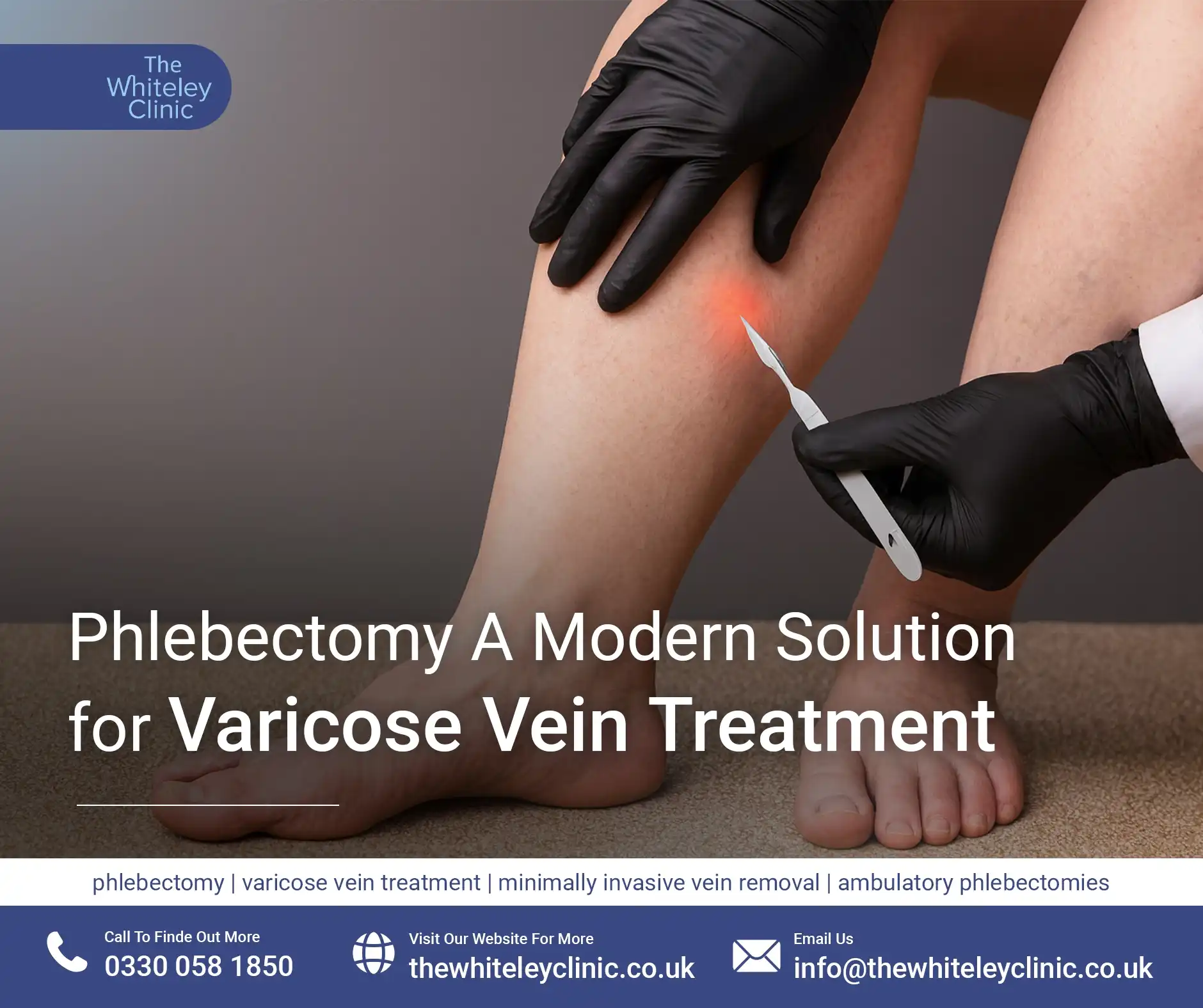
Phlebectomy is a contemporary, minimally invasive technique that has revolutionised the treatment of surface varicose veins.
Unlike outdated surgical methods, it focuses on removing the visible, bulging veins just beneath the skin through very small incisions. In this article, you will discover the true meaning of the procedure, how it differs from stripping, why it is part of The Whiteley Protocol, and in which cases it remains the most effective treatment.
The term comes from two medical roots:
In simple terms, Phlebectomy means the removal of a vein. However, in clinical practice, the term specifically refers to the removal of surface varicose veins. These are the bulging veins that appear under the skin, often visible on the legs when standing. While the name might sound complex, the technique itself is remarkably straightforward and patient-friendly.
Doctors sometimes refer to it as ambulatory Phlebectomies, highlighting that patients can walk immediately after the treatment and do not need a hospital stay or general anaesthetic.
Read more: Veins around eyes removed by mini-phlebectomy
Surgeons design Phlebectomies for superficial veins that protrude on the skin surface. These varices are not the deep truncal veins but rather the rope-like or knotted veins that patients can easily see and feel.
By making small incisions under local anaesthetic, surgeons remove these unsightly veins with minimal trauma.
This makes phlebectomy particularly suitable for patients with prominent, symptomatic surface veins. For deeper venous reflux, surgeons recommend additional procedures such as endovenous laser ablation (EVLA) or radiofrequency ablation. When combined with these treatments, it offers both functional and cosmetic benefits.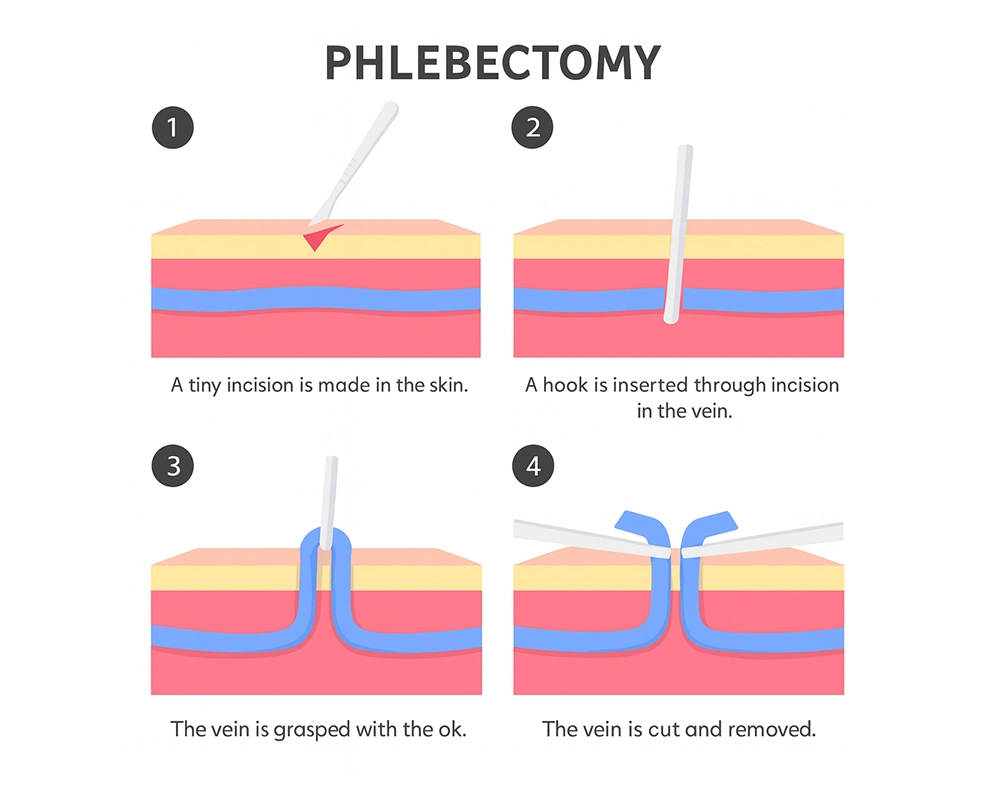
Although both involve removing veins, the difference is significant. Surgeons performed stripping as the older operation, tying off truncal veins hidden deep under the skin and then pulling them out.
This caused extensive bruising, pain, and slow recovery. In many patients, it also led to recurrence because the body attempted to regrow the stripped veins.
Phlebectomies, by contrast, are a minimally invasive method. They target only surface veins that lie just under the skin. The technique uses tiny cuts of less than 2 mm and a fine hook to gently extract the vein.
Patients recover much faster, experience minimal scarring, and feel less discomfort compared with stripping.
🎥 Watch the video to see Professor Whiteley explain the differences between these two treatment methods in practice.
Research at The Whiteley Clinic has demonstrated that stripping truncal veins not only causes unnecessary trauma but also stimulates the body to regrow these veins. As a result, recurrence rates increase, making it an ineffective long-term treatment.
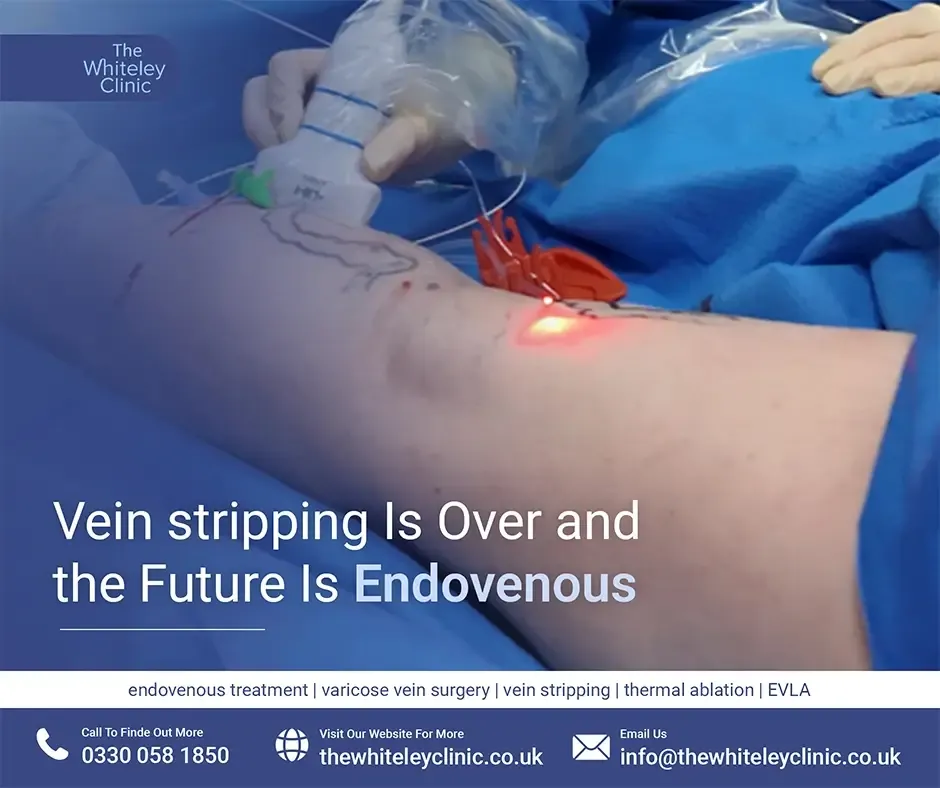
When Mark Whiteley of The Whiteley Clinic introduced endovenous surgery to the UK in March 1999, surgeons initially considered the main advantage to be the “keyhole” surgical technique, which left smaller scars compared with traditional surgery.
Over time, it became clear that the most important benefit was the ability to perform these procedures under local anaesthetic as ambulatory, walk-in walk-out surgeries, reducing pain and recovery time significantly.
With the arrival of endovenous techniques, stripping became obsolete. The Whiteley Protocol now combines evidence-based methods such as EVLA, radiofrequency, TRLOP, and pelvic vein embolisation.
Within this protocol, surgeons continue to use minimally invasive techniques to treat surface veins, while they no longer require or recommend stripping.
This transition from traditional stripping to modern minimally invasive approaches was first described in the medical literature by Whiteley, Davey & Placzek (2006), marking an important milestone in contemporary vein care.
Surgeons carefully structure the phlebectomy procedure to ensure precision, safety, and minimal discomfort. They follow several key stages:
Varicose veins often collapse when the patient lies down, making them invisible on the operating table. Therefore, the patient is examined standing up before surgery. The surgeon marks the visible bulging veins with a permanent marker. This allows surgeons to accurately target each vein during the operation, even though the veins flatten when the patient lies down. Properly marking the veins helps them avoid missing any affected areas and achieve the best cosmetic and functional results.
Local anaesthetic is injected under the skin along the marked veins. This injection may sting briefly, but it numbs both the skin and the vein itself. The Whiteley Clinic uses refined techniques to minimise discomfort, including surface creams and improved anaesthetic formulations. Administering the anaesthetic carefully allows the patient to remain awake but comfortable throughout the procedure.
Surgeons make tiny incisions, typically less than 2 mm, along the marked veins. They insert a fine hook, similar to a blunt crochet hook, to gently lift the vein through the incision. Then they apply small clips to secure the vein and carefully “milk” it out through each incision.
Patients usually feel only a pulling or tugging sensation rather than pain. This technique preserves surrounding nerves and minimises trauma, reducing bruising and speeding up recovery.
Because the incisions are extremely small, surgeons close them with skin tapes instead of stitches. These tapes support healing, and patients can remove them after three days.
The minimal closure method reduces scarring, prevents infection, and allows patients to return to daily activities quickly.
🎥 Watch the video for a closer look at how local anaesthetic and micro-incisions are used during the procedure.
Phlebectomy is most effective for:
However, if ultrasound scanning shows reflux in truncal or perforator veins, Phlebectomies alone are insufficient.
In such cases, surgeons combine the procedure with other endovenous treatments. This combined approach is why surgeons at The Whiteley Clinic first conduct a comprehensive duplex ultrasound scan before making any treatment decisions. Duplex scanning helps surgeons detect all underlying problems and guides the exact choice of treatment.
At The Whiteley Clinic, surgeons rarely use Phlebectomies in isolation. Instead, they integrate them within The Whiteley Protocol, a proven sequence of treatments tailored to each patient.
For example, surgeons may treat truncal reflux with EVLA, address pelvic vein problems with embolisation, and then remove the remaining surface varices. This step-by-step method allows them to tackle both the underlying cause and the visible problem.
Patients benefit not only from the removal of unattractive veins but also from the prevention of recurrence by tackling the hidden sources of venous reflux. This comprehensive approach, combining cutting-edge technology with clinical expertise, is what makes The Whiteley Clinic a global leader in vein care.