
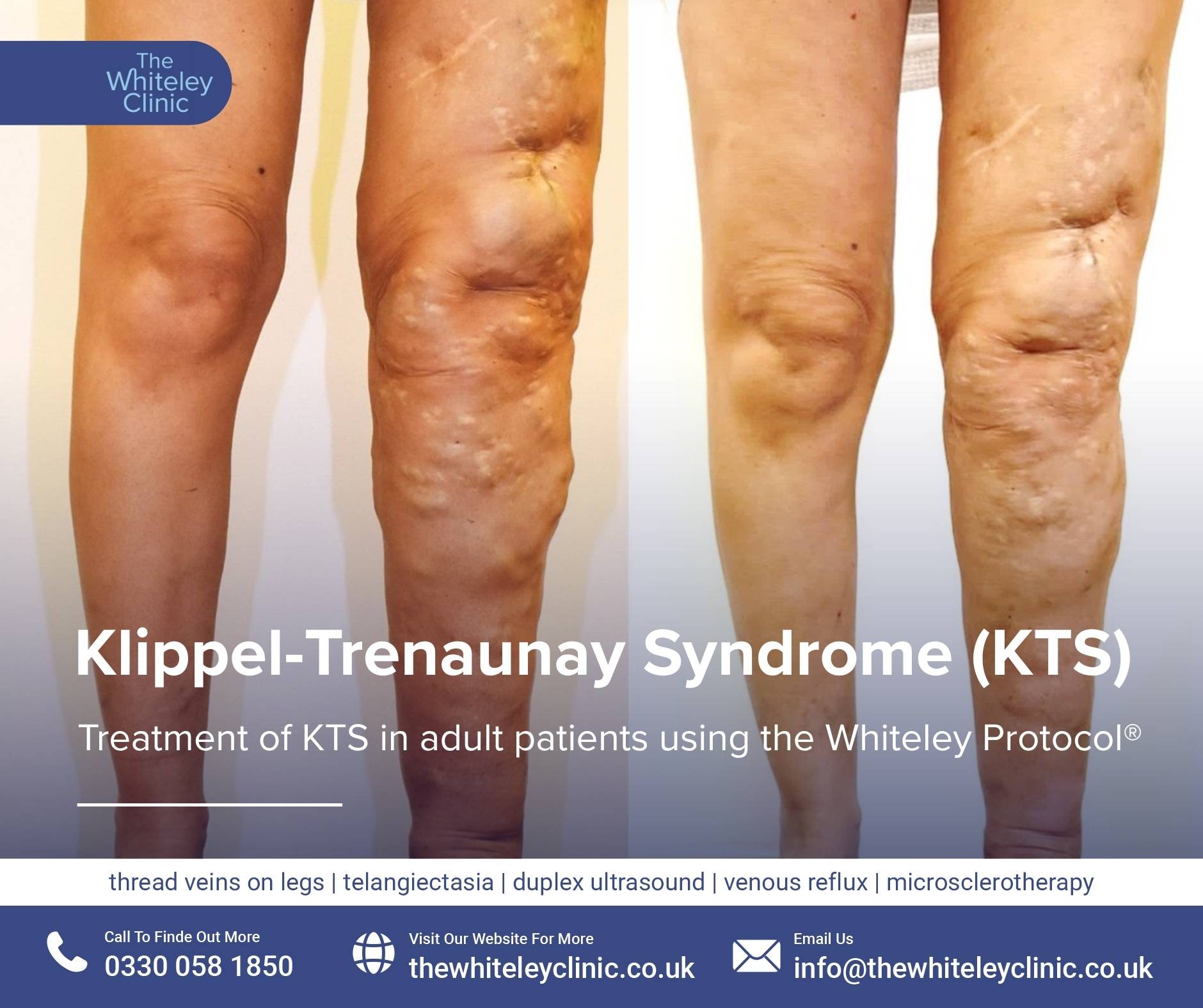
Klippel-Trenaunay Syndrome (KTS)
March 26, 2026

We recently read a story based on an American Celebrity, Hayley Hubbard, who only experienced varicose veins throughout her pregnancies. Hayley shared on Instagram that she has struggled with "miserably painful" varicose veins during each of her pregnancies, sharing photos and videos of her legs to give you a glimpse of what the veins look like up close.
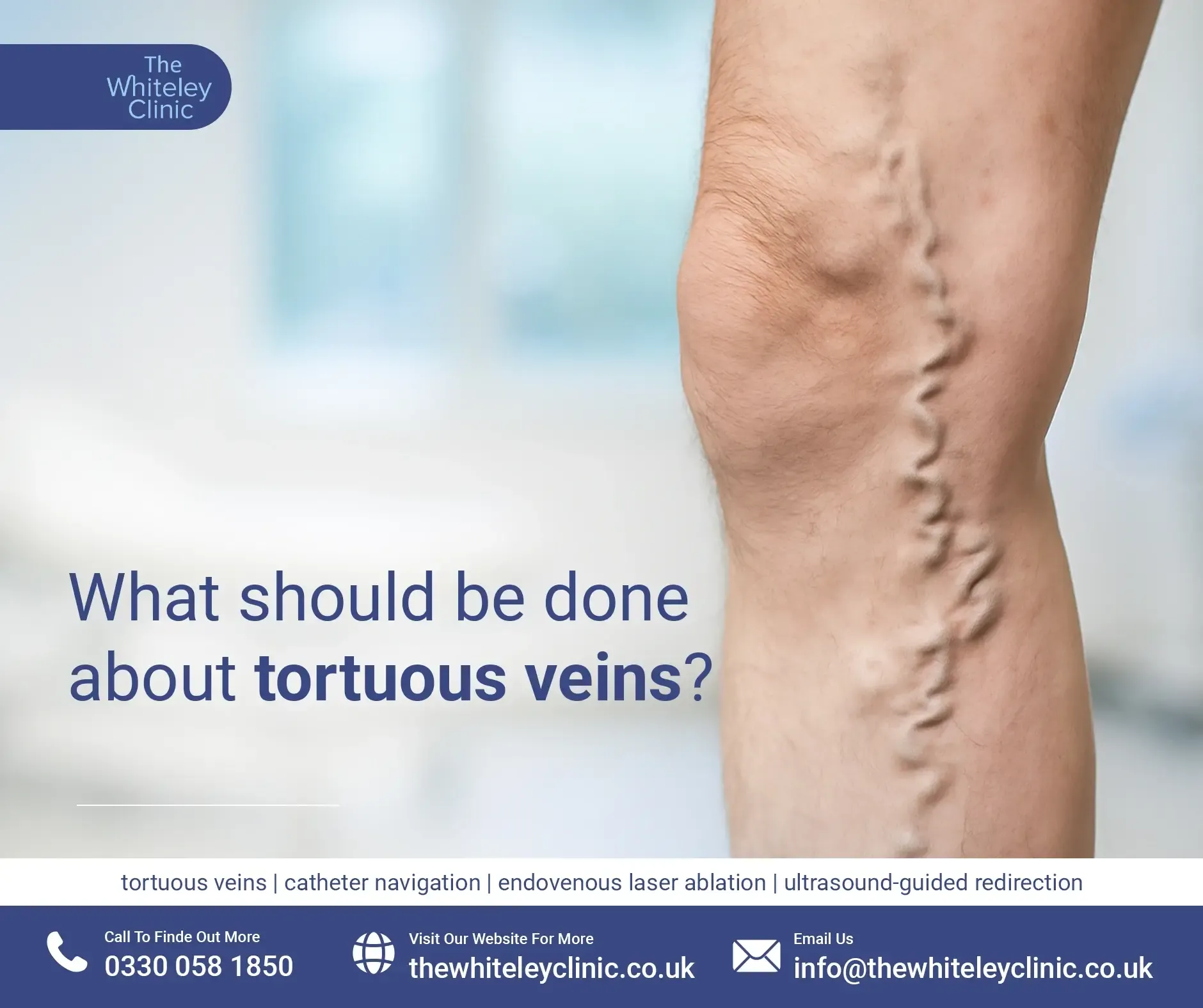
Simply answered, No, varicose veins can not just be brought on during pregnancy and then completely disappear when not pregnant. Varicose veins can often not show with the visible signs that most people associate them with – the large, bulging and twisted raised veins seen on the leg. In fact, often varicose veins can be unnoticeable to the human eye, also known as Hidden Varicose Veins.
The signs and symptoms of “hidden varicose veins” are the same as those for varicose veins except that no varicose veins are visible. Hidden varicose veins cause:
We now know that about 15 to 20% of adults have varicose veins. However another 15 to 20% of adults have hidden varicose veins. This shows us that venous reflux disease is much more common than we thought. More importantly, everyone with any symptoms or signs of venous disease must have a venous duplex ultrasound scan performed by an appropriate specialist. Only duplex ultrasound can reassure you that you do not have hidden varicose veins. Leaving hidden varicose veins without treatment results in a deterioration in 1 in 20 patients per year.
Duplex scanning should be done by expert vascular technologists. When a doctor does their own scan, they can miss 30% of these other veins. Hence NICE guidelines say varicose veins should be treated by a team – not a doctor by themselves. Once the problem veins have been identified, the optimal treatment for each can be selected.

Echotherapy Treatment, SONOVEIN, exclusive to the whiteley clinic
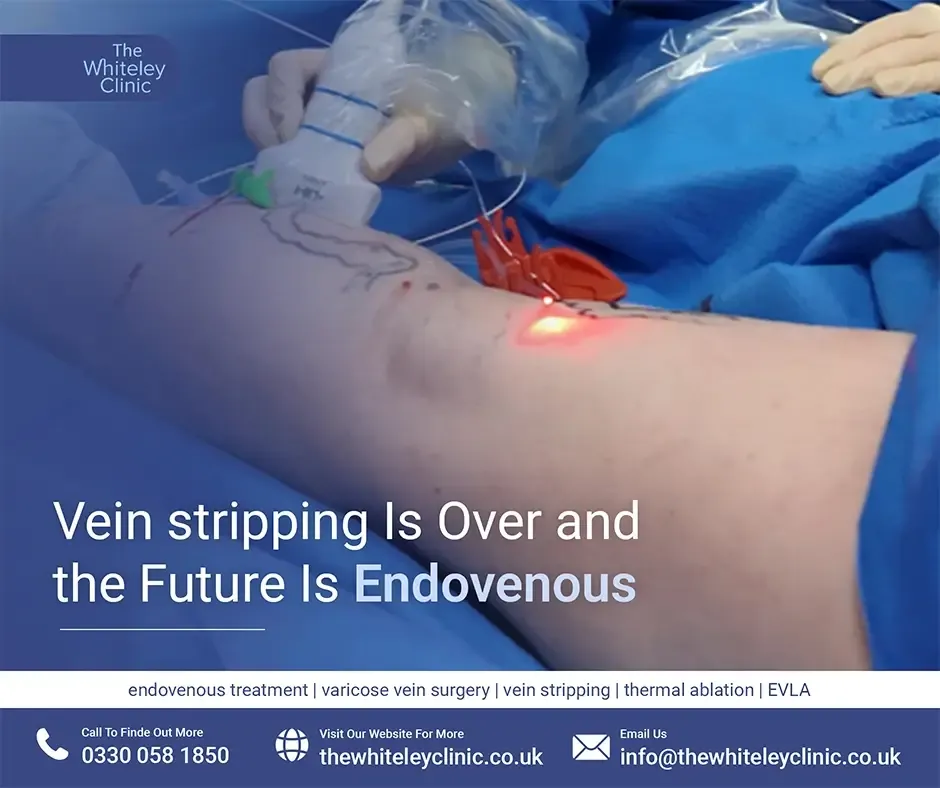
Such treatments include Echotherapy (SONOVEIN® – exclusive to The Whiteley Clinic in the UK), endovenous microwave, endovenous laser, TRLOP, and pelvic embolisation. Foam sclerotherapy is useful in small veins but has poor results in big veins. There are other endovenous treatments such as radiofrequency ablation, mechanochemical ablation, glue and stripping, but each of these have draw-backs and so are rarely or never used now in The Whiteley Protocol®.
Each individual patient has their own pattern of venous disease. Not surprisingly the old “standard approach” to varicose vein surgery – concentrating on just 2 main veins – gives poor long-term results, even if the new techniques are used. The Whiteley Protocol® allows us to tailor combinations of treatments aimed specifically at each individual pattern of venous disease. Our 15-year audit has proven treatment by The Whiteley Clinic to have the lowest possible risk of recurrence.