
How Can You Effectively Treat Calluses and Corns on Feet?
August 15, 2026
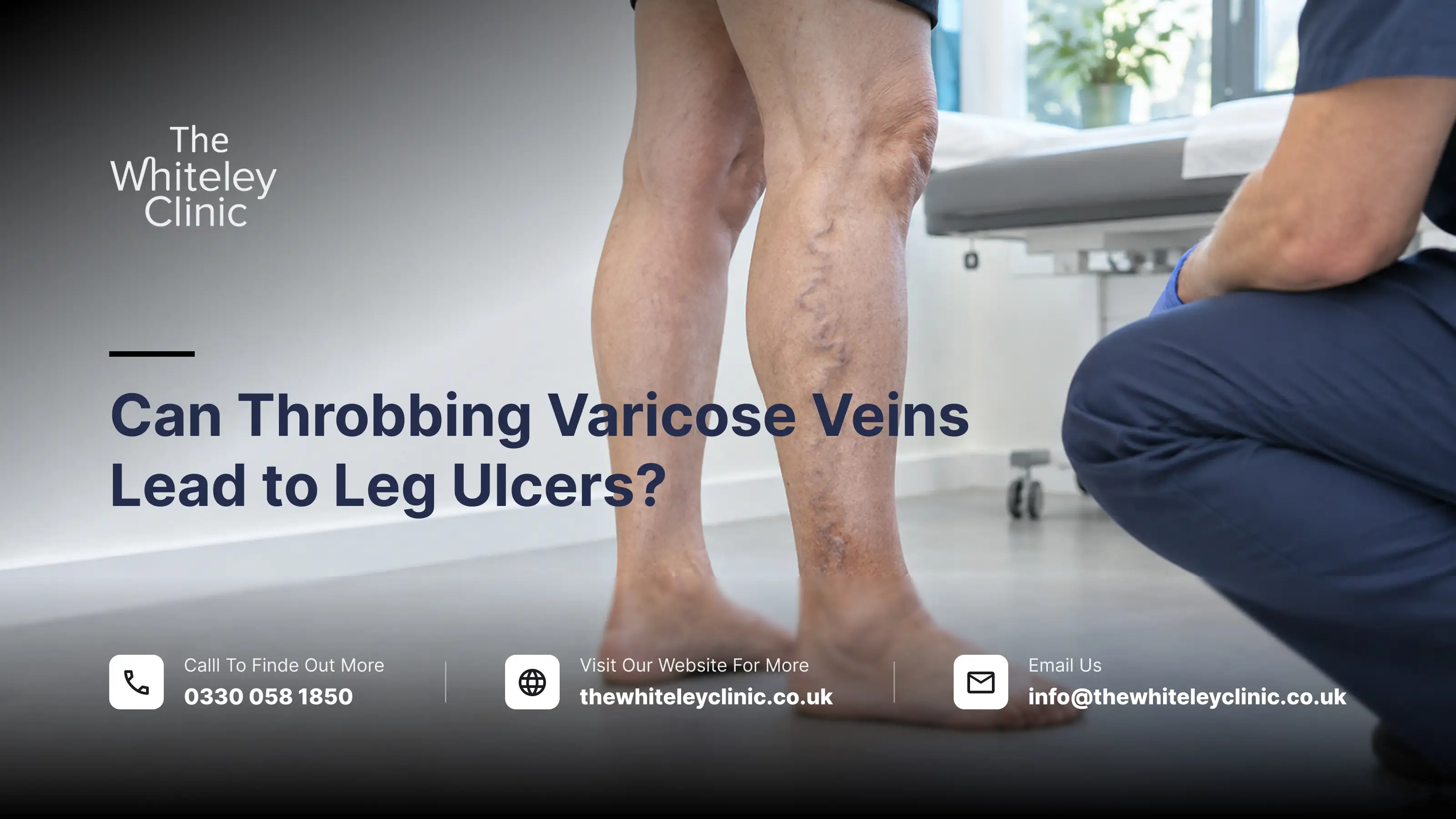
Throbbing varicose veins are more than a cosmetic concern. Persistent throbbing pain may indicate underlying venous reflux, a condition in which faulty vein valves allow blood to flow in the wrong direction. If left untreated, chronic venous insufficiency can progress to skin damage and, in some cases, venous leg ulcers. Fortunately, early investigation with duplex ultrasound allows specialists to identify venous reflux and recommend appropriate treatment before the disease progresses further. This approach may reduce future complications and support better long-term vein health.
This article explains the link between throbbing varicose veins and leg ulcers, highlights the importance of accurate investigation, and introduces an educational video from the Leg Ulcer Charity.
Many people dismiss throbbing varicose veins as a normal part of ageing or assume that discomfort is inevitable. However, persistent throbbing, aching or heaviness often suggests that blood is no longer flowing efficiently through the veins.
Healthy vein valves direct blood back towards the heart. When these valves fail, blood falls backwards under gravity, creating venous reflux. As pressure builds inside the veins, symptoms gradually become more noticeable. These may include:
These symptoms do not always occur alongside prominent surface veins.
Visible varicose veins are not always present in patients with venous reflux. Hidden varicose veins may already be causing symptoms, despite the absence of obvious surface veins.
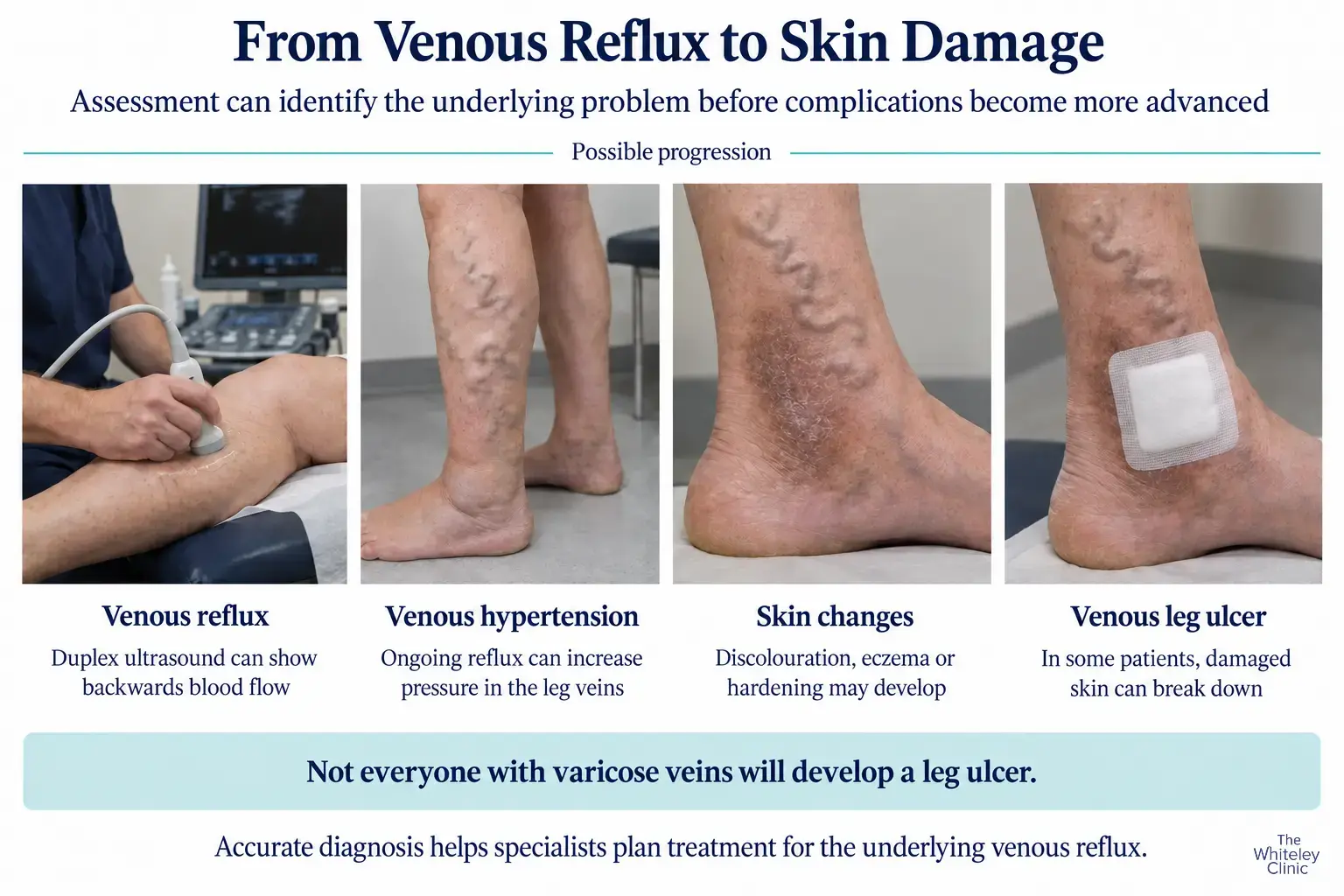
Venous disease develops gradually. At first, symptoms may seem mild. However, ongoing venous hypertension can damage the skin and surrounding tissues.
Without treatment, some patients develop:
The CEAP classification reflects the progression of chronic venous disease. As venous reflux becomes more severe, patients may develop skin changes (C4), followed by a healed venous leg ulcer (C5).
The development of an active venous leg ulcer indicates that chronic venous disease has progressed to C6, the most advanced stage of the CEAP classification.
For this reason, identifying and treating venous reflux before the disease progresses to C5 or C6 may help prevent ulcer formation and improve long-term outcomes.
Not every person with throbbing varicose veins will develop an ulcer. Nevertheless, persistent symptoms should never be ignored because early treatment can interrupt disease progression.
Compression therapy plays an important role in the management of chronic venous disease. Compression bandages help venous leg ulcers heal by reducing swelling, improving venous return and supporting the surrounding tissues. Likewise, compression stockings can relieve symptoms such as aching, swelling and throbbing varicose veins by applying graduated pressure to the legs.
However, neither compression bandages nor compression stockings treat the underlying venous reflux. Although they help control symptoms and encourage healing, the underlying vein disease remains unless appropriate treatment addresses the source of the reflux. Compression therefore supports symptom management rather than providing a permanent solution.
Compression stockings may be recommended in several situations. They can help manage symptoms while a patient is waiting for treatment, support recovery after endovenous procedures, or provide ongoing symptom relief for patients who are not suitable for intervention. They also remain an important part of care for many patients with venous leg ulcers.
If the underlying venous reflux is left untreated, symptoms and ulcers may return after compression therapy is stopped. Therefore, modern venous care focuses on identifying and treating the source of reflux rather than managing only the visible symptoms or wound. A duplex ultrasound assessment should form the basis of any long-term treatment plan.
Symptoms alone cannot show where venous reflux is occurring.
A duplex ultrasound scan allows specialists to examine blood flow, identify incompetent veins and determine whether visible or hidden varicose veins are responsible for the problem.
This investigation forms the foundation of personalised treatment planning. It also helps distinguish venous disease from other conditions that may cause leg pain or swelling.
For patients with persistent throbbing varicose veins, duplex ultrasound provides valuable information that cannot be obtained through visual examination alone.
The Leg Ulcer Charity works across the UK to raise awareness of venous leg ulcers and help patients understand the importance of proper investigation and treatment of the underlying cause, rather than relying only on ongoing wound care.
The charity shares an important message: many venous leg ulcers could be prevented—or even permanently treated—when clinicians identify and manage the underlying venous disease at an early stage.
The following video explains why accurate diagnosis is essential, why duplex ultrasound should be considered for patients with venous leg ulcers, and why treating the underlying venous reflux can make a significant difference to long-term outcomes.
Watch the video below to learn more about the importance of investigating venous leg ulcers rather than relying solely on compression therapy.
Further information about the charity and its educational work is available at leg ulcer charity.
Modern varicose vein management focuses on treating venous reflux rather than simply relieving symptoms.
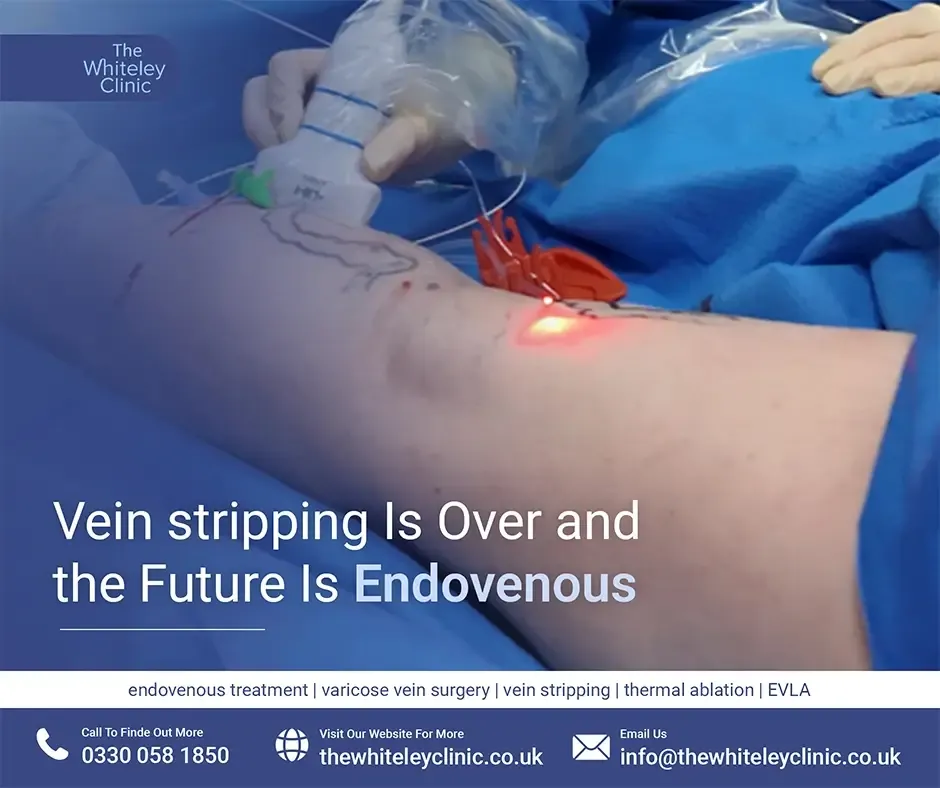
Following a comprehensive duplex ultrasound assessment, treatment may include minimally invasive endovenous procedures that close incompetent veins while preserving healthy venous circulation.
By treating the source of venous reflux, this approach can:
Treatment decisions should always follow an individual assessment because every patient's venous anatomy is different.
Anyone experiencing persistent throbbing varicose veins, particularly alongside swelling, skin changes or a non-healing wound, should arrange a specialist venous assessment.
Early investigation offers the best opportunity to diagnose venous reflux before complications become more advanced. Prompt treatment may improve symptoms, reduce future risks and help preserve long-term vein health.
Rather than viewing venous leg ulcers as an inevitable chronic condition, current understanding supports identifying the underlying cause whenever possible. With accurate diagnosis, personalised treatment and timely intervention, many patients can achieve better long-term outcomes and reduce the risk of future complications.