
How Can You Effectively Treat Calluses and Corns on Feet?
August 15, 2026
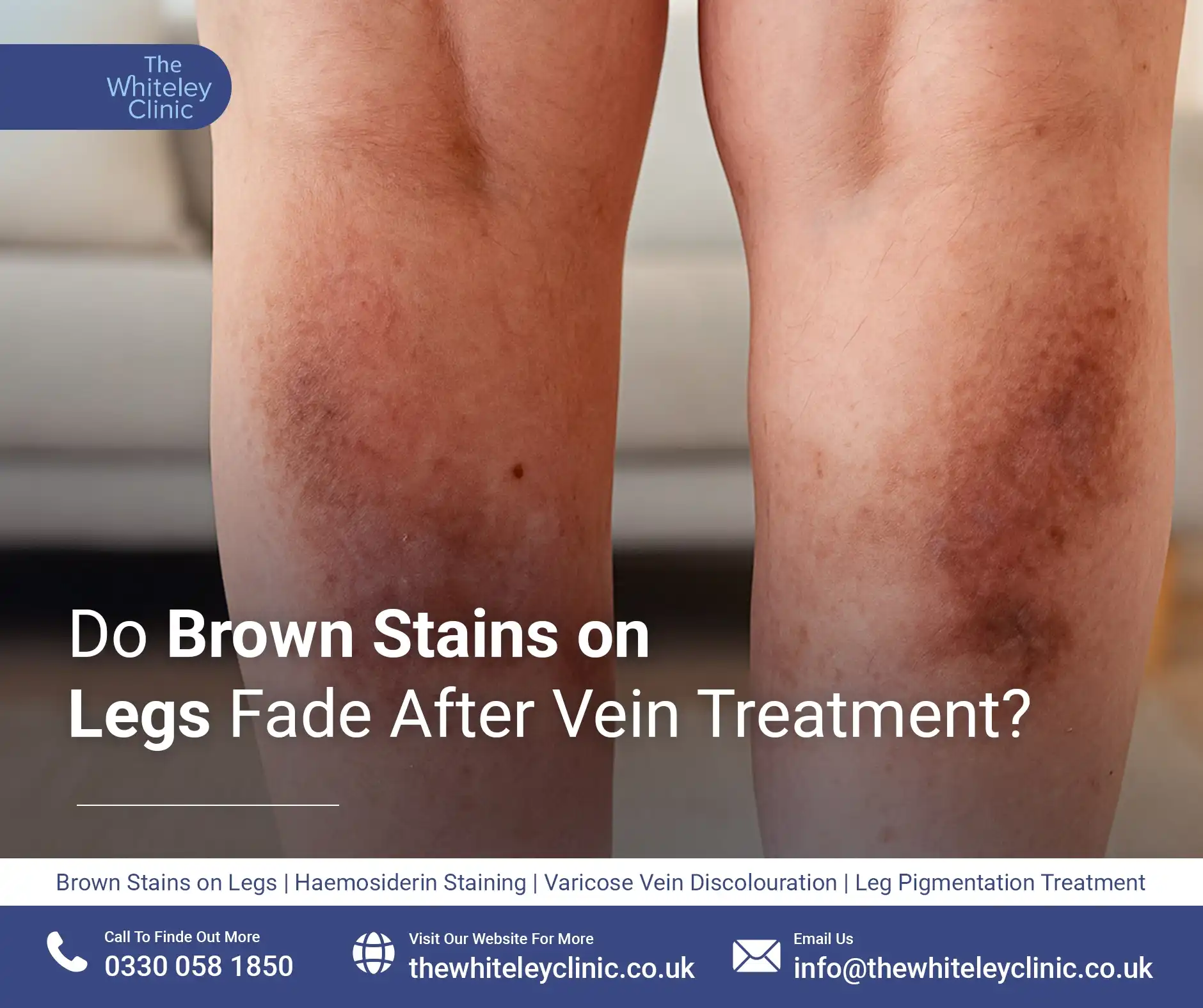
Brown stains on legs, which are a common concern for patients with venous disease, can be quite troubling. These stains, medically known as haemosiderin, typically appear around the ankles and lower calves. Not only do they affect appearance, but they also signify an underlying venous problem that should not be overlooked.
This article explains why brown stains on the legs develop, how they relate to varicose veins, whether they fade on their own after vein treatment, and how new therapies at The Whiteley Clinic can restore normal skin colour.
The article also clarifies how these brown stains fit into the CEAP classification, which is essential for understanding the severity of venous disease. In addition, it outlines how The Whiteley Protocol® is designed to ensure the best possible results for patients seeking treatment for venous issues.
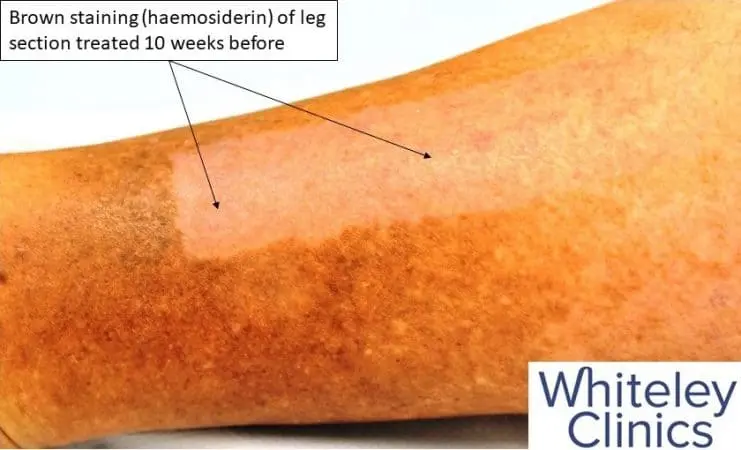
Brown stains on the legs are patches of discolouration. These stains occur due to the breakdown of red blood cells. When varicose veins, or even hidden varicose veins, are left untreated, blood can leak into the surrounding tissue. As a result, this leads to those noticeable stains. Moreover, this condition not only affects the skin's appearance but also indicates more significant vascular issues that may need attention.
The iron from the red cells is stored in the skin as haemosiderin, leading to a permanent brown appearance. For many years, no effective treatment was available, and patients were told these marks would remain for life.
However, recent advances have now made it possible to treat brown stains on the legs. The following sections outline the innovative therapies that can restore skin colour and improve appearance.
The primary cause of these brown stains is venous reflux stemming from varicose veins or hidden varicose veins. Over time, this reflux can lead to inflammation in the tissues of the lower leg.
Initially, patients may notice symptoms such as aching or a sensation of tiredness in their legs. Untreated symptoms can cause the condition to worsen significantly. Consequently, this may lead to ankle swelling. Eventually, it can result in the appearance of red or brown stains on the skin. If the issue remains unaddressed, it might progress to the development of venous leg ulcers, which can be quite serious.
According to recent clinical research, approximately 1 in 20 patients with varicose veins deteriorate each year if left untreated. This statistic highlights why early intervention is vital. Brown stains are not just cosmetic; they are a warning sign of worsening venous disease.
Many patients often wonder whether the brown stains on their legs will ever disappear after treating their varicose veins. While vein surgery can effectively cure reflux, reduce swelling, and eliminate visible varicose veins, it is crucial to understand that the brown stains often remain even after treatment. This is an important consideration for patients seeking comprehensive solutions.
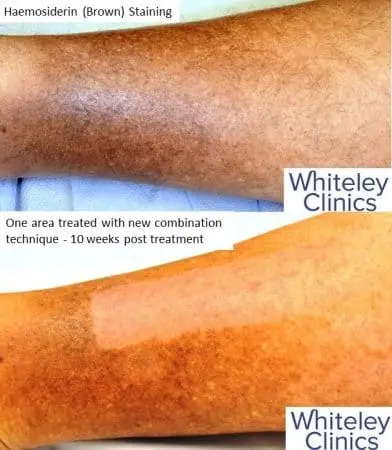
A revolutionary combination treatment, developed by Vicki Smith and Mark Whiteley at The Whiteley Clinic, now provides an effective solution for patients. Those who have completed vein surgery but still have brown stains can benefit from a two-step approach: first, skin preparation, followed by laser therapy. This innovative method aims to address the lingering discolouration effectively.
Results are very promising. The treated areas become noticeably lighter, and in some cases, the skin returns to its original colour. This breakthrough not only provides medical improvement but also delivers cosmetic results. As a result, patients experience renewed confidence in their legs.
The number of sessions required depends on two key factors:
Patients interested in this treatment undergo a consultation. During this session, the specialist explains the treatment process, discusses the expected outcomes, and reviews potential risks. Each plan considers the individual patient’s needs to ensure the best combination of medical and cosmetic results.
This breakthrough treatment provides a safe and effective solution for patients who have undergone successful vein surgery but still have residual brown stains, offering both improved skin appearance and renewed confidence.
The international CEAP classification is used to grade chronic venous disease. Brown stains fall under the later stages of this scale:
Understanding where brown stains fit into the CEAP classification helps patients recognize that these stains are part of a disease spectrum, not merely a cosmetic issue. They represent stage C4, where intervention becomes critical to prevent further deterioration.
The Whiteley Protocol® provides a structured, evidence-based pathway for diagnosing and treating venous disease. This protocol ensures that advanced duplex ultrasound identifies all hidden reflux. Subsequently, it treats these issues using minimally invasive techniques under local anaesthetic.
When applied correctly, the protocol eliminates varicose veins, heals ulcers, reduces ankle swelling, and improves cosmetic appearance.
Until recently, even with The Whiteley Protocol®, brown stains on legs could not be reversed. However, the latest combined treatment now fills this gap, allowing patients to achieve both medical and cosmetic success.
The Whiteley Clinic has been at the forefront of venous research and treatment innovations for decades. The team, led by Professor Mark Whiteley and colleagues such as Vicki Smith, continues to pioneer new therapies that improve patient outcomes. Patients who undergo the new treatment for brown stains on legs can now look forward to regaining natural skin colour and confidence, in addition to resolving their venous disease.