


How Can You Effectively Treat Calluses and Corns on Feet?
August 15, 2026
A leg veins assessment can help identify early signs of venous disease before more serious complications develop. While some vein conditions cause visible symptoms such as varicose veins or spider veins, others may not be visible at all. These are commonly known as hidden varicose veins, which can cause symptoms even when no enlarged veins can be seen on the surface of the skin.
However, home assessments cannot replace a professional evaluation. A comprehensive clinical examination and duplex ultrasound scan remain the most reliable methods for diagnosing vein disorders and determining the most appropriate treatment.
Vein problems are extremely common and can affect people of all ages. Faulty vein valves may allow blood to flow in the wrong direction, a condition known as venous reflux. As a result, blood can pool within the veins, increasing pressure and causing symptoms to develop over time.
Some people notice bulging varicose veins, while others experience symptoms without any visible vein changes. Common signs of venous disease include:
For this reason, a leg veins assessment can be useful when symptoms suggest an underlying vein problem.
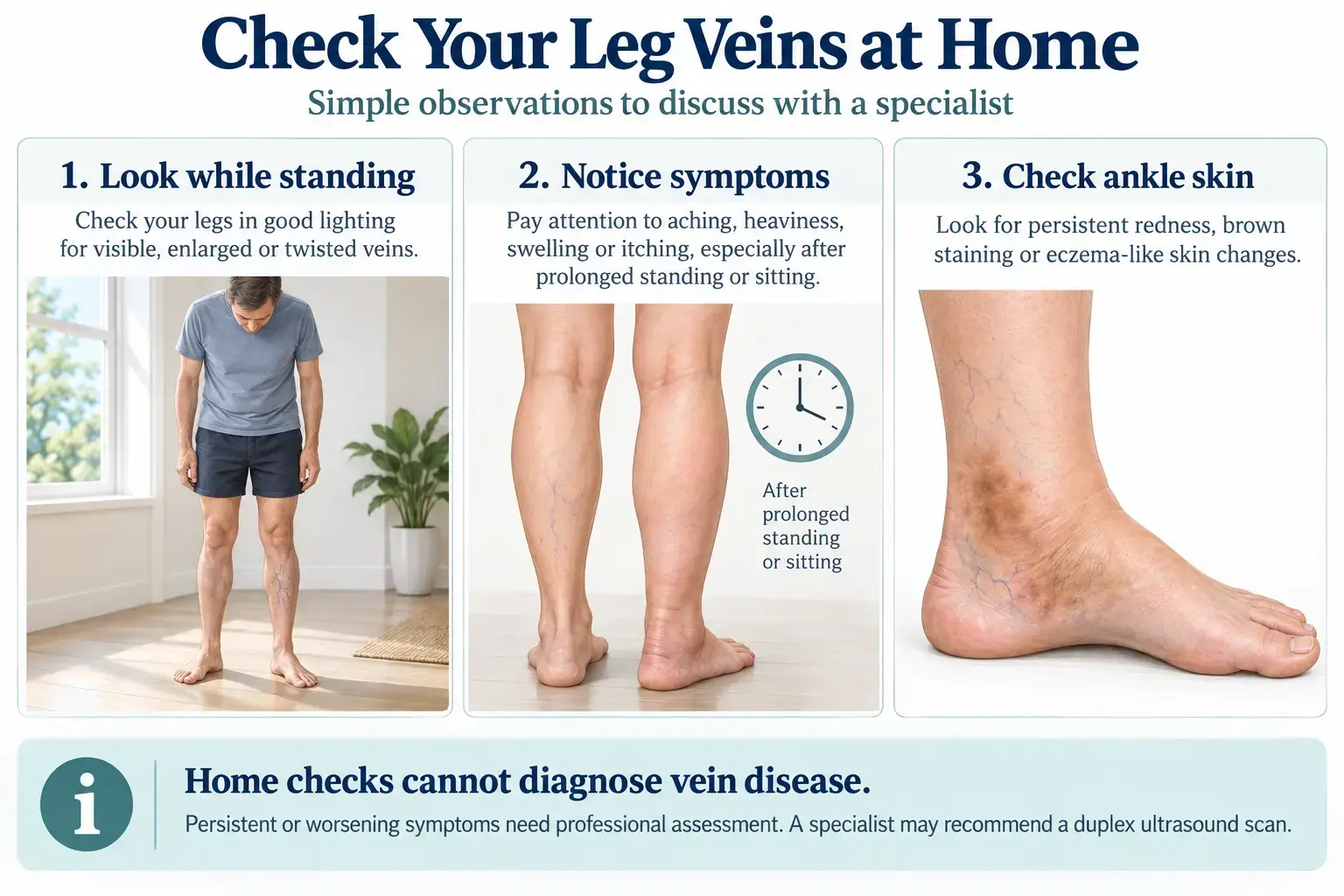
Although a home assessment cannot diagnose venous disease, it may help identify warning signs that require further investigation.
One useful approach is to examine the legs while standing in good lighting. Visible varicose veins often become more noticeable when the veins are under normal gravitational pressure. Twisted, enlarged veins beneath the skin may indicate venous reflux.
In addition, it is important to pay attention to symptoms that worsen after prolonged standing or sitting. Discomfort that improves after walking or elevating the legs may also suggest a venous circulation problem.
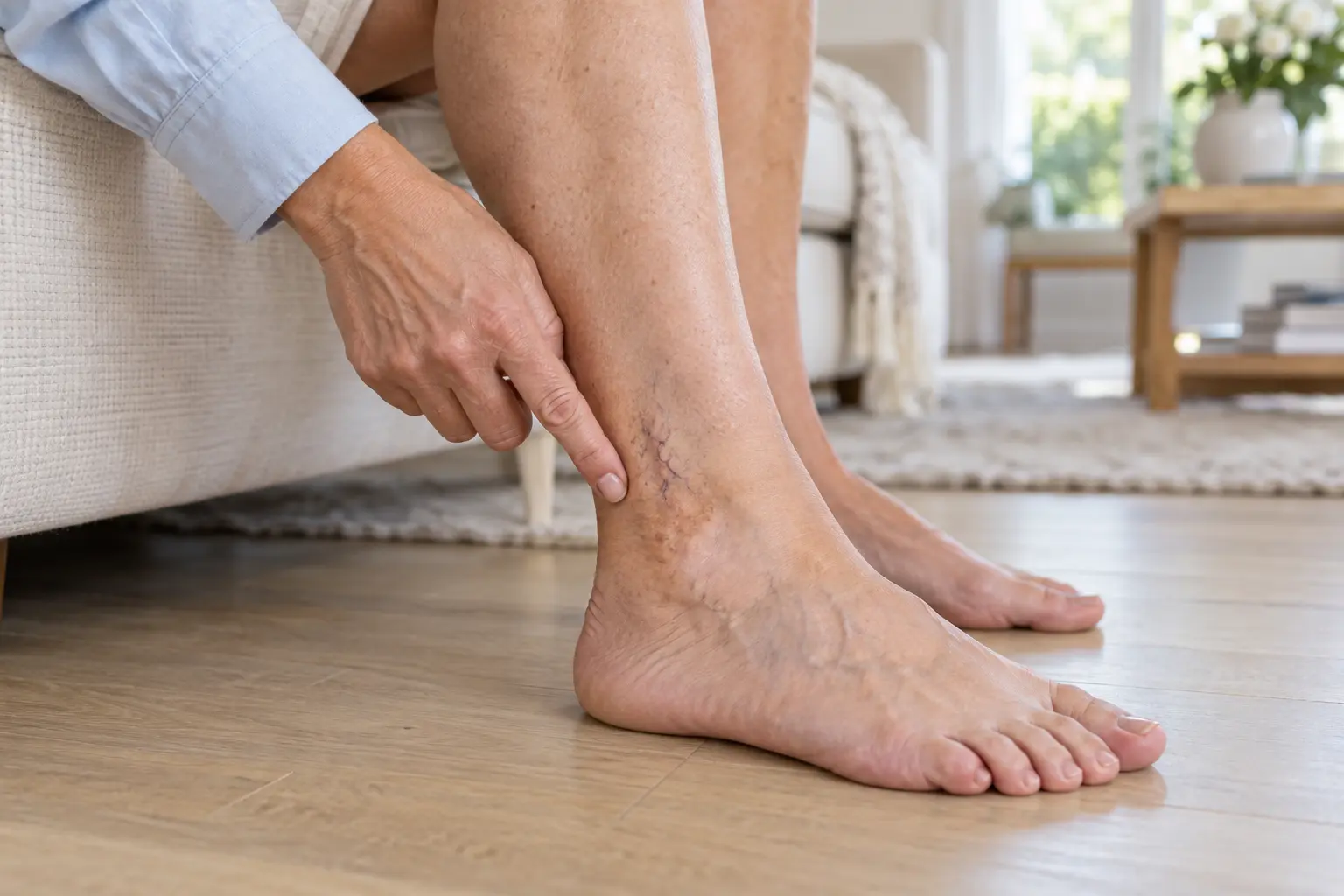
Another helpful observation involves the skin around the ankles. Persistent redness, brown staining, eczema-like changes, or hardening of the skin can indicate long-term venous hypertension.
A family history of varicose veins may also increase the likelihood of developing venous disease. Therefore, family history should form part of any leg veins assessment.
For more information on home tests for varicose veins, read this article.
Healthcare professionals commonly use the CEAP classification system to describe the severity of chronic venous disease. This internationally recognised framework helps standardise diagnosis and treatment planning.
The clinical component of CEAP ranges from C0 to C6:
Although this classification can help patients understand the progression of venous disease, it does not replace a full medical assessment. Nevertheless, becoming familiar with CEAP can provide useful context during a leg veins assessment.
Home observations can identify visible signs and symptoms, but they cannot determine the underlying cause of a vein problem.
Many patients experience symptoms despite having no visible varicose veins. In some cases, hidden varicose veins may develop beneath the surface and remain undetected without specialised imaging.
Furthermore, symptoms such as swelling, aching, or skin changes may have causes unrelated to venous disease. Consequently, relying solely on a home assessment can lead to inaccurate conclusions.
For this reason, any concerning symptoms should be assessed by a vascular specialist.
A professional leg veins assessment involves more than a visual examination. Specialists typically review symptoms, medical history, and risk factors before performing a detailed clinical assessment.
A duplex ultrasound scan is usually the most important part of the evaluation. This non-invasive investigation allows specialists to assess blood flow, identify venous reflux, and evaluate the function of vein valves throughout the leg.
The findings help determine whether treatment is required and, if so, which approach is most suitable for the individual patient.
Professional advice should be considered if symptoms persist, worsen, or interfere with daily activities. Visible varicose veins, recurrent swelling, skin changes, or leg ulcers should also prompt further assessment.
Patients who are concerned about possible vein disease can complete a consultation request form to discuss their symptoms with a specialist team. Following an initial review, a clinical appointment and diagnostic assessment can be arranged if appropriate.
Once a diagnosis has been confirmed, treatment recommendations can be based on the underlying cause of the problem rather than simply addressing visible symptoms. This approach helps achieve effective long-term results and significantly reduces the risk of recurrence.
A thorough leg veins assessment remains the most reliable way to identify venous disease, understand its severity, and determine the most appropriate treatment pathway.